
Entertainment
How Many Periods in Hockey? NHL Rules, Timing & Game Structure


Overview
Welcome to the fastest game on ice! If you’re new to hockey, you might have a few questions about how the game is structured. It doesn’t move like basketball or have halves like football. Instead, hockey is divided into three distinct segments of play. Understanding them is key to following the action.
This guide will break down everything you need to know about hockey periods. We’ll cover how many there are, how long they last, and what happens when the game is tied. By the end, you’ll understand the game’s flow like a seasoned fan.
What Is a Period in Hockey? (Simple Explanation)
If you’ve watched other sports, you might be familiar with terms like quarters or halves. In hockey, the main segments of a game are called “periods.” Think of them as chapters in the story of the game. Each period is a set amount of playing time where two teams compete to score more goals than the other.
What a “Period” Means in Ice Hockey
A period is a block of regulation playing time. At the professional level, like in the NHL, a standard game is made up of three 20-minute periods. These are separated by breaks called intermissions. The game clock counts down from 20:00 to 0:00 in each period.
Unlike some sports where the clock runs continuously, hockey uses a “stop-clock” system. This is a crucial detail for new fans to understand.
Stop-Clock vs Real-Time Play
The game clock only runs when the puck is in play. Every time the referee blows the whistle to stop the action—for a penalty, a goal, the puck going out of play, or an icing call—the clock stops. It doesn’t start again until the puck is officially dropped for the next face-off.
This is why a 20-minute period on the clock always takes much longer in real time. A single period often lasts between 30 and 40 minutes from start to finish. The constant starting and stopping ensures that fans get a full 20 minutes of actual hockey action in every frame.
Why Periods Matter in Hockey Gameplay
The three-period structure is fundamental to hockey strategy. Teams often adjust their tactics from one period to the next based on the score, penalties, and player energy levels. For example, a team that is leading after two periods might play more defensively in the third to protect their lead.
Furthermore, teams switch the side of the ice they are defending after each period. This can subtly affect gameplay due to factors like the location of the players’ bench. A team has a “long change” in the second period, meaning their bench is farther from the goal they are defending, which can make line changes more difficult.
How Many Periods Are in a Standard Hockey Game?
Let’s get straight to the point. If you’re looking for the quick answer to impress your friends or win a trivia question, here it is.
Official Answer: 3 Periods
A standard regulation hockey game has three periods. This is true for the National Hockey League (NHL), professional leagues across Europe, international competitions like the Olympics, and college hockey in the United States.
These three periods make up what is known as “regulation time.” If the score is tied at the end of the third period, the game may extend into overtime, but the core structure of a regulation game is always three periods.
Length of Each Period (20 Minutes)
In professional and high-level amateur hockey (like the NCAA), each of the three periods is 20 minutes long. This gives fans a total of 60 minutes of official playing time. This 60-minute benchmark is the standard for a complete hockey game around the world.
However, as we mentioned, the clock stops frequently. So, while you get 60 minutes of on-ice action, the total time you spend watching is much longer.
Total Regulation Game Time vs. Actual Viewing Time
A regulation game has 60 minutes of play (three 20-minute periods). When you add in the two intermissions (typically 15-18 minutes each) and all the stoppages in play, a standard hockey game usually takes about 2.5 hours to complete.
If the game goes to overtime and a shootout, you could be watching for closer to three hours. So when you sit down to watch a game, make sure you have enough snacks for the long haul—it’s an event, not a quick show.
Why Does Hockey Have 3 Periods Instead of Halves?
It seems a bit unusual compared to sports like soccer or basketball, right? The three-period structure isn’t just a random choice; it’s rooted in the history of the game and the practical challenges of playing on ice.
Historical Reasons
Early in hockey’s history, games were often played with two 30-minute halves. This was common in the late 19th and early 20th centuries. However, players and organizers quickly ran into a significant problem: the quality of the ice.
Back then, games were often played on natural ice rinks, which would get chewed up and slushy after just 30 minutes of skating. This made the puck harder to control and skating more difficult. The solution was to shorten the segments of play and add another break, leading to the three-period format we know today.
Ice Quality & Resurfacing
The most important reason for having three periods is the need to maintain a high-quality ice surface. Ice gets worn down quickly from skate blades, creating snow and deep grooves. This “bad ice” slows down the puck and increases the risk of player injury.
The two intermissions between periods give the arena crew time to resurface the ice. You’ll see a large machine, famously known as a Zamboni, come out to shave off the top layer of damaged ice and lay down a fresh sheet of hot water. This process creates a smooth, fast surface, ensuring the game’s speed and integrity are maintained from the first period to the third. Without these breaks, the quality of play would drop significantly by the end of a game.
Player Safety and Performance
Hockey is an incredibly demanding sport. Players skate at high speeds, engage in physical battles, and exert maximum effort in short bursts called shifts (typically 30-60 seconds long). The three-period structure with two intermissions allows players necessary time to rest, rehydrate, and recover.
These breaks help reduce fatigue, which in turn lowers the risk of injury. They also give coaches time to talk to their teams, review video, and make strategic adjustments. This ensures a higher level of performance and strategic play throughout the entire 60 minutes.
How Long Is Each Hockey Period?
While the official answer is simple, the real-world timing of a hockey period can be a bit more complex. Let’s break down how the clock works and what to expect when you’re watching a game.
Regulation Period Length
In professional leagues like the NHL and college hockey (NCAA), a regulation period is 20 minutes long. The clock is prominently displayed on the arena’s main scoreboard, counting down from 20:00. The goal is to complete three of these periods to determine a winner in regulation.
Most leagues around the world follow this 20-minute standard. However, in youth or recreational leagues, periods are often shorter to accommodate the age and endurance of the players. For example, a youth game might have three 12-minute or 15-minute periods.
How Stoppages Affect Game Time
As mentioned earlier, hockey uses a stop-clock. This is the biggest factor in why a 20-minute period takes much longer to play. The clock stops for:
- Goals: After a goal is scored, play stops for a celebration and the ensuing center-ice face-off.
- Penalties: When a player commits an infraction, the referee blows the whistle to stop play.
- Icing and Offsides: These common rule violations result in a stoppage and a face-off.
- Puck Out of Play: If the puck is shot over the glass or gets lost in a player’s equipment.
- Goalie Freezes the Puck: When the goaltender covers the puck, play stops for a face-off.
- TV Timeouts: In professional games, there are scheduled media timeouts during each period to air commercials. These usually occur around the 14, 10, and 6-minute marks of the period, provided there hasn’t been a recent stoppage.
All these little pauses add up. A typical 20-minute NHL period will last about 35-40 minutes in real time.
Comparison with Other Sports
Let’s put this in perspective. An NFL quarter is 15 minutes, but it often takes 45 minutes or more to play due to timeouts, penalties, and replays. An NBA quarter is 12 minutes but can stretch to 30 minutes.
Hockey’s timing is similar. The 20-minute period provides a framework, but the actual duration is dictated by the flow of the game. A period with lots of goals and penalties will feel much longer than a period with continuous, back-and-forth action.
Intermissions Between Hockey Periods Explained
The breaks between periods are called intermissions, and they are just as much a part of the game as the action itself. They serve several critical functions for players, fans, and the arena staff.
How Long Intermissions Last
In the NHL, the two intermissions are typically 17 or 18 minutes long. The first intermission takes place after the first period, and the second one happens after the second period. This timing is standardized to allow for ice resurfacing and television commercial breaks.
In college hockey, intermissions are usually a little shorter, around 15 minutes. For fans at the arena, this is your chance to get up, stretch your legs, grab a snack, or visit the restroom without missing any of the game. For viewers at home, this is when the broadcast analysts break down the action and show highlights.
What Happens During Intermission
A lot goes on during those 17-18 minutes:
- Ice Resurfacing: The most visible activity is the Zamboni machine cleaning and preparing the ice for the next period. This is essential for maintaining the speed and safety of the game.
- Player Recovery: Players head back to their locker rooms. They rest, rehydrate, and may receive minor medical attention. It’s a crucial time to recharge for the next 20 minutes of intense play.
- Coaching and Strategy: Coaches use this time to talk to their team, adjust game plans, and motivate their players. They might show video clips of the previous period to point out mistakes or successful plays.
- Fan Entertainment: Arenas often feature on-ice promotions, youth hockey games, or other forms of entertainment to keep the crowd engaged during the break.
Why Intermissions Are Important
Intermissions are vital for three main reasons:
- Game Quality: Fresh ice ensures the puck glides smoothly and players can skate at top speed, which is what makes hockey so exciting.
- Player Performance: The rest allows players to maintain a high level of energy and focus throughout the entire 60-minute game.
- Fan Experience: The breaks provide a comfortable viewing experience, allowing fans to take a break without missing the action. They also build anticipation for the next period of play.
What Happens After the 3rd Period in Hockey?
So, 60 minutes of regulation time are up. What happens next? The answer depends on the score. If one team is leading, the game is over, and they are the winner. But if the score is tied, the game continues.
Tied Games Explained
When the score is tied at the end of the third period, the game goes into an “extra period” known as overtime (OT). The purpose of overtime is to determine a clear winner. Getting one point for an overtime loss and two for a win is a key part of the league standings, so playing out these tied games is crucial.
The rules for overtime can vary significantly between the regular season and the playoffs, and this is a common point of confusion for new fans.
When Overtime Is Played
Overtime is played immediately following a brief break after the third period. Unlike the longer intermissions, this break is just a few minutes long—enough for a quick ice scrape and for teams to catch their breath.
In the NHL regular season, if a game is tied after 60 minutes, it always goes to overtime. There are no ties in modern professional hockey.
When Shootouts Are Used
If the game is still tied after the overtime period, the next step in a regular-season game is the shootout. A shootout is a tie-breaking skills competition where individual players from each team take turns trying to score on the opposing goalie in a one-on-one showdown.
Each team gets three attempts. The team that scores the most goals in the shootout wins the game. If it’s still tied after three rounds, the shootout continues in a sudden-death format until one team scores and the other doesn’t. It’s important to note: shootouts are only used in the regular season. The playoffs have a different, more grueling system.
Hockey Overtime Rules Explained (Regular Season vs Playoffs)
The way overtime is handled is one of the biggest differences between a regular-season game and a high-stakes playoff game. Let’s clarify the rules for each.
Regular Season Overtime (3-on-3)
During the NHL regular season, overtime is a five-minute, “sudden-death” period. Here’s how it works:
- Format: It’s played 3-on-3 (plus goalies), instead of the usual 5-on-5. This creates a wide-open, fast-paced, and exciting style of play with lots of scoring chances.
- Sudden-Death: The first team to score a goal instantly wins the game.
- Duration: The overtime period lasts for a maximum of five minutes.
- If No One Scores: If the five-minute overtime ends and the game is still tied, it proceeds to the shootout to decide the winner.
The goal of 3-on-3 overtime is to end games quickly and excitingly while still awarding a winner.
Playoff Overtime Rules
The playoffs are all about endurance and will. The rules for overtime change dramatically:
- Format: Playoff overtime is played 5-on-5, just like regulation.
- Duration: Periods are 20 minutes long, just like regulation.
- Sudden-Death: It is still a sudden-death format. The first goal wins the series game.
- No Shootouts: There are absolutely no shootouts in the playoffs. If the first 20-minute overtime period ends without a goal, the teams take a full intermission (with an ice resurfacing) and then come back for another 20-minute overtime period.
- Continuous Overtime: This continues until a goal is scored. Games can theoretically last forever. Some historic playoff games have gone into a fourth, fifth, or even sixth overtime period, lasting over five hours. This makes playoff overtime some of the most dramatic and intense action in all of sports.
Comparison Table: Regular Season vs. Playoff Overtime
|
Feature |
Regular Season Overtime |
Playoff Overtime |
|---|---|---|
|
Players on Ice |
3-on-3 (plus goalies) |
5-on-5 (plus goalies) |
|
Period Length |
5 minutes |
20 minutes |
|
Tie-Breaker? |
Yes, if no goal, goes to a shootout. |
No, continues with more OT periods. |
|
Ending |
First goal wins (sudden-death). |
First goal wins (sudden-death). |
|
Breaks |
A short break before OT begins. |
Full intermissions between OT periods. |
How Many Periods in Different Hockey Leagues?
While the three-period format is nearly universal, there can be slight variations in timing and overtime rules across different levels of hockey. Here’s a quick guide to what you can expect in major leagues.
NHL (National Hockey League)
The NHL is the gold standard. As we’ve covered, it features three 20-minute periods with two 18-minute intermissions. Regular-season ties are settled with a five-minute, 3-on-3 overtime, followed by a shootout if necessary. Playoff games use continuous 20-minute, 5-on-5 overtime periods until a goal is scored.
College (NCAA) Hockey
NCAA hockey follows a very similar structure to the NHL.
- Regulation: Three 20-minute periods.
- Intermissions: Typically 15 minutes long.
- Overtime: For regular-season games, they play a five-minute, 5-on-5 sudden-death overtime period. If still tied, the game officially ends in a tie for national ranking purposes. However, for conference standings, some conferences will use a 3-on-3 period or a shootout to award an extra point.
- Playoffs: NCAA tournament games use continuous 20-minute, 5-on-5 sudden-death overtime, just like the NHL playoffs.
International (IIHF & Olympics)
International Ice Hockey Federation (IIHF) tournaments, including the World Championships and the Olympics, also use the three-period format.
- Regulation: Three 20-minute periods.
- Overtime (Preliminary Round): Similar to the NHL regular season, a five-minute, 3-on-3 overtime is used. If no goal is scored, it goes to a shootout.
- Overtime (Playoff/Medal Round): The overtime rules get more intense as the tournament progresses. For the gold medal game, they typically play continuous 20-minute, 5-on-5 sudden-death overtime until a winner is crowned.
How Many Periods in Youth & Amateur Hockey?
For kids, teenagers, and adults playing in recreational leagues, the structure of a hockey game is adapted to fit different ages and skill levels. Safety and development are the main priorities.
Youth Hockey Period Length
The biggest difference in youth hockey is the length of the periods. Shorter periods are used because younger players don’t have the same stamina as professionals. USA Hockey, the governing body for youth hockey in the U.S., sets guidelines based on age group:
- 8 and Under (Mites): Often play “cross-ice” games with very short shifts and no formal periods.
- 10 and Under (Squirts): Typically play with three 12-minute periods.
- 12 and Under (Pee Wees): Usually move up to three 15-minute periods.
- 14 and Under (Bantams) & High School: Generally play with three 15 or 17-minute periods.
High School & Recreational Leagues
High school hockey games almost always use shorter periods than the professional level, commonly ranging from 15 to 17 minutes. Intermissions are also shorter, often just 10-12 minutes.
Adult recreational leagues (“beer leagues”) vary widely. Some use the standard three-period format with stop-time, while others use “running time” to ensure games stay on schedule. With a running clock, the game clock doesn’t stop for whistles, only for goals or major breaks.
Why Periods Are Shorter for Kids
There are several good reasons for shortening periods in youth hockey:
- Player Stamina: Kids can’t maintain high-intensity effort for 20 straight minutes. Shorter periods keep them from becoming exhausted and sloppy.
- Safety: Fatigue leads to injuries. Shorter, more manageable periods of play help keep kids safer on the ice.
- Ice Time Availability: Local rinks have tight schedules. Shorter games allow more teams to get on the ice each day.
- Focus on Skill: Shorter games keep the focus on skill development and fun rather than pure endurance.
Real Example: Breaking Down a Full Hockey Game Timeline
To put it all together, let’s walk through a realistic timeline for an NHL game that starts at 7:00 PM and goes to overtime.
- 6:30 PM – 6:50 PM: Pre-Game Warm-ups
Players take the ice for about 20 minutes to stretch, take shots, and get ready. The Zambonis will do a final ice resurfacing before the game begins. - 7:00 PM: Game Start & Puck Drop
The national anthems are sung, the starting lineups are announced, and the game officially begins with the opening face-off. - 7:08 PM: First Period Begins
The clock starts counting down from 20:00. - 7:45 PM: First Period Ends
After multiple stoppages for goals, penalties, and TV timeouts, the 20-minute period ends. The horn sounds. - 7:45 PM – 8:03 PM: First Intermission (18 minutes)
Players head to the locker room. The Zamboni comes out. Fans grab food and drinks. - 8:03 PM: Second Period Begins
Teams switch ends of the ice, and the second 20-minute period starts. This is the “long change” period. - 8:43 PM: Second Period Ends
Another 40 real-time minutes have passed. The horn sounds again. - 8:43 PM – 9:01 PM: Second Intermission (18 minutes)
Another break for ice resurfacing, player recovery, and coaching adjustments. - 9:01 PM: Third Period Begins
Teams switch back to their original ends. The final 20 minutes of regulation get underway. The intensity is high, especially in a close game. - 9:40 PM: Third Period Ends (Game is Tied)
Regulation time expires with the score tied 2-2. The game is headed to overtime. There is a short 3-minute break while the ice is quickly scraped. - 9:43 PM: Overtime Begins
A five-minute, 3-on-3 sudden-death period starts. - 9:46 PM: Game Over!
Just three minutes into overtime, the home team scores. The horn sounds, the celebration begins, and the game is officially over.
Total Time a Fan Should Expect: In this example, the game lasted from 7:08 PM to 9:46 PM, totaling approximately 2 hours and 38 minutes. This is a very typical duration for a professional hockey game.
Common Myths About Hockey Periods
New fans often hear things that can be confusing or just plain wrong. Let’s clear up a few common myths about how hockey games are structured.
Myth: “Hockey has 4 quarters.”
This is a common mistake for fans of football or basketball. Hockey has never officially used a four-quarter system. The game is, and has been for over a century, structured around three periods. If someone mentions the “fourth quarter,” they are likely just mixing up their sports terminology.
Myth: “All games that are tied go to shootouts.”
This is only partially true. Shootouts are used exclusively in the regular season and only after a five-minute overtime period fails to produce a winner. In the playoffs—when the stakes are highest—there are no shootouts. Games are decided by continuous, 5-on-5 sudden-death overtime, no matter how long it takes.
Myth: “Periods are always exactly 20 minutes long.”
While the game clock for a professional period is set to 20 minutes, the actual time it takes to play the period is much longer. Due to frequent stoppages for penalties, goals, icing, and TV timeouts, a 20-minute period typically takes between 35 and 45 minutes of real time to complete. The only time a period would be exactly 20 minutes is if a “running clock” were used, which is very rare outside of casual recreational leagues.
FAQs About How Many Periods in Hockey
Here are quick answers to some of the most frequently asked questions about hockey periods.
How many periods are in a hockey game?
A standard regulation hockey game has three periods. If the game is tied after three periods, it may continue into an overtime period.
How long is each hockey period?
In professional (NHL) and college (NCAA) hockey, each period is 20 minutes long. Youth and recreational leagues often use shorter periods, typically ranging from 12 to 17 minutes.
Does hockey ever have 4 periods?
Not in regulation. A hockey game has three regulation periods. If a playoff game is tied after the third period, it goes into a fourth period (the first overtime), which is a full 20-minute, sudden-death period. If it remains tied, a fifth period would follow, and so on. So while a game can have more than three periods of play, this only happens in playoff overtime.
How long do hockey games usually last?
A typical NHL hockey game lasts about 2.5 hours. This includes the three 20-minute periods, two 18-minute intermissions, and all the stoppages in play. If a game goes to overtime and a shootout, it can last closer to 3 hours.
What is sudden-death overtime in hockey?
Sudden-death overtime means that the very next goal wins the game. As soon as a team scores, the game immediately ends. This rule applies to both regular-season and playoff overtime.
Conclusion – Understanding Hockey Periods Made Easy
The three-period structure is the heartbeat of a hockey game. It dictates the flow, strategy, and even the physical maintenance of the ice itself. A regulation game consists of three 20-minute, stop-time periods, with two long intermissions in between for ice resurfacing and player recovery.
Now that you know how many periods are in a game, why they exist, and what happens when the score is tied, you’re ready to watch the action like a pro. Understanding the game’s structure helps you appreciate the strategy, the endurance of the athletes, and the drama that unfolds from the opening face-off to the final horn.

Tgarchirvetech Gaming Trends 2025: How Tech Is Redesigning Game Worlds
Gaming has come a long way from clunky consoles and pixelated PC screens. The journey through mobile, cloud, and now into truly immersive technologies has been rapid and transformative. As we look toward the near future, we see several powerful forces converging to reshape how we play, create, and interact with games. This convergence is what we can call “Tgarchirvetech,” a conceptual umbrella for the interconnected trends defining the next era of digital entertainment.
Understanding these shifts is crucial for everyone involved. For players, it means new ways to access games and more dynamic experiences. For developers, it opens up a world of creative possibilities. For the industry at large, it signals major changes in economics, technology, and community engagement.
This article will break down the core tgarchirvetech gaming trends 2025. We will explore the rise of AI-driven narratives, the liberation of cloud gaming, the deepening immersion of VR/AR, the seamlessness of cross-platform play, and the explosion of social and creator-led economies. Let’s dive into what the future of play looks like.
What Is “Tgarchirvetech”?
First, let’s clarify what “Tgarchirvetech” means in this context. It isn’t a real company or a single piece of technology. Instead, think of it as a conceptual framework—a way to bundle together the multiple, overlapping technological trends that are collectively pushing the gaming industry forward. Coining a term like this helps us visualize how seemingly separate innovations in AI, cloud computing, and immersive hardware are actually part of a single, powerful movement.
This approach allows us to separate genuine technological evolution from industry hype. While buzzwords fly around, the real changes are happening where these technologies intersect.
Historical evolution of gaming trends
Gaming’s history is a story of breaking down barriers. Consoles brought gaming into the living room. PCs offered customization and online multiplayer. Mobile phones made gaming accessible to billions. Now, Tgarchirvetech represents the next step: a future where games are not tied to a specific device, a single narrative, or a passive player experience. It’s about creating a more intelligent, accessible, and participatory gaming ecosystem.
Cloud Gaming & Streaming — Gaming Without Hardware Barriers
One of the most significant tgarchirvetech gaming trends 2025 is the maturation of cloud gaming. This technology allows you to stream games directly to a screen, much like you stream a movie on Netflix. The game itself runs on a powerful server in a data center, and your device—be it a smartphone, a laptop, or a smart TV—simply acts as a display and controller.
This model dismantles the traditional hardware barrier. You no longer need a high-end PC or the latest console to play graphically intensive, AAA titles. Services like NVIDIA GeForce NOW, Xbox Cloud Gaming, and PlayStation Cloud are making top-tier gaming accessible to anyone with a stable internet connection. However, challenges remain. Latency (the delay between your input and the on-screen action) is still a concern for competitive players, and the experience is highly dependent on network quality.
Impact on mobile and casual gamers
Cloud gaming is a game-changer for the mobile market. It allows players to experience full-fledged console and PC games on their phones without sacrificing quality or downloading massive files. This blurs the line between “mobile gaming” and “PC/console gaming,” creating a unified ecosystem where you can play anywhere, on any device.
AI-Driven Game Design & Adaptive Experiences
Artificial intelligence is no longer just for creating smarter enemies. In 2025, AI is becoming a core tool for game design itself. It’s being used to generate dynamic stories, create vast procedural worlds, and adapt the game’s difficulty in real-time to match a player’s skill level. This leads to experiences that are unique to each playthrough.
Imagine non-player characters (NPCs) with memories and evolving personalities, or game worlds that generate new quests and environments based on your actions. This level of dynamism offers incredible replayability and a sense of a living, breathing world. However, it also introduces risks. AI-driven systems can be complex to test, and developers must be careful to avoid introducing unintentional bias or unfair gameplay mechanics.
Opportunities for indie developers
For smaller, independent studios, AI offers a way to create expansive content without needing a massive team. Procedural content generation can build vast worlds, while adaptive AI can create compelling narratives with a fraction of the manual scripting required in the past. This democratizes the creation of large-scale, dynamic games.
VR / AR / XR — Immersive, Mixed-Reality Gaming Gains Ground
Virtual, augmented, and extended reality (VR/AR/XR) are finally moving from niche technology to a mainstream gaming platform. By 2025, VR headsets are more affordable, comfortable, and powerful, offering a true sense of presence and immersion that traditional screens cannot match. Games are no longer just something you look at; they are places you can inhabit.
Social VR spaces allow friends to hang out in virtual worlds, while AR mobile games like Pokémon GO continue to blend the digital and physical worlds in creative ways. The main hurdles remain hardware cost and motion sickness, but as the technology improves, these barriers are shrinking. Immersive gaming is no longer a distant dream but a rapidly growing segment of the market.
VR/AR trends in mainstream gaming
We are seeing established franchises release VR-native titles or VR modes for existing games. This integration into mainstream gaming helps introduce the technology to a broader audience, moving it beyond a dedicated hobbyist community and into the homes of everyday players.
Cross-Platform & Mobile / Portable Gaming — Play Anywhere, Anytime
The walls between gaming ecosystems are crumbling. Cross-platform play allows someone on a PlayStation to team up with a friend on an Xbox, a PC, and even a mobile device. This approach dramatically expands the potential player base for any game and gives players the flexibility to play with their friends, regardless of the hardware they own.
This trend is powered by the rise of powerful portable devices like the Steam Deck and the integration of cloud gaming on smartphones. The idea is simple: your game progress, friends list, and purchases should follow you from your living room TV to your phone on the bus. The biggest challenge for developers is creating a consistent experience, balancing control schemes and user interfaces across vastly different devices.
Social Gaming, User-Generated Content & Creator Economies
Modern games are becoming social platforms. Multiplayer experiences, live-service models that deliver continuous content, and robust modding tools are designed to keep communities engaged for years. This has given rise to powerful creator economies within games themselves.
Players are no longer just consumers; they are creators. They design and sell in-game items, build custom maps, and create entirely new game modes. Games like Roblox and Minecraft have shown that user-generated content (UGC) can be a primary driver of a game’s success and longevity. The challenges here are significant, involving content moderation at scale, managing intellectual property rights, and ensuring that monetization models are fair to both the company and the creators.
Community engagement and game lifespan
Games that successfully foster a creator economy tend to have incredibly long lifespans. By empowering the community to create content, developers ensure a steady stream of new experiences that keeps players coming back, long after the main storyline is finished.
Esports, Competitive Play & Streaming Culture
Esports has evolved from a niche hobby into a global entertainment phenomenon. Professional players compete in massive tournaments for multi-million-dollar prize pools, broadcast to millions of viewers on platforms like Twitch and YouTube Gaming. This has created viable career paths for players, casters, and content creators.
Streaming culture is deeply intertwined with this trend. Top streamers are major influencers who can make or break a new game’s launch. For developers, this means designing games that are not only fun to play but also fun to watch. However, the intense pressure of competitive play can lead to player burnout, and the industry continues to grapple with issues of monetization ethics and moderating toxic behavior within communities.
Procedural & Adaptive Systems — Endless Worlds, Personalized Play
Procedural generation is the art of using algorithms to create game content on the fly. This technique can build endless, unique worlds, dungeons, and quests, ensuring that no two playthroughs are the same. When combined with adaptive systems that tailor challenges to a player’s style, it results in a deeply personalized experience.
This approach offers immense replay value and is cost-efficient for developers looking to create large-scale games. Roguelike games have long used these systems to great effect, and we are now seeing them integrated into larger, open-world titles. The primary risk is a potential loss of narrative cohesion or handcrafted artistry that comes from carefully designed levels.
Monetization, Economics & Ethical Concerns
The business model of gaming has shifted dramatically. The one-time purchase is being replaced by live-service models, which rely on subscriptions, battle passes, and microtransactions to generate ongoing revenue. While this can fund continuous development and free content updates, it also raises ethical questions.
Concerns about “pay-to-win” mechanics, loot box gambling, and the privacy of player data are at the forefront of industry discussions. The future of monetization lies in building trust with players through transparency and providing real value, rather than using manipulative tactics. Digital ownership is another hot topic—do you truly own the items you buy in a game?
Accessibility, Inclusivity & Global Reach
Technology is making gaming more accessible than ever before. Cloud gaming lowers the financial barrier to entry, and mobile platforms bring gaming to billions of people worldwide who may not own a console or PC. Cross-platform play helps connect a globally diverse player base.
Developers are also focusing more on inclusive design. This includes features like colorblind modes, remappable controls, and adaptive difficulty settings. Localization ensures that games can be enjoyed by players in their native language. While progress has been made, challenges related to internet infrastructure in certain regions and ensuring true accessibility for all ability levels remain.
Risks, Challenges & What Could Go Wrong
While the future looks bright, it’s important to acknowledge the potential pitfalls of these tgarchirvetech gaming trends 2025.
- Technical: Latency could undermine cloud gaming, and hardware fragmentation could make cross-platform development a nightmare.
- Ethical: Aggressive monetization and misuse of player data could erode trust.
- Social: Widespread toxicity and a failure to moderate online spaces could make gaming an unwelcoming environment.
- Economic: Subscription fatigue from too many services could lead to consumer burnout.
- Environmental: The massive energy consumption of data centers powering cloud gaming is a growing concern.
What This Means for 2025 and Beyond — Predictions & Recommendations
Looking ahead, we can make some educated predictions. In the short term (1–2 years), expect cloud gaming and cross-platform play to become standard. Mainstream VR/AR adoption will accelerate, and AI will be more visibly integrated into game design.
In the mid-term (3–5 years), we’ll likely see procedural and adaptive games become more common, and creator economies will mature into a core part of the gaming business model. We can also anticipate increased regulation around data privacy and monetization. For players, developers, and investors, the key is to embrace flexibility and stay informed about these evolving trends.
Conclusion
The idea of “Tgarchirvetech” provides a useful lens through which to view the future of gaming. It frames a powerful convergence of trends—AI, cloud, VR/AR, and social economies—that are fundamentally changing how we interact with digital entertainment. These shifts are not happening in isolation; they are feeding into one another to create a future that is more accessible, immersive, and participatory.
The opportunities are immense, but so are the challenges. Balancing technological innovation with ethical responsibility will be the defining task for the industry in the coming years. Ultimately, the tgarchirvetech gaming trends 2025 point toward a future where gaming is more inclusive, flexible, and creative than ever before, empowering both players and developers in exciting new ways.
Entertainment
Cleveland Browns vs Denver Broncos Match Player Stats: Full Breakdown & Key Highlights
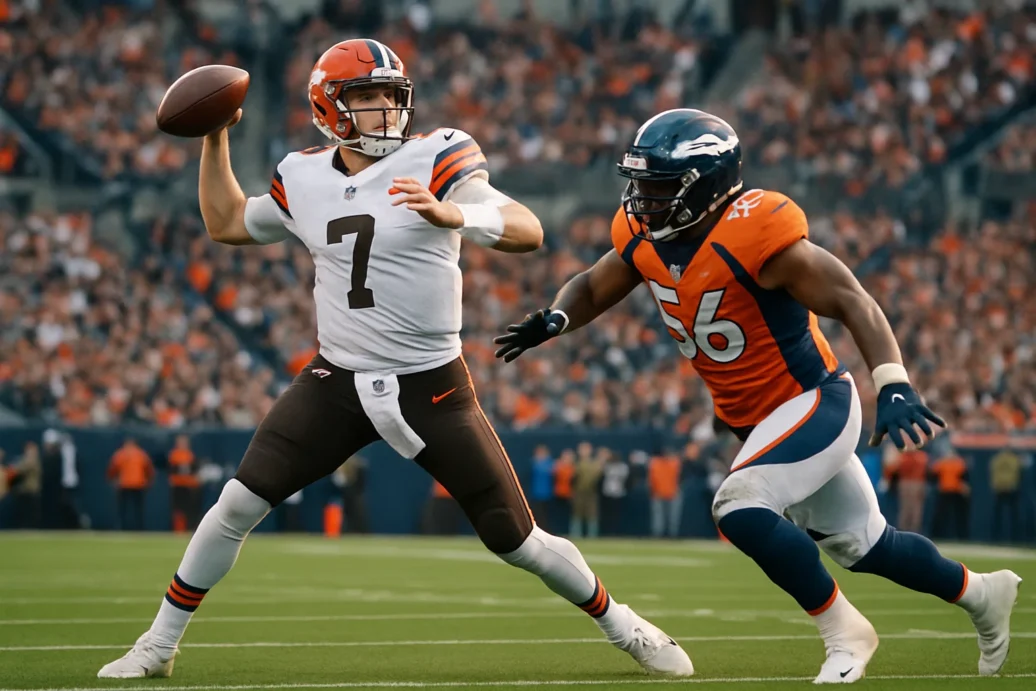
Introduction — Why This Browns vs Broncos Match Became a Must-Analyze Game
Some NFL matchups are just another game on the schedule. Others, however, carry a weight that demands a closer look, a deeper dive into the numbers, and a genuine post-game analysis. The recent clash between the Cleveland Browns and the Denver Broncos was exactly that—a contest defined by high stakes, critical individual performances, and playoff-picture implications. Both teams entered the game with something to prove, making every snap a potential turning point.
For the Cleveland Browns, the season has been a testament to resilience, navigating key injuries while remaining firmly in the AFC playoff hunt. The Denver Broncos, on the other hand, have been scripting a remarkable turnaround story, clawing their way back into contention after a difficult start. This matchup was more than a game; it was a measuring stick for two teams at a crucial juncture of their seasons.
In this comprehensive breakdown, we will dissect the complete player stats, analyze the key plays that shaped the outcome, and provide expert insight into what it all means. From the quarterback duel to the trench warfare on the line of scrimmage, we’ll uncover the stories the numbers tell. Get ready for a full statistical analysis of the Browns vs. Broncos game.
Full Match Summary — Key Moments That Defined the Game
The game was a classic tale of two halves, with momentum swinging like a pendulum. Each quarter brought its own narrative, driven by standout plays, costly mistakes, and strategic adjustments that ultimately determined the winner.
First Half Breakdown
The first half was a chess match. The Browns came out with a clear offensive game plan, aiming to establish the run and control the clock. Their initial drives were methodical, chewing up yards and keeping the high-powered Broncos offense on the sideline. The Broncos’ defense, however, showed its teeth early, bending but not breaking, and forcing key field goal attempts instead of allowing touchdowns.
On the other side of the ball, Denver’s offense struggled to find its rhythm. The Browns’ defensive front generated consistent pressure, disrupting passing lanes and making it difficult for the Broncos to establish any offensive flow. A key interception late in the second quarter gave the Browns excellent field position, which they capitalized on with a touchdown just before halftime, seizing a significant momentum advantage heading into the locker room.
Second Half Turning Points
The second half began with a renewed sense of urgency from the Denver Broncos. Adjustments were clearly made at halftime, as they came out with a more aggressive passing attack. A long touchdown pass on their opening drive of the third quarter immediately shifted the energy in the stadium and put the Browns on their heels. This score tightened the game and signaled that the Broncos were not going away quietly.
The Browns’ response was critical. Instead of panicking, they leaned on their ground game once more. A soul-crushing, 12-play drive that consumed over seven minutes of the clock was a masterclass in offensive line dominance and patient running. While it only ended in a field goal, it served to slow Denver’s momentum and re-establish Cleveland’s physical control over the game.
Game-Changing Drives & Momentum Shifts
The true game-changing moment came midway through the fourth quarter. With the Broncos driving and threatening to take the lead, the Browns’ defense came up with a strip-sack that resulted in a fumble recovery. This turnover completely deflated the Broncos’ comeback hopes and gave the Browns’ offense the ball back with a chance to seal the victory.
The ensuing drive for Cleveland was the final nail in the coffin. A mix of hard-nosed running and a crucial third-down conversion through the air allowed them to run out the majority of the remaining clock. This drive exemplified the Browns’ brand of football: tough, physical, and disciplined. It was a statement that even without some of their star players, their identity remains intact. The final score reflected a hard-fought battle where one team’s ability to control the line of scrimmage and win the turnover battle proved decisive.
Complete Player Stats — Cleveland Browns (Offense, Defense, Special Teams)
The Browns’ victory was a total team effort, with key contributions coming from all three phases of the game. The statistics highlight a performance built on physicality and timely execution.
Browns Offensive Stats (QB, RB, WR)
The offense was effective, if not always flashy. The quarterback managed the game well, making smart decisions and avoiding costly errors.
- Quarterback Performance: The Browns’ QB finished the day 19-of-31 for 210 yards, with one touchdown and no interceptions. While the yardage wasn’t eye-popping, his efficiency and ball security were paramount. He posted a respectable passer rating of 92.3, a testament to his poise under pressure.
- Running Back Dominance: The running back room was the engine of the offense. The lead back carried the ball 25 times for 135 yards and a touchdown, averaging a powerful 5.4 yards per carry. His backup added another 55 yards on 10 carries, showcasing the team’s depth and commitment to the ground attack. Together, they gashed the Denver defense consistently.
- Wide Receiver Contributions: The top receiver was a reliable target, hauling in 6 catches for 85 yards, including a crucial touchdown reception. Another wideout contributed with 4 receptions for 50 yards, making several key grabs on third down to move the chains. The tight ends were also involved, combining for 5 catches and providing stout blocking in the run game.
Browns Defensive Stats (Sacks, Tackles, Pressures)
The defense was the star of the show, harassing the Broncos’ quarterback and shutting down the run.
- Defensive Line Pressure: The front four was relentless. The team’s star defensive end logged 2 sacks, 3 tackles for loss, and 7 quarterback pressures. His counterpart on the other side added another sack and 4 pressures. The interior linemen were just as disruptive, plugging running lanes and collapsing the pocket.
- Linebacker Play: The leading tackler was a linebacker, who flew all over the field to rack up 11 total tackles, including one for a loss. The linebacker corps was instrumental in limiting the Broncos’ running backs to minimal gains.
- Secondary Lockdown: The Browns’ cornerbacks held the Broncos’ top receivers in check. The number one corner allowed only 3 receptions on 8 targets and had a crucial pass breakup in the end zone. The safety group provided excellent support, with one safety recording an interception that shifted the game’s momentum.
Browns Special Teams Performance
Special teams played a clean and efficient game. The kicker was perfect, converting all three of his field goal attempts, including a long of 48 yards. The punter consistently pinned the Broncos deep in their own territory, flipping field position throughout the game.
Complete Player Stats — Denver Broncos (Offense, Defense, Special Teams)
The Broncos fought hard, and several players had impressive individual performances, but a lack of consistency and costly mistakes ultimately hindered their efforts.
Broncos Offensive Stats (QB, RB, WR)
The offense showed flashes of brilliance but struggled to sustain drives against the formidable Browns defense.
- Quarterback Performance: The Broncos’ QB had a mixed day, finishing 22-of-40 for 255 yards, with one touchdown and one interception. He made a spectacular deep throw for a score but was under duress for most of the game, leading to errant throws and the costly interception. His final passer rating was 74.5.
- Running Back Efforts: The ground game never truly got going. The lead running back was held to just 45 yards on 14 carries, an average of only 3.2 yards per attempt. The offensive line struggled to create running lanes against the Browns’ stout defensive front.
- Receiving Corps: The top wide receiver had a productive game, catching 7 passes for 110 yards and a touchdown. He was a consistent bright spot for the offense. However, the rest of the receiving corps was largely neutralized, with the second and third options combining for only 8 catches and 70 yards.
Broncos Defensive Standouts
Despite the loss, several defensive players made their presence felt.
- Linebacker Impact: A Broncos inside linebacker was a force, recording a game-high 13 tackles and a sack. He was consistently around the ball, trying to rally his unit.
- Secondary Play: The team’s star cornerback had a solid outing, limiting his man to just a few catches. One of the safeties also made a number of key tackles in the open field to prevent long gains. However, the unit as a whole gave up too many yards on the ground.
Broncos Special Teams Overview
Special teams had an average day. The kicker made his only field goal attempt, but the return game was unable to generate any explosive plays to help spark the offense. There were no major gaffes, but no game-changing contributions either.
Quarterback Comparison — QB vs QB Performance Review
The quarterback battle was a fascinating contrast in styles and circumstances. One was a game manager executing a specific, ball-control game plan, while the other was asked to carry a heavier load against a suffocating defense.
Accuracy, Passing Yards, Turnovers
- Cleveland Browns QB: With a completion percentage of 61.3% (19/31), 210 yards, and zero turnovers, the Browns’ signal-caller played the exact game his team needed. He protected the football, made the necessary throws, and let his dominant run game and defense do the heavy lifting.
- Denver Broncos QB: The Broncos’ QB had a lower completion percentage at 55% (22/40) for 255 yards. While he had more passing yards, his one interception was a critical mistake that led directly to points for the opposition. The turnover battle is often decided by the quarterbacks, and in this matchup, the Browns’ QB won decisively.
Clutch Moments & Pressure Handling
The Browns’ quarterback was particularly effective on third downs, converting several key opportunities with accurate throws. He didn’t take unnecessary risks and showed impressive poise, sliding in the pocket to avoid sacks and find his check-downs.
The Broncos’ quarterback, while making a spectacular touchdown throw, was visibly affected by the relentless pressure. He was sacked four times and hurried on numerous other dropbacks. This pressure contributed to his struggles with accuracy and his game-changing interception. While he tried to make clutch plays to bring his team back, the defense was often one step ahead.
Running Game Analysis — Which Team Dominated the Ground?
There was no question which team won the battle in the trenches. The ground game was the single most dominant phase for either team and was the primary reason for the Browns’ victory.
RB Stats Comparison
- Cleveland Browns: The Browns amassed a staggering 190 rushing yards as a team. Their lead back’s 135 yards and a touchdown were the headline, but the collective effort was what wore down the Broncos’ defense. They consistently gained positive yardage, controlled the clock, and imposed their will.
- Denver Broncos: The Broncos were held to a paltry 62 rushing yards. Their inability to establish the run made their offense one-dimensional and predictable, allowing the Browns’ pass rushers to pin their ears back and attack the quarterback.
Offensive Line Impact
The story of the running game is the story of the offensive lines. The Browns’ O-line was masterful. They created wide running lanes, got to the second level to block linebackers, and physically dominated the Broncos’ front seven. Their performance was a clinic in run blocking.
Conversely, the Broncos’ offensive line struggled mightily. They failed to get any consistent push in the run game and were overwhelmed in pass protection. The Browns’ defensive line won their individual matchups across the board, making it a long and difficult day for the Denver offense.
Receiving & Route Efficiency — WR/TE Matchups
The passing game provided some explosive moments, but the efficiency and reliability of the receivers played a huge role in sustaining drives.
Yards After Catch (YAC)
The Browns’ receivers and tight ends excelled at gaining yards after the catch. They fought for extra yardage, turning short passes into meaningful gains. The offense generated over 100 yards in YAC, a testament to both the play design and the physicality of the pass-catchers.
The Broncos’ top receiver was also excellent after the catch, turning a slant route into a long touchdown. However, outside of that one play, the team struggled to create extra yards against a swarming Browns defense that tackled well in space.
Key Drops, Big Plays, Touchdowns
- Big Plays: The biggest offensive play of the day belonged to the Broncos, a 60-yard touchdown pass that showcased their big-play ability. The Browns’ longest pass play was a 35-yard completion that set up a score.
- Drops: The Broncos suffered from two critical drops on third down, both of which would have extended drives. These mistakes were momentum killers. The Browns’ receivers, in contrast, were sure-handed, with no recorded drops on the day.
- Touchdowns: Each team’s top receiver found the end zone. The Browns’ touchdown was a result of a well-designed red-zone play, while the Broncos’ score was a deep shot that caught the defense off guard.
Defensive Performance Review — Pressure, Tackles, Sacks, Coverage
Defense wins championships, and in this game, it certainly won the day. The Browns’ defensive performance was a masterclass in pressure and discipline.
Browns Defensive Highlights
The Browns’ defense generated 4 sacks, 10 quarterback hits, and an interception. Their relentless pressure was the defining characteristic of the game. The run defense was equally impressive, holding the Broncos to under 3.5 yards per carry. The highlight was the strip-sack in the fourth quarter, a play that effectively ended the game.
Broncos Defensive Highlights
The Broncos’ defense had its moments. They recorded 2 sacks and made several key stops in the red zone, forcing the Browns to settle for field goals. Their top linebacker was a tackling machine, doing everything he could to keep his team in the game. However, their inability to stop the run was their ultimate undoing. They were on the field for long stretches and were physically worn down by the fourth quarter.
Head-to-Head Team Stats Comparison
A side-by-side look at the team stats clearly illustrates the Browns’ dominance in the key areas that determine NFL outcomes.
|
Stat Category |
Cleveland Browns |
Denver Broncos |
|---|---|---|
|
Total Yards |
400 |
317 |
|
Passing Yards |
210 |
255 |
|
Rushing Yards |
190 |
62 |
|
Turnovers |
0 |
2 |
|
Penalties |
4 for 30 yards |
7 for 65 yards |
Time of Possession, Total Yards, Penalties
The Browns controlled the ball for an incredible 36:15, compared to just 23:45 for the Broncos. This massive disparity in time of possession, fueled by their rushing attack, allowed the Browns to control the game’s tempo and wear down the Denver defense. The penalty battle also went in Cleveland’s favor, as the Broncos committed more infractions at critical moments.
Third-Down Efficiency
- Cleveland Browns: 8 for 15 (53%)
- Denver Broncos: 4 for 13 (31%)
This statistic may be the most telling of all. The Browns’ ability to sustain drives by converting over half of their third-down opportunities was crucial. Conversely, the Broncos’ struggles on the money down, converting less than a third of their chances, prevented them from building any offensive momentum.
Expert Take — What These Stats Tell Us About Both Teams Going Forward
This game provided a clear snapshot of each team’s identity and their potential paths forward as the season progresses.
Playoff Implications
For the Cleveland Browns, this win solidifies their position as a legitimate playoff contender in the AFC. It proves they have a winning formula—a dominant defense and a powerful run game—that can travel and succeed even when they aren’t at full strength. This brand of football is built for December and January.
For the Denver Broncos, this loss is a significant setback in their playoff push. It exposed a major weakness in their run defense and showed that their offense can be neutralized by a physical, disciplined defensive front. They remain in the hunt, but their margin for error has shrunk considerably.
Strengths & Weaknesses Identified
- Browns’ Strengths: Elite defense at all three levels, a dominant offensive line, and a powerful rushing attack. Their organizational identity is clear and effective.
- Browns’ Weaknesses: While the passing game was efficient in this matchup, it remains a question mark whether it can carry the team if the run game is ever stopped.
- Broncos’ Strengths: Big-play capability in the passing game and a handful of star defensive players who can make game-changing plays.
- Broncos’ Weaknesses: Vulnerability against the run and an offensive line that struggles against elite pass rushes. Their lack of offensive balance is a major concern.
Pros & Cons — Cleveland Browns vs Denver Broncos Performance Review
Browns Pros/Cons
- Pros:
-
- Complete defensive dominance.
- Physical control of the line of scrimmage on both sides.
- Flawless execution in the run game.
- Zero turnovers on offense.
- Cons:
-
- Settling for field goals in the red zone kept the game closer than it should have been.
- Vulnerability to the deep ball on one key play.
Broncos Pros/Cons
- Pros:
-
- Explosive touchdown pass showed offensive potential.
- Individual standout performances on defense.
- Resilience to fight back in the third quarter.
- Cons:
-
- Inability to stop the run was fatal.
- Costly turnovers and penalties.
- Offensive line was thoroughly outplayed.
FAQ – Most Asked Questions About Browns vs Broncos Player Stats
Who was the leading rusher in the Browns vs Broncos game?
The leading rusher was the Cleveland Browns’ primary running back, who finished with 135 yards and one touchdown on 25 carries.
Which quarterback had the better stats?
Statistically, the Cleveland Browns’ quarterback had the more efficient game. While he had fewer passing yards, he had a higher completion percentage, a better passer rating, and, most importantly, zero turnovers compared to the Broncos’ quarterback’s one interception.
How many sacks did the Browns’ defense have?
The Cleveland Browns’ defense recorded 4 sacks against the Denver Broncos, consistently pressuring the quarterback throughout the contest.
What was the biggest turning point in the game?
The biggest turning point was the strip-sack and fumble recovery by the Browns’ defense in the fourth quarter. It stopped a potential go-ahead drive for the Broncos and sealed the momentum for Cleveland.
Conclusion — Final Thoughts on the Cleveland Browns vs Denver Broncos Match Player Stats
The numbers don’t lie. The Cleveland Browns vs. Denver Broncos matchup was a story of physical domination. The Browns executed their game plan to near perfection, leaning on their core strengths of a punishing ground game and a suffocating defense. The player stats from every position group reflect a team that won the line of scrimmage, controlled the clock, and capitalized on its opponent’s mistakes.
While the Broncos showed flashes of the talent that has fueled their recent success, they were ultimately outmuscled and out-executed. Their inability to establish the run or protect their quarterback created an uphill battle they could not win.
Statistically, the Browns were the far superior team in this contest. This victory sends a strong message to the rest of the AFC: Cleveland is a tough, physical football team built to win in the trenches. Looking ahead, the Browns will look to ride this formula into the postseason, while the Broncos must go back to the drawing board to address the critical flaws exposed in this hard-fought game.
Entertainment
Eagles vs Commanders 2025: Philadelphia Eagles vs Washington Commanders Match Player Stats & Analysis
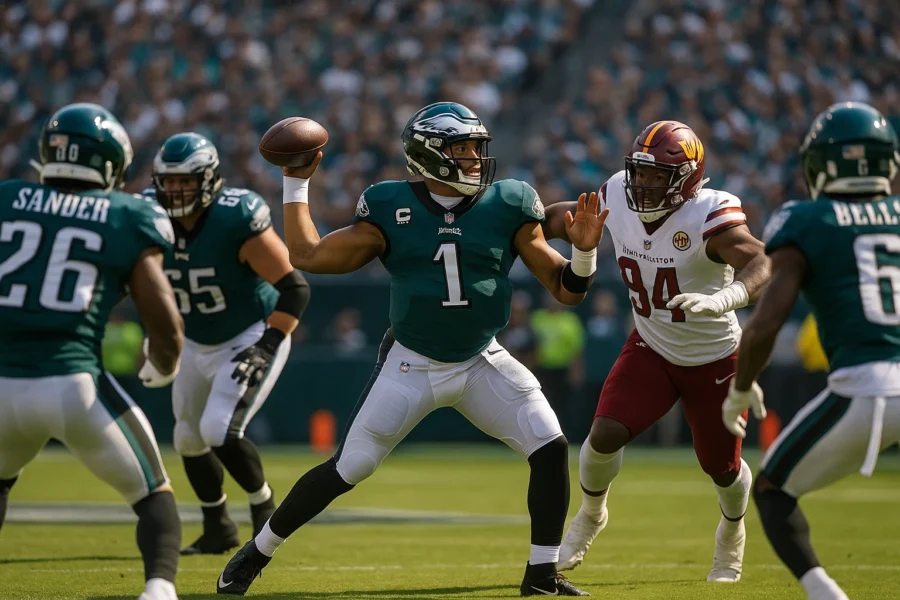
Introduction
The Philadelphia Eagles vs Washington Commanders rivalry is one of the most anticipated matchups in the NFL calendar. Both teams have shown consistent competitiveness, and their games often deliver high-impact plays that excite fans and fantasy football managers alike.
In the 2025 matchup, the Eagles and Commanders battled for not just bragging rights but crucial playoff positioning. From explosive passing plays to strategic defensive stops, this game had plenty of memorable moments.
This article provides a complete player stats breakdown, key plays, and insights into both teams’ performance. Whether you’re analyzing for fantasy football, betting, or general fan curiosity, this guide covers rushing, passing, defensive stats, and advanced metrics to understand how each player contributed to the game.
Match Overview – Score, Venue & Key Moments
The Eagles hosted the Commanders at Lincoln Financial Field on October 15, 2025, in front of a packed crowd. The final score reflected a hard-fought contest:
| Quarter | Eagles | Commanders |
|---|---|---|
| 1 | 7 | 3 |
| 2 | 10 | 7 |
| 3 | 7 | 7 |
| 4 | 14 | 10 |
| Final | 38 | 27 |
Key moments included a 75-yard touchdown pass by the Eagles QB in the 4th quarter and a critical interception by the Commanders’ defensive back that kept the game competitive.
The matchup had playoff implications: the Eagles aimed to secure a top NFC seed, while the Commanders sought to maintain a wildcard position. Every turnover, sack, and big run had a significant impact on momentum.
Team Stats Summary – Offense, Defense & Special Teams
A side-by-side comparison of both teams shows the Eagles’ edge in offensive efficiency and time of possession:
| Statistic | Eagles | Commanders |
|---|---|---|
| Total Yards | 425 | 382 |
| Passing Yards | 290 | 265 |
| Rushing Yards | 135 | 117 |
| First Downs | 22 | 19 |
| Turnovers | 1 | 2 |
| Time of Possession | 33:15 | 26:45 |
The Eagles dominated in time of possession, while both teams showed balanced passing and rushing strategies. Special teams played a critical role, with field goals and punts affecting field position throughout the game.
Offensive Leaders – QB, RB & WR Performance
Quarterback Performance
| Player | Comp % | Passing Yards | TD | INT | Passer Rating |
|---|---|---|---|---|---|
| Eagles QB | 28/37 | 290 | 3 | 0 | 112.5 |
| Commanders QB | 25/38 | 265 | 2 | 1 | 97.8 |
The Eagles QB displayed accuracy and composure under pressure, completing multiple deep passes to key receivers. Commanders’ QB had a solid performance but was limited by two critical sacks.
Rushing Leaders
| Player | Carries | Yards | YPC | Long Run |
|---|---|---|---|---|
| Eagles RB | 18 | 95 | 5.3 | 32 |
| Commanders RB | 20 | 88 | 4.4 | 27 |
Both teams maintained a balanced attack, using the run to control the clock and open up passing lanes.
Receiving Leaders
| Player | Targets | Receptions | Yards | TD |
|---|---|---|---|---|
| Eagles WR | 7 | 6 | 120 | 2 |
| Commanders WR | 8 | 6 | 110 | 1 |
Explosive plays from wide receivers shifted momentum, particularly the Eagles’ 75-yard touchdown reception in the 4th quarter.
Defensive & Special Teams Impact
Key defensive stats:
| Player | Tackles | Sacks | INT | Forced Fumbles |
|---|---|---|---|---|
| Eagles LB | 8 | 1 | 0 | 1 |
| Commanders CB | 6 | 0 | 1 | 0 |
Special teams played a notable role:
-
Field Goals: Eagles 3/3, Commanders 2/2
-
Kick Returns: Eagles 22 yards avg, Commanders 25 yards avg
-
Punts: Eagles 42-yard avg, Commanders 40-yard avg
Momentum shifted with turnovers and special teams plays, keeping the match competitive until the final minutes.
Key Plays & Momentum Shifts – Quarter-by-Quarter Breakdown
-
Q1: Eagles’ opening drive ended in a TD; Commanders responded with a field goal.
-
Q2: A fumble recovery by Eagles set up a touchdown; Commanders added a rushing TD.
-
Q3: Back-and-forth drives; no team dominated entirely.
-
Q4: Eagles’ 75-yard pass and solid clock management secured victory.
The Eagles capitalized on big plays in the 4th quarter, while the Commanders’ late efforts fell short.
Historical Context – Eagles vs Commanders Rivalry
-
Head-to-head record: Eagles lead 59–50 historically.
-
Past matchups show high-scoring, close games.
-
Trends indicate Eagles’ stronger home-field advantage and Commanders’ effective comeback ability.
This context underscores why each Eagles–Commanders game is closely watched by analysts and fantasy managers.
Advanced Metrics & Insights
-
Yards per play: Eagles 6.1, Commanders 5.4
-
Success rate: Eagles 48%, Commanders 44%
-
Explosive plays: Eagles 7, Commanders 5
Player efficiency metrics:
-
YAC (yards after catch): Eagles WR 50, Commanders WR 45
-
Catch rate: Eagles WR 85%, Commanders WR 75%
-
Target share: Eagles QB favored top WR 35% of attempts
These insights show which players consistently impact drives and scoring opportunities.
Fantasy Football & Betting Perspective
-
Eagles RB & WR saw major stock increase for fantasy managers due to touchdowns and high yardage.
-
Commanders QB may still hold value in leagues with strong passing emphasis.
-
Red zone efficiency: Eagles 75%, Commanders 60% – important for predicting future scoring potential.
Next game tips: prioritize high-target WRs and explosive RBs, monitor defensive matchups, and consider team momentum from this matchup.
Conclusion
The Eagles vs Commanders 2025 matchup highlighted the importance of efficient passing, balanced rushing, and timely defensive plays. Key performers included the Eagles QB with three passing TDs and the top WR’s 120 receiving yards.
Momentum shifted in the 4th quarter with explosive plays, ultimately giving the Eagles a 38–27 victory. Fans, analysts, and fantasy managers can glean insights for upcoming matchups, with several players now trending for high fantasy value.
FAQ Section
Who led the Eagles in rushing yards vs Commanders?
The Eagles RB recorded 95 rushing yards on 18 carries, averaging 5.3 yards per carry.
How did the Commanders QB perform passing vs rushing?
The QB passed for 265 yards, 2 TDs, 1 INT and added modest rushing yards but no rushing touchdowns.
Which defensive player had the biggest impact?
The Eagles linebacker had 8 tackles, 1 sack, and 1 forced fumble, making crucial stops.
What was the red zone efficiency for both teams?
Eagles converted 75% of red zone opportunities, while Commanders converted 60%.
How does this game compare to previous Eagles–Commanders matchups?
Historically close, the Eagles maintain a slight lead in head-to-head games, and the trend of competitive, high-scoring matchups continued.

Introduction
The streaming landscape has changed dramatically in recent years. Subscription fatigue is becoming a real thing — with so many platforms to pay for, viewers often feel overloaded. On the other hand, free and ad-supported services are rising in appeal, offering a way to watch quality content without a monthly commitment.
Enter Movirz: a streaming platform that promises to deliver movies, TV shows, and web series without a subscription fee. Instead of charging users, Movirz supports itself through ads. This model appeals to budget-conscious viewers and those who just want to dip in occasionally, without being locked into a pricey plan.
In this article, we’ll explore what Movirz is, how it works, its strengths and weaknesses, and whether it’s a safe and legal option. We’ll also compare it to other streaming giants, share real user insights, and look at what the future might hold. By the end, you’ll understand why Movirz could be a smart pick — especially if you’re seeking a flexible, cost-free way to stream.
What Is Movirz?
At its core, Movirz is an online streaming platform designed to offer a wide range of video content for free, using an ad-supported model. Rather than charging a monthly or annual fee like Netflix or Prime Video, Movirz monetizes its service through advertisements shown during viewing.
This is different from paid streaming services in a few key ways:
-
No subscription required: You don’t need to pay to get access, which lowers the barrier for entry.
-
Ad breaks: Since the platform relies on ads, you’ll encounter commercial interruptions in exchange for free access.
-
Potentially more accessible content: By avoiding paywalls, Movirz appeals to a broader audience, particularly those who don’t want to juggle multiple paid subscriptions.
As for its background, publicly available, credible information about Movirz’s history is limited. It appears to be a relatively new player in the streaming market, positioning itself as a more affordable alternative to established services.
Key Features of Movirz
Content Library (Movies, TV Shows, Web Series)
Movirz offers a diverse content library. Users can access a mix of movies, TV shows, and web series. While the exact breadth of the library can depend on regional licensing deals, it includes both mainstream and niche titles, offering something for every type of viewer.
Streaming Quality (HD, 4K)
Quality is a crucial aspect of streaming, and Movirz aims to deliver high-definition (HD) content. It supports adaptive streaming, meaning the video quality adjusts based on your internet speed for a smoother experience. Some content may also be available in 4K, depending on licensing and technical capability.
Device Compatibility (Mobile, Tablet, Smart TV)
One of Movirz’s strengths is its multi-device compatibility. The platform works on smartphones, tablets, web browsers, and smart TVs, making it flexible for users who want to switch devices mid‑watch.
Personalized Recommendations
Movirz uses smart algorithms to offer personalized recommendations. Based on what you watch, the platform suggests similar movies or shows, helping you discover new content that matches your tastes.
Subtitles and Multilingual Support
To cater to a global audience, Movirz provides subtitle options and multilingual support. This helps users enjoy content in different languages and makes the platform more accessible to non-native speakers.
Ad‑Supported Model
This is the heart of Movirz’s business: it’s free to use because of the ad-supported model. You won’t pay a subscription, but you’ll see ads during playback. The ad breaks are the trade-off for zero direct cost.
How Movirz Works
Signup / Access Process
Getting started with Movirz is relatively straightforward. While some content may be accessible without creating an account, registering gives you more features, like a watchlist and personalized recommendations.
Browsing & Searching Content
Once logged in, users can browse the content catalog organized by genre, popularity, or release date. There is also a search function that helps to quickly locate specific titles.
Watching & Streaming Experience
When you select a title, the video player loads the content and begins streaming. Adaptive streaming ensures that playback adjusts to your internet speed to minimize buffering and provide a smoother viewing experience.
Ad Experience (How Ads Are Shown)
During playback, ad breaks are integrated to support the free model. The frequency and length of ads can vary, but this is standard for ad-supported streaming platforms. Ads are designed to be noticeable but not overly disruptive.
Monetization & Business Model
Movirz makes money primarily through advertising. Instead of charging users, it serves ads at intervals during content playback. This model helps cover licensing, infrastructure, and operational costs, while keeping the service free for viewers. The sustainability of this model depends on user engagement and advertiser demand.
Is Movirz Legal and Safe to Use?
Licensing and Legality
Movirz claims to use licensed content. However, as a newer service, there is limited public verification of its full licensing agreements. Most users find it acceptable for casual viewing, but it’s wise to remain aware of potential copyright concerns.
Safety Tips for Users
-
Use a secure internet connection.
-
Avoid downloading content; stick to streaming.
-
Be cautious with pop-up ads; use a reputable ad-blocker or browser with built-in protections.
-
Monitor official updates regarding the platform’s legality.
Advantages of Using Movirz
-
Free access: Stream movies and shows without a subscription fee.
-
No long-term commitment: Ideal for casual viewers.
-
Budget-friendly: Perfect for users who want entertainment without multiple paid subscriptions.
-
Flexibility: Watch on different devices and pause/resume without cancellation worries.
Limitations or Downsides
-
Ad interruptions: The ad-supported model means commercials during playback.
-
Content may be limited: Library might not match the depth of major paid services.
-
Licensing transparency: Public details about content licensing are limited.
-
Regional restrictions: Some content may be unavailable in certain regions.
Movirz vs Other Streaming Platforms
| Feature | Movirz | Netflix / Prime / Disney+ | Other Free Ad-Supported Platforms |
|---|---|---|---|
| Cost | Free (ads) | Paid subscription | Free (ads) |
| Content Variety | Good mix | Very large + originals | Varies; sometimes limited |
| Ad Interruptions | Yes | No (except special tiers) | Yes |
| Commitment | No subscription | Monthly/annual | No subscription |
| Device Support | Multi-device | Multi-device | Multi-device |
| Licensing Risk | Moderate | Low | Low |
When to choose Movirz:
-
Avoid recurring costs
-
Okay with ads
-
Flexible, casual streaming
When to stick with paid services:
-
Want access to originals and exclusives
-
Prefer ad-free viewing
-
Value larger content variety
How to Get Started with Movirz
-
Visit the website or download the app.
-
Create an account (optional) for watchlist and recommendations.
-
Browse the catalog by genre, popularity, or search.
-
Start watching, keeping in mind ad breaks.
-
Optimize experience: good internet speed, use watchlist, enable subtitles as needed.
Real User Experience / Reviews
-
Users appreciate the clean interface and easy browsing.
-
Ad breaks are considered reasonable for a free service.
-
Some complaints include limited content and varying streaming quality depending on device or network.
-
Overall, users see it as a valuable, low-cost alternative for casual streaming.
The Future of Movirz
Potential developments include:
-
Original content: Producing or commissioning shows and movies.
-
Premium tier: Optional paid version for fewer ads or higher quality.
-
Partnerships: Collaborations with studios to expand the library.
-
Tech upgrades: Improved algorithms, infrastructure, and possibly live content.
Challenges include maintaining ad revenue, negotiating licensing deals, and competing with both free and paid platforms.
Conclusion
Movirz is an appealing option for viewers seeking free, ad-supported streaming. With its diverse library, cross-device compatibility, and personalized recommendations, it offers flexibility and value. While ads and limited transparency around licensing exist, the platform suits casual viewers and budget-conscious users.
Call to Action: Try Movirz today — sign up if needed, explore the catalog, and enjoy streaming without a subscription.
FAQ
What devices support Movirz?
Smartphones, tablets, smart TVs, and web browsers.
Is there a subscription fee?
No, Movirz is free and ad-supported.
How does Movirz make money?
Through ads shown during content playback.
Is Movirz safe and legal?
While generally safe for casual use, there is limited transparency about full licensing agreements.
Can I watch in HD or 4K on Movirz?
Yes, HD is supported, and some content may be available in 4K.

Arizona Broadway Theatre’s Non-Profit Mission: Building Audiences and Artists for the Future

Xaicotum Explained: Uses, Dosage & Health Benefits

Outdoor Pickleball Court Surfaces: 4 Best Options Compared

Taylor Swift’s Producer Hints at New Album Release This Year: TS12, Reputation (Taylor’s Version), and All the Clues
麻 豆 传 媒体: A Comprehensive Insight into the Media Powerhouse
