
Blog
Who is Elizabeth Anderson Martin? The Equestrian, Artist, and Force Beyond William Shatner

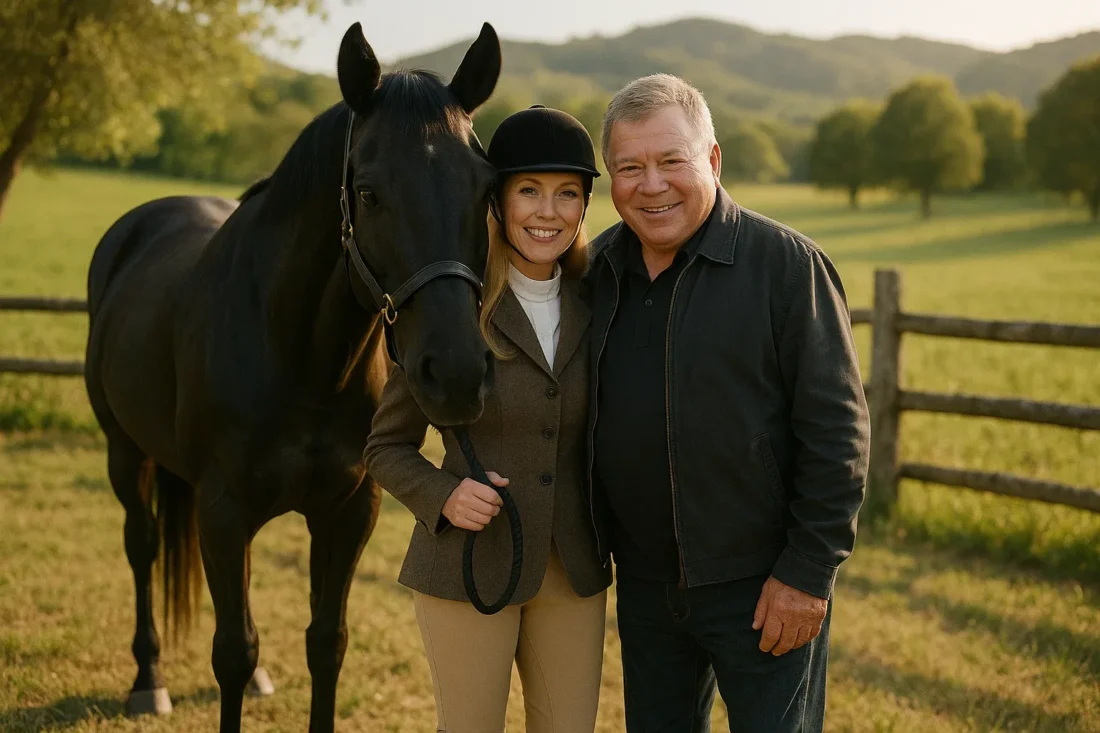
An Introduction to Elizabeth Anderson Martin
While the name Elizabeth Anderson Martin is often linked to Hollywood icon William Shatner, her story is one of quiet strength, lifelong passion, and personal accomplishment that stands firmly on its own. Best known to the public as the fourth wife of the Star Trek legend, Martin has cultivated a life rich with purpose, far from the glare of celebrity. She is an accomplished equestrian, a talented photographer, and a woman who has handled public life and private transitions with remarkable grace. Her journey is not one defined by her famous ex-husband but by her deep connection to the equestrian world and her artistic pursuits.
This article delves into the life of Elizabeth Anderson Martin, tracing her path from her early days to her respected status in the horse-training community. We will explore her professional achievements, her nearly two-decade marriage to Shatner, how their shared passions brought them together, and the details of their amicable separation. Furthermore, we’ll look at what Elizabeth Anderson Martin is doing today, rediscovering her passions and building a life of quiet fulfillment. Her story is a compelling look at a person who, while connected to fame, has always been guided by her own compass.
The Formative Years and Love for Horses
Elizabeth Anderson Martin was born on December 30, 1958, in the United States. Unlike the celebrity world she would later be associated with, her upbringing was rooted in a more private, rural setting that fostered a deep appreciation for nature and animals. This environment was the perfect incubator for what would become her life’s greatest passion: horses. From a very young age, Elizabeth demonstrated a natural affinity for these majestic animals, an interest that her family supported and encouraged. By the age of five, she was already taking riding lessons and spending much of her time at local stables.
This was more than just a hobby; it was a calling. Her connection with horses was intuitive, and she dedicated her youth to understanding their behavior, needs, and language. This hands-on experience laid a crucial foundation for her future career. She wasn’t just learning to ride; she was learning to communicate and build partnerships with the animals, a philosophy that would later define her training style.
Early Equestrian Competitions
As a teenager, Elizabeth began translating her skills into the competitive arena. She participated in various local and state-level equestrian events, specializing in disciplines that required precision and a strong horse-and-rider bond, such as dressage and showmanship. These competitions were not about winning ribbons but about honing her craft and deepening her understanding of equine dynamics. Her calm and patient demeanor made her stand out, and she began to earn a reputation as a thoughtful and skilled horsewoman long before she ever appeared on a red carpet.
Developing a Training Philosophy
Her early experiences shaped a training philosophy centered on mutual respect and gentle communication. Elizabeth believed in working with a horse’s natural instincts rather than against them. This approach was less about dominance and more about partnership, a perspective that would make her a sought-after trainer. This period of her life was instrumental in building the expertise and confidence that would define her professional identity, separate from any future public associations.
A Professional Equestrian Before the Spotlight
Before her marriage to William Shatner brought her into the public eye, Elizabeth Anderson Martin had already carved out a successful and respected career in the equestrian world. Her transition from a passionate young rider to a professional trainer was a natural progression. By her twenties, she was not only competing but also training horses and coaching other riders. Her specialization in dressage, a discipline often called “horse ballet” for its elegance and precision, showcased her sophisticated understanding of equine biomechanics and psychology.
Her training business grew through word-of-mouth, with clients drawn to her patient methods and her ability to bring out the best in both horse and rider. She became known for her ability to work with difficult or sensitive horses, transforming them into willing and confident partners. Her professional life was a testament to her dedication and expertise, establishing her as a credible and influential figure within her community.
Contributions to Equine Therapy
Beyond competitive training, Elizabeth was also deeply involved in the world of equine-assisted therapy. She recognized the profound healing power of horses and dedicated time to programs that helped individuals with physical, emotional, and psychological challenges. She worked with organizations that provided therapeutic riding for children with disabilities, veterans suffering from PTSD, and others in need. This work highlighted her compassionate nature and her desire to use her skills to make a positive impact on people’s lives. It was this combination of technical skill and genuine empathy that made her a true leader in the equestrian field.
A Recognized and Respected Horsewoman
Through her work in training and therapy, Elizabeth earned invitations to speak at clinics, judge at local shows, and participate in equine expos. She was a horsewoman’s horsewoman—respected not for fame or connections, but for her tangible skills and deep-seated love for the animals she worked with. This solid professional foundation ensured that when she did enter the public sphere, she did so with her own established identity.
Meeting William Shatner: A Bond Forged by Horses
The story of how Elizabeth Anderson Martin and William Shatner met is a perfect reflection of their shared passions. Both were deeply involved in the equestrian world, and their paths crossed in the late 1990s at horse shows and other equine events. Shatner, a lifelong and avid horseman himself, was known for breeding and showing American Saddlebreds. He was immediately drawn to Elizabeth’s expertise, grace, and profound connection with the animals.
They bonded over their mutual love for horses, spending hours discussing everything from breeding lines to training techniques. Their relationship developed organically, rooted in a shared lifestyle and value system that prized the outdoors and the company of animals over the glitz of Hollywood. For Shatner, Elizabeth’s authenticity and down-to-earth nature were a refreshing contrast to the world he inhabited as an actor.
A Marriage of Shared Interests
The couple married in Lebanon, Indiana, in 2001. It was Shatner’s fourth marriage, and for nearly two decades, it appeared to be his most stable. Their union was less about the fusion of two celebrity lives and more about the partnership of two people who genuinely enjoyed each other’s company and interests. They bought property together, built stables, and created a life that revolved around their horses. Elizabeth, who then became known as Elizabeth Shatner, was often seen by his side, not as a passive spouse but as an active partner in their shared endeavors.
Collaboration in the Equestrian World
Their personal partnership extended into their professional and philanthropic lives. They co-hosted the “Hollywood Charity Horse Show,” an event Shatner had founded to raise money for children’s charities. Elizabeth’s involvement elevated the event, bringing her expertise and network to the cause. They also collaborated on equine-related projects, with her knowledge complementing his public platform. This shared purpose was a cornerstone of their marriage and a reason it was viewed by many as a strong and successful match.
Life During the Marriage to a Hollywood Icon
For almost two decades, Elizabeth Anderson Martin navigated life as the wife of one of the most recognizable actors in the world. While she largely eschewed the spotlight, she was a constant and poised presence at William Shatner’s side for red-carpet events, award shows, and public appearances. She handled the attention with a quiet dignity that earned her admiration. Unlike many who marry into fame, Elizabeth never appeared to seek it for herself. Her focus remained on her passions and her partnership with her husband.
Their life together was a unique blend of Hollywood and the countryside. Their home in Southern California was a sprawling estate with extensive equestrian facilities, allowing them to indulge their shared love for horses. This was their sanctuary, a place where they could escape the demands of Shatner’s career and immerse themselves in the rhythm of farm life.
Balancing a Public and Private World
Elizabeth played a crucial role in grounding Shatner. In his autobiographies and interviews, he often spoke of her calming influence and how she helped him stay connected to the things that mattered most. While he was off filming or making public appearances, she managed their home and their beloved animals. This balance seemed to be the key to their long-lasting relationship. She supported his career but maintained her own identity and interests, ensuring that their lives were a partnership of equals.
Artistic Collaborations and Shared Endeavors
Their collaboration was not limited to charity events. Elizabeth’s artistic eye, particularly in photography, found its way into their shared life. She photographed their horses and the beautiful landscapes of their properties, creating a visual diary of their life together. Shatner, in turn, supported her artistic pursuits. She also co-wrote a song, “Together,” which appeared on Shatner’s 2004 album, Has Been. The track was a touching tribute to their bond, offering a rare public glimpse into their private feelings for one another. Their marriage was a testament to the idea that two people from different worlds can build a strong and fulfilling life together when it is based on mutual respect and shared values.
The Quiet Separation and Amicable Divorce
In December 2019, news outlets reported that William Shatner had filed for divorce from Elizabeth Anderson Martin, a move that surprised many fans who had come to see them as a solid and enduring couple. After nearly 18 years of marriage, their separation marked the end of a significant chapter for both. The divorce was finalized swiftly, in early 2020, and was characterized by a remarkable lack of public drama.
Unlike many high-profile splits, theirs was handled with discretion and mutual respect. Sources close to the couple described the process as amicable, with both parties committed to ending their marriage on peaceful terms. There were no children from the marriage, which simplified the legal proceedings. However, the division of their shared assets, particularly their beloved horses and properties, was a central point of the settlement.
The Prenuptial Agreement and Division of Assets
The couple had a prenuptial agreement in place, which reportedly streamlined the divorce process. According to legal documents, Shatner and Martin divided their assets based on the terms they had agreed upon at the start of their marriage. Shatner’s estimated net worth of over $100 million remained largely his, while Elizabeth received a settlement. More personally, the agreement outlined the division of their cherished animals. Shatner kept two of their horses, while Elizabeth also retained ownership of several horses and was given access to their Kentucky farm to continue her work.
A Rekindled Friendship?
In the years following their divorce, both William and Elizabeth have spoken of each other with respect. In a surprising turn of events, recent reports in late 2024 and early 2025 suggest the pair have reconciled. They have been seen together at public events, and insiders claim they are back together, finding that their bond was too strong to let go of completely. While they remain legally divorced, they have reportedly resumed their partnership, proving that their connection transcends a legal document. This development speaks volumes about the deep-seated friendship and mutual admiration that always underpinned their relationship.
Elizabeth’s Life After the Divorce
In the years immediately following her divorce from William Shatner, Elizabeth Anderson Martin deliberately stepped back from the public eye, choosing a life of privacy and personal focus. While Shatner continued to make headlines, including his historic trip to space in 2021, Elizabeth embarked on a new chapter centered on her core passions: horses and art. She moved away from the Los Angeles area, reportedly spending more time in quieter, rural settings that better suited her personality.
This period was not one of retreat but of quiet rediscovery. Free from the obligations of being a celebrity’s wife, she had the opportunity to fully immerse herself in the work that had always brought her joy. She continued her involvement in the equestrian world, albeit on a more personal and less public scale. Her focus shifted from large-scale charity events to more intimate forms of engagement, such as private training and mentoring.
Returning to Her Artistic Roots
A significant part of Elizabeth’s life post-divorce has been her return to photography. An artist at heart, she had always possessed a talent for capturing the beauty of the natural world. In 2023 and 2024, she was reportedly seen attending wildlife photography workshops and spending time in places like Montana and the Pacific Northwest, honing her craft. Her work, which primarily features horses, rustic landscapes, and moments of quiet country life, has been described as both technically skilled and emotionally resonant. While she has not pursued a commercial photography career, her work has been featured in local art exhibits and equestrian publications, earning her praise for its authenticity and artistry.
A Focus on Personal Well-being
Those who know her say that Elizabeth has embraced a peaceful, semi-retired lifestyle. Her days are filled with activities that nourish her soul—riding her horses, exploring nature with her camera, and spending time with a close circle of friends. She has successfully navigated the transition from a public life to a private one, demonstrating a resilience and self-assuredness that is truly admirable. As of 2025, she appears to be living a life that is authentically and unapologetically her own.
The Professional Photographer: An Artistic Eye
Beyond her identity as an equestrian, Elizabeth Anderson Martin is a gifted photographer with a distinct artistic vision. While this talent was present throughout her life, it has come into sharper focus in recent years. Her photography is an extension of her love for the natural world, capturing the subjects she knows best: horses, landscapes, and the subtle beauty of rural life. Her work is characterized by its emotional depth and its ability to convey a sense of peace and connection.
Her style is not that of a commercial photographer aiming for glossy, perfect images. Instead, her photos are authentic and evocative, telling a story with each frame. She has a unique ability to capture the spirit of a horse in a single shot—its strength, its gentleness, its wildness. Her landscape photography is equally compelling, often featuring the soft light of dawn or dusk and the rugged beauty of the American West.
From Hobby to Acclaimed Artistry
What began as a personal hobby has quietly grown into a more recognized artistic pursuit. Although she maintains a low profile, Elizabeth’s work has not gone unnoticed. In recent years, her photographs have been featured in several local art galleries and community exhibitions, particularly in areas with strong equestrian cultures. Critics and viewers alike have praised her work for its honesty and technical skill. Her compositions are thoughtful, her use of light is masterful, and her ability to capture fleeting moments is remarkable.
The “Art of the Horse” Project
In 2024, it was reported that Elizabeth was involved in a digital project titled “Art of the Horse,” a collection of her photographs and writings that celebrate the bond between humans and horses. The project, shared through private channels and select online forums, is a culmination of her life’s work and passion. It serves as a visual and narrative exploration of the lessons she has learned from these animals. While she has not sought widespread public acclaim, her artistic endeavors have provided her with a powerful medium for self-expression and have further solidified her identity as a multi-talented and creative individual.
The Pros and Cons of a Life in the Public Eye
Living a life connected to a major celebrity like William Shatner comes with a unique set of advantages and disadvantages. For Elizabeth Anderson Martin, this duality was a constant feature of her nearly two-decade-long marriage.
Pros:
- Platform for Philanthropy: Being married to Shatner gave her a significantly larger platform for her charitable work. Her involvement in the Hollywood Charity Horse Show, for instance, was amplified by his fame, allowing them to raise more money and awareness for children’s causes.
- Access and Resources: Her connection to Shatner provided access to resources, networks, and opportunities that may have otherwise been out of reach. This included funding for their shared equestrian passions and the ability to connect with influential people in various fields.
- Shared Experiences: She had the opportunity to travel the world, attend exclusive events, and share in the unique experiences that come with a life in Hollywood, all while having a partner who understood the landscape.
Cons:
- Loss of Privacy: The most significant drawback was the constant public scrutiny. Every aspect of her life, from her appearance to her relationship, was subject to commentary and speculation by the media and the public.
- Overshadowed Identity: Despite her own accomplishments as an equestrian and artist, she was often referred to simply as “William Shatner’s wife.” Her personal and professional identity was frequently overshadowed by his celebrity status.
- Pressure and Expectations: Living in the public eye comes with immense pressure to maintain a certain image. For a private person like Elizabeth, navigating the expectations of Hollywood while staying true to herself was likely a constant challenge.
- Public Divorce: While their separation was handled amicably, the fact that it was public news added a layer of stress that most people do not have to face. Every detail, from the filing to the settlement, became fodder for gossip columns.
William Shatner’s Enduring Legacy and Its Connection to Elizabeth
William Shatner is more than just an actor; he is a cultural phenomenon. His portrayal of Captain James T. Kirk in the original Star Trek series cemented his place in television history, but his career has spanned over seven decades, encompassing roles in film and television, a unique musical career, and even a real-life journey into space. This enduring legacy is intrinsically linked to the personal stability and support he found during his marriage to Elizabeth Anderson Martin.
During their time together, Shatner experienced a significant career renaissance. He won two Emmy Awards and a Golden Globe for his role as Denny Crane in The Practice and Boston Legal. He hosted popular shows, released new albums, and remained a relevant and beloved figure in pop culture. Elizabeth’s grounding influence is often credited with providing the stable foundation that allowed him to continue pursuing his eclectic and demanding career with such vigor, even into his 80s and 90s.
A Shared Passion for Horses and Philanthropy
A key part of Shatner’s public persona is his deep love for horses, a passion that Elizabeth not only shared but also helped to cultivate. Together, they turned this shared interest into a powerful tool for philanthropy. The Hollywood Charity Horse Show, which Shatner founded in 1990, flourished under their joint guidance. Elizabeth’s expertise and hands-on involvement brought a new level of authenticity and respect to the event, helping to raise millions of dollars for children’s charities. This shared commitment to giving back became a defining feature of their public and private lives, adding a meaningful dimension to Shatner’s celebrity.
Her Influence on His Life and Work
In his memoirs, Shatner has written warmly about Elizabeth, highlighting her wisdom, patience, and the sense of peace she brought to his life. She encouraged his artistic pursuits, supported his adventurous spirit, and provided a sanctuary from the chaos of Hollywood. While their marriage eventually ended, the nearly 20 years they spent together were a period of immense personal and professional growth for Shatner. Elizabeth’s influence remains a quiet but important part of his story, a chapter defined by partnership, passion, and purpose.
Where is Elizabeth Anderson Martin in 2025?
As of 2025, Elizabeth Anderson Martin is living a life that is both private and purposeful. After her divorce, she made a conscious decision to step away from the Hollywood-adjacent life she had known for nearly two decades. She is believed to reside in a quiet, rural area, possibly in the Pacific Northwest or on a property in Kentucky, where she can be close to her horses and the natural environment she loves.
Her primary focus remains the equestrian world. She continues to train and ride, though on a more personal scale. She is reportedly involved in mentoring a small number of young riders, passing on her philosophy of horsemanship rooted in respect and communication. Her involvement in equine therapy also continues, as she lends her expertise to select non-profit organizations away from the public glare.
Renewed Artistic Focus and a Surprising Reconciliation
Artistically, Elizabeth has fully re-engaged with her passion for photography. She dedicates much of her time to capturing the beauty of the American landscape and the spirit of her beloved horses. While she avoids social media and a commercial online presence, her work is occasionally shared within close-knit artistic and equestrian communities.
Perhaps the most surprising development is her reported reconciliation with William Shatner. Although they remain divorced, the couple has been seen together publicly, and sources close to them confirm they are back in each other’s lives. This suggests that their bond, forged over shared passions and mutual respect, has endured. In 2025, Elizabeth Anderson Martin is a woman who has successfully defined her own life, proving that fulfillment is found not in fame, but in authenticity and passion.
Frequently Asked Questions (FAQ)
1. Who is Elizabeth Anderson Martin?
Elizabeth Anderson Martin is a professional equestrian trainer, photographer, and philanthropist. She is also known as the fourth ex-wife of actor William Shatner, to whom she was married from 2001 to 2020.
2. How did Elizabeth Anderson Martin and William Shatner meet?
They met in the late 1990s through their mutual involvement in the equestrian world. Both were passionate horse enthusiasts and breeders, and they bonded over this shared interest at horse shows and related events.
3. What is Elizabeth Anderson Martin’s profession?
She is a highly respected equestrian, specializing in horse training and dressage. She is also known for her work with equine-assisted therapy programs and is a talented photographer, focusing on landscapes and horses.
4. Why did Elizabeth Anderson Martin and William Shatner divorce?
The couple divorced in 2020 after nearly 18 years of marriage. The split was reportedly amicable and handled privately. While no specific reason was made public, they had a prenuptial agreement that facilitated a smooth separation of assets.
5. Where is Elizabeth Anderson Martin today?
As of 2025, Elizabeth Anderson Martin lives a private life, reportedly in a rural part of the United States. She continues to be involved with horses and has focused more on her photography. Recent reports also suggest she and William Shatner have reconciled and are back together, though they remain legally divorced.
6. Did Elizabeth Anderson Martin have any children with William Shatner?
No, the couple did not have any children together. William Shatner has three daughters from his first marriage to Gloria Rand.
Conclusion
Elizabeth Anderson Martin’s story is a compelling reminder that a person’s identity is their own, regardless of whom they are connected to. While her marriage to William Shatner brought her into the public consciousness, her life has been defined by a deep and abiding passion for the equestrian world and a talent for art that is entirely her own. From her early days as a dedicated horsewoman to her respected career as a trainer and her quiet re-emergence as a gifted photographer, she has navigated her journey with grace and resilience.
Her ability to handle the pressures of a public life and the transition to a private one speaks volumes about her character. She has shown that it is possible to support a world-famous partner while nurturing one’s own identity and to move forward with dignity after a public separation. As of 2025, Elizabeth Anderson Martin lives a life of quiet fulfillment, rooted in her love for horses, nature, and art. Her legacy is not that of a celebrity’s ex-wife, but of a strong, talented, and independent woman who has always stayed true to herself.

COVID-19 is a contagious disease caused by the coronavirus SARS-CoV-2. In January 2020, the disease spread worldwide, resulting in the COVID-19 pandemic.
The symptoms of COVID‑19 can vary but often include fever,[7] fatigue, cough, breathing difficulties, loss of smell, and loss of taste.[8][9][10] Symptoms may begin one to fourteen days after exposure to the virus. At least a third of people who are infected do not develop noticeable symptoms.[11][12] Of those who develop symptoms noticeable enough to be classified as patients, most (81%) develop mild to moderate symptoms (up to mild pneumonia), while 14% develop severe symptoms (dyspnea, hypoxia, or more than 50% lung involvement on imaging), and 5% develop critical symptoms (respiratory failure, shock, or multiorgan dysfunction).[13] Older people have a higher risk of developing severe symptoms. Some complications result in death. Some people continue to experience a range of effects (long COVID) for months or years after infection, and damage to organs has been observed.[14] Multi-year studies on the long-term effects are ongoing.[15]
COVID‑19 transmission occurs when infectious particles are breathed in or come into contact with the eyes, nose, or mouth. The risk is highest when people are in close proximity, but small airborne particles containing the virus can remain suspended in the air and travel over longer distances, particularly indoors. Transmission can also occur when people touch their eyes, nose, or mouth after touching surfaces or objects that have been contaminated by the virus. People remain contagious for up to 20 days and can spread the virus even if they do not develop symptoms.[16]
Testing methods for COVID-19 to detect the virus’s nucleic acid include real-time reverse transcription polymerase chain reaction (RT‑PCR),[17][18] transcription-mediated amplification,[17][18][19] and reverse transcription loop-mediated isothermal amplification (RT‑LAMP)[17][18] from a nasopharyngeal swab.[20]
Several COVID-19 vaccines have been approved and distributed in various countries, many of which have initiated mass vaccination campaigns. Other preventive measures include physical or social distancing, quarantining, ventilation of indoor spaces, use of face masks or coverings in public, covering coughs and sneezes, hand washing, and keeping unwashed hands away from the face. While drugs have been developed to inhibit the virus, the primary treatment is still symptomatic, managing the disease through supportive care, isolation, and experimental measures.

Most Canadian homeowners set their home insurance coverage once and never revisit it. The number on the policy feels safe because it was confirmed by a professional when the coverage was arranged. The premium gets paid automatically. The policy renews each year with a modest inflation bump. Life moves on.
Then a fire damages the kitchen. Or a burst pipe floods two floors. And the claim comes back short.
Not because the insurer acted in bad faith. Not because the policy was misrepresented. But because the number the entire policy was built on was wrong from the beginning, or was right once and quietly drifted out of date.
This is more common than most homeowners realize, and it is one of the most consequential financial planning gaps in Canadian household budgets. Understanding why it happens, and what to do about it, takes about ten minutes of reading and could protect you from a five or six-figure shortfall when you need your insurance to work.
The Number You Should Be Insuring Is Not What You Think
When most homeowners think about what their property is worth, they think about the price they could sell it for. In a strong Canadian real estate market, that number has been encouraging. A home purchased in 2015 for $700,000 might sell for $1.2 million today. That feels like more than enough coverage.
The problem is that property insurance does not work on market value. It works on replacement cost, and the two figures are not the same thing, often not even close.
Understanding the difference between replacement cost vs market value is the foundation of proper insurance coverage. Market value is what a buyer would pay for your property. It includes the land, the location, the neighbourhood, and demand from buyers. It is the number that matters when you sell.
Replacement cost is what it would cost to rebuild your structure from the ground up today. It excludes the land entirely, because land does not burn down or wash away in a flood. It is calculated based on current construction costs, current labour rates, and the cost of meeting today’s building code requirements.
In high land value markets across Canada, these two figures can be dramatically different. A home in a desirable Toronto neighbourhood might sell for $1.5 million, with a large portion of that price representing expensive urban land. The actual cost to rebuild the house might be $700,000. Insuring for $1.5 million means paying premiums on $800,000 worth of coverage you could never use.
More commonly, the gap runs the other way. Homeowners set their replacement cost low, anchoring to an old estimate, and find themselves underinsured when a claim arrives.
Why Replacement Cost Estimates Go Stale
Even when a homeowner sets their coverage correctly at the start, the replacement cost figure can drift significantly out of date in a relatively short period.
Canadian construction costs have risen sharply over the past several years. Material costs including lumber, concrete, steel, copper wiring, and roofing have climbed. Skilled trades shortages have pushed labour rates higher across the country. Supply chain disruptions added additional pressure on building materials. A replacement cost estimate that was accurate in 2019 or 2020 may be significantly below the actual rebuild cost today.
Renovations compound the problem. A homeowner who spends $60,000 on a kitchen renovation, $30,000 finishing the basement, and $15,000 replacing windows and doors has added $105,000 to the cost of rebuilding their home without necessarily updating their insurance coverage to match.
Automatic annual inflation adjustments help but rarely keep pace with real construction cost increases in specific markets. A blanket 3 percent annual increase does not capture a period where skilled trade costs in your city rose 18 percent in two years.
The Co-Insurance Clause Most Homeowners Have Never Read
Hidden inside most commercial, multi-unit, and many higher-value residential policies is a provision called the co-insurance clause. If you have not read your policy documents recently, this is worth understanding.
Co-insurance clauses require you to insure your property to a minimum percentage of its full replacement cost, typically 80, 90, or 100 percent. If you fall below that percentage, the insurer applies a proportional penalty to every claim, including partial claims well below your stated policy limit.
The math is not complicated. If your home would cost $900,000 to rebuild and your policy requires you to insure to 80 percent, you are required to carry at least $720,000 in coverage. If you only carry $540,000, and you file a legitimate $200,000 claim after a kitchen fire, the insurer pays you only $150,000. The missing $50,000 comes out of your pocket, purely because the coverage was inadequate relative to the true replacement cost.
Many Canadians do not discover this clause until they are holding a reduced settlement cheque. By then, the time to fix the problem has passed.
What a Professional Insurance Appraisal Actually Does
This is where a property appraisal enters the picture in a context most homeowners associate only with buying and selling.
A professional insurance appraisal in Toronto and other Canadian markets involves a designated appraiser visiting the property, documenting its physical characteristics, assessing the quality of construction and finishes, and calculating the actual cost to rebuild the structure using current material and labour pricing. The calculation accounts for demolition and debris removal, architectural and engineering fees for the rebuild design, and the cost of meeting current building code requirements, which are often more stringent than the standards the home was originally built to.
The result is a documented, defensible replacement cost figure that your insurance broker can use to set your coverage at the right level.
This is meaningfully different from the replacement cost estimate an insurer provides using their internal calculator. Those tools apply broad assumptions to a property type and often miss property-specific features, the quality of finishes, any above-standard construction, and current local trade rates. They produce a starting point, not a property-specific answer.
A professional appraisal is built around your actual home. It produces a figure that is both more accurate and more defensible if a claim is ever disputed.
The Properties Most at Risk of Underinsurance
While any homeowner can be underinsured, certain properties are consistently underserved by generic replacement cost calculators.
Heritage and older homes. Original features including plaster walls, old-growth lumber framing, period-specific brickwork, and architectural details cost significantly more to replicate than standard contemporary construction. Generic calculators routinely underestimate rebuild costs on these properties.
Custom-built and luxury homes. High-end finishes, premium mechanical systems, custom cabinetry, and architectural features require custom analysis to cost accurately.
Homes with significant renovation history. Any property where substantial improvements have been made since the original insurance coverage was established may carry a coverage gap.
Older homes in general. Properties built to 1970s, 1980s, or 1990s standards must be rebuilt to current code if substantially damaged. The cost uplift from code compliance alone can be significant.
Condominium unit owners. Many condo owners assume their building’s insurance covers their unit comprehensively. The building policy generally covers the standard unit and common elements. Improvements you have made above the standard unit definition, upgraded finishes, custom renovations, are typically your responsibility to insure separately.
What to Do If You Are Not Sure Your Coverage Is Right
The practical path forward is straightforward.
Review your current policy for the replacement cost figure and the co-insurance requirement. Ask your insurance broker whether the figure was set using a generic calculator or a professional appraisal. Consider when the figure was last updated and what has changed since then.
If your home is older, has been renovated, contains above-standard finishes, or has not had its replacement cost professionally assessed in the past three to five years, a professional insurance appraisal is worth commissioning. The cost is modest, the process is straightforward, and the protection it provides is proportional to the claim it might someday support.
Insurance exists to make you whole when something goes wrong. For it to do that job, the number at the centre of the policy has to reflect reality, not a calculator estimate from several years ago applied to a home the insurer has never seen.
Getting that number right is not the insurer’s job. It is yours.
This article was contributed by the team at Innovative Property Solutions (IPS), a professional real estate appraisal firm providing AACI designated residential, commercial, and insurance appraisals across Toronto and the Greater Toronto Area.

Walk into two offices that pay the same rent in Business Bay. One feels like a space someone assembled over several years — mismatched furniture, fluorescent overhead lighting, a reception desk that was clearly bought from a catalogue and placed wherever it fit. The other feels considered. The lighting shifts between zones. The reception area communicates the company’s identity before anyone says a word. The workstations are arranged so teams can collaborate when they need to and focus when they do not. Both offices cost roughly the same to run. Only one of them is working for the business.
This is the commercial interior design conversation that more Dubai businesses are starting to have — not because it is a trend, but because the evidence connecting workspace design to both employee performance and client conversion has become impossible to dismiss.
The Productivity Connection Is Not Abstract
There is a straightforward reason why companies with well-designed workspaces report lower staff turnover and higher output. People spend eight to ten hours a day in their office. The physical environment of those eight to ten hours affects every dimension of their experience: how focused they can be, how energized they feel, how comfortable their interactions are with colleagues, and fundamentally, whether the space signals that the organization they work for values them.
In Dubai specifically, the competition for skilled talent is real. A marketing agency in JLT competing for a senior hire against a tech firm in Dubai Internet City is not just competing on salary. The workspace matters in that conversation, and it matters more than most employers in the UAE currently acknowledge in their budgets.
Three specific design elements have the most direct impact on daily productivity.
Lighting. This is the single most underestimated factor in office performance and the one that makes the greatest difference per dirham spent. Standard fluorescent grid lighting produces a flat, even field that causes eye strain over long working periods and does not support the different modes of work that happen across a day. Focused task lighting at workstations, warmer ambient lighting in breakout areas, and directional lighting in meeting rooms each serve different purposes. A properly designed lighting scheme for a Dubai office supports focus during work hours, reduces fatigue, and changes the atmosphere of the space for different types of interaction. This is not expensive when designed from the outset. It becomes expensive when retrofitted after everything else is in place.
Acoustic design. Open plan offices in Dubai often fail acoustically. The combination of hard floor surfaces, glass partitioning, high ceilings, and dense workstation layouts creates an environment where ambient noise from one end of the floor reaches the other end continuously. Research consistently shows that uncontrolled ambient noise is one of the primary contributors to concentration loss and reported job dissatisfaction. Acoustic treatment does not mean adding padded walls. It means designing with materials and partition strategies that control sound distribution — acoustic ceiling panels, soft furnishing in breakout zones, glazed meeting rooms with proper door seals. These decisions happen at the design stage. They cannot be easily added after the fit out is complete.
Spatial flow. How people move through the space determines how they interact. An office where the coffee station requires walking past the CEO’s desk creates a social friction that changes how junior employees navigate their day. A meeting room positioned so that entering it requires crossing the main floor during a presentation distracts both the person entering and the people trying to focus. These are not minor inconveniences. Over time they shape the culture of the workplace in ways that are visible in staff behavior and invisible in the P&L until the correlation with turnover is noticed.
The Client Impression Is a Revenue Decision
Most commercial businesses in Dubai receive clients, partners, or suppliers at their premises at some point. The office is a physical communication of the company’s positioning, capability, and values. What clients experience from the moment they arrive at reception through to the meeting room shapes their assessment of the relationship in ways that rarely surface as explicit feedback but consistently influence decisions.
In sectors where credibility is the product — law firms, financial services, management consulting, architecture, property development — the workspace is part of the pitch. A client sitting across the table in a boardroom where the fit out matches the quality of the proposal feels differently about the engagement than a client sitting in a space where mismatched chairs and a cable-covered table send a different message entirely.
The reception area is where this matters most acutely. It is the first interior space every visitor experiences, and first impressions in physical environments form in seconds and persist. A reception desk designed and built for the specific space, with the brand properly integrated, sets a tone that everything else in the interaction builds on. A generic desk from a supplier catalogue, positioned wherever it fit in the available floor plan, sends a tone equally clearly.
This is why the companies in Dubai that invest in commercial interior design in Dubai tend to talk about it as a revenue decision, not an aesthetic one. The conversion rate in client meetings, the speed of trust-building in new relationships, and the implicit confidence signal in pitches are all affected by the physical environment in which they happen.
The Dubai Market Has Specific Dynamics
A commercial fit out or redesign in Dubai involves considerations that do not apply in most other markets, and they are worth understanding before any project begins.
The approval process is one. Any commercial interior modification that touches MEP — mechanical, electrical, or plumbing systems — or changes the layout of the space requires a Dubai Municipality building permit and a Dubai Civil Defence NOC for fire safety. From 2026, Hassantuk smart fire monitoring connection is also mandatory for all commercial premises. These are not bureaucratic obstacles to be managed around. They are legal requirements that affect the project timeline and that need to be built into the programme from day one.
The zone your office is in matters. Dubai Municipality governs most mainland commercial areas. Trakhees governs free zone areas including Palm Jumeirah, Al Furjan, and Jebel Ali. DDA governs Dubai Internet City, Media City, and Dubai Design District. Each authority has different submission portals and different drawing format requirements. A contractor who handles approvals for one zone does not automatically know the requirements of another.
Material specification matters differently here than in temperate climates. Dubai’s heat and humidity accelerate wear on surfaces that might last twenty years in a European office and last eight in an improperly specified Dubai one. Flooring choices, surface treatments, and joinery materials that are not specified for the UAE climate create visible deterioration within a few years of a fit out that looked exceptional on handover day.
Timeline realism matters. A commercial fit out in Dubai including approval processing, design sign-off, joinery fabrication, and construction typically takes 6 to 12 weeks for a standard office. Approvals run in parallel with design — not sequentially — in a well-managed project. Companies that plan for a six-week opening date without building the approval period into the programme miss that date and pay for the lease period during which the space is unoccupied.
What the Right Contractor Changes
The difference between a commercial interior project that is delivered on time, within budget, and to the specification that was agreed is almost entirely determined by the contractor chosen to execute it.
The distinction that matters most in Dubai is design-and-build versus design-only. A design-only firm produces drawings and hands them to the client. The client then manages a separate contractor to execute the work, and separately manages the approval process, or hires a third consultant for that. The design-and-build model puts all of this under one contract with one team accountable for the outcome.
For businesses in Dubai that are running the company while also managing an office fit out, the single-contract model removes a substantial coordination burden. The same team that produced the space plan is also preparing the DM permit drawings, managing the joinery fabrication, and coordinating the site. There is no gap between what was designed and what was built, because both happened with the same people.
Favoritehome is a Dubai-based design-and-build contractor working across offices, restaurants, salons, gyms, retail spaces, and hospitality projects across all Dubai zones. As an interior fit out company in Dubai that manages design, approvals, and construction under one contract, the team handles every element from the first concept to the completion certificate. The client gets one project manager, one fixed price, and one handover — rather than three separate processes running in parallel with no single point of accountability.
The Bottom Line
A well-designed commercial interior in Dubai does three things simultaneously. It supports the daily performance of the people working inside it. It communicates to every visitor something specific about the organization before anyone has spoken. And it holds its quality and value over time because the materials and the systems behind the surfaces were specified correctly for the environment.
None of those outcomes happen automatically from a fit out. They happen from intentional decisions made at the design stage, executed by a team that understands both the design objective and the construction reality of delivering it in Dubai.
The businesses in Dubai that are growing fastest are not necessarily the ones with the biggest offices. They are the ones where the workspace works — for the team, for the clients, and for the brand.

For decades, a facelift was the only real answer to sagging skin and a softening jawline. Today, that is no longer true, and the shift has been dramatic. Across York Region, more people than ever are choosing non-surgical treatments that deliver meaningful, visible tightening without a single incision, without general anaesthesia, and without the weeks of recovery a surgical procedure demands.
This is not a trend built on vanity alone. It reflects something more practical. People want results that fit into real life, a busy work schedule, family responsibilities, no time to disappear for a month of healing. Non-surgical skin tightening has stepped into that gap, and it has done so with technology genuinely capable of producing results that were once thought to require a scalpel.
Why the Shift Is Happening Now
A few factors have converged to drive this change. The technology behind non-surgical tightening has matured significantly in the last several years, reaching depths beneath the skin that were previously only accessible through surgery. At the same time, awareness has grown. People are no longer choosing between “do nothing” and “have surgery.” They understand there is a genuine middle path, one that produces real structural change rather than a temporary surface improvement.
There is also a cultural shift toward subtlety. Fewer people want a result that announces itself. Most are looking for something quieter, a version of their own face that simply looks more rested, more defined, less tired, without anyone being able to pinpoint exactly what changed. Surgical facelifts, done well, can achieve this too, but the appeal of getting there without surgery is obvious for anyone weighing the trade-offs of downtime, cost and risk.
The Two Technologies Leading the Shift
Two treatments in particular have become the names people search for when researching non-surgical alternatives to a facelift, and they work in genuinely different ways.
The first combines radiofrequency energy with precision microneedling, delivering controlled heat deep beneath the skin’s surface while simultaneously triggering the body’s own collagen-building response. This dual mechanism is what allows it to address not just fine lines, but genuine skin laxity across the face, jawline, neck and even the body, something most surface-level treatments cannot claim. Clients across Aurora, Richmond Hill and Vaughan have been turning to Morpheus8 in Aurora specifically because it reaches a depth and delivers a versatility that few non-surgical treatments can match, treating everything from early jowling to post-pregnancy skin laxity on the body.
The second approach takes a slower, more gradual path. Rather than immediately adding volume or tightening tissue on contact, it works by stimulating the body’s own collagen production over months, using a biocompatible substance the body has safely used in medical applications for decades. The result builds so gradually that friends and family often cannot identify exactly what has changed, only that someone looks well, rested, quietly refreshed. For clients dealing with broader volume loss across the face, rather than one isolated concern, Sculptra in Aurora has become a genuinely popular choice specifically because the results last years rather than months, trading a longer initial commitment for significantly less ongoing maintenance.
Who Is Actually Choosing These Treatments
The demographic pursuing non-surgical alternatives has broadened considerably. It is no longer only clients in their fifties and sixties who might once have considered a facelift. Many York Region residents in their late thirties and forties are starting treatment proactively, catching early signs of laxity before they become significant, essentially choosing maintenance over correction.
Men represent a growing share of this shift too, drawn by the lack of visible downtime and the practical, no-fuss nature of the treatment experience. For working professionals across Vaughan and Aurora, the appeal of a treatment that fits around a demanding schedule, without weeks of visible healing, has made non-surgical options an easy decision that surgery never quite was.
What a Realistic Result Actually Looks Like
It is worth being honest about what these treatments can and cannot do. Neither radiofrequency microneedling nor a collagen-stimulating treatment like Sculptra will produce the same dramatic, structural change as a surgical facelift for someone with very advanced skin laxity. What they do produce, for the right candidate, is a firmer, more lifted, more youthful version of the same face, not a different one.
This is precisely the appeal for most people exploring these options. The goal was never to look like someone else. It was to look like a well-rested version of themselves, and that is exactly what these technologies are built to deliver.
Making the Right Choice for Your Skin
With two genuinely different technologies both promising non-surgical tightening, the right choice depends entirely on individual goals, skin condition and timeline expectations. Someone wanting more immediate, versatile treatment that can also address acne scarring or body skin laxity is often better suited to radiofrequency microneedling. Someone specifically focused on gradual, long-lasting volume restoration across multiple areas of the face may find a collagen-stimulating approach the better fit.
This is not a decision to make from a search result alone. A proper in-person assessment, examining the specific skin concern and discussing realistic goals, remains the only reliable way to determine which non-surgical path actually makes sense for a given face.
Glow Med Clinic in Aurora has become one of the go-to clinics in York Region for exactly this reason, offering both technologies under one roof and, more importantly, an honest recommendation based on individual assessment rather than whichever treatment happens to be the current trend. For residents across Aurora, Richmond Hill, Vaughan and Newmarket exploring non-surgical alternatives to a facelift, a free consultation with their nurse-led team is typically the first and most useful step before committing to any treatment path.
Exploring the landscape of online libraries A complete overview
Experience the excitement of licensed casinos with Neosurf Casino Australia
Fast payouts and exciting games await at New Online Casino Canada 2026

Taylor Swift’s Producer Hints at New Album Release This Year: TS12, Reputation (Taylor’s Version), and All the Clues
麻 豆 传 媒体: A Comprehensive Insight into the Media Powerhouse
