Tech
Piment Coréen Schoville: A Comprehensive Guide to Its History, Benefits, Culinary Uses, and Global Significance


Introduction
Schoville peppers, a term so explicitly used for spice and flavor, directly correlates with Korean and cooking altogether. There is a reason this variety of chili is referred to as ‘espelette’, it comes in a variety of colors including red, has a strong fragrance, and enriches many food items like Kimchi, stews, and sauces. The word Schoville is a reference to Scoville heat units which quantify the spice levels of a chilli pepper. When we talk about this keyword, it is not strictly the culinary attributes of the chili that comes to mind, instead, it brings to the forefront its cultural, nutritional, and agricultural aspects.
It is essential for food and body conscious individuals to understand Schoville peppers as it is from this chili that interest begins and tends to grow globally. This article covers every aspect, from history and characteristics, to health benefits and practical uses of the chili.
What is Piment Coréen Schoville?
Abundantly used in Korean cuisine, the Piment Coréen Schoville, or Korean chili pepper, is very popular due to its distinctive taste and spice strength. The term ‘schoville’ refers to the spices which this type of chili can deliver to a dish on the Scoville spice stem. Besides Korea, the pepper is used globally, and so, there are numerous forms that are produced such as flakes, powders and pastes. With his combination of southern and eastern culinary traditions, Korean cooking marvelously balances sweetness with heat.
It serves as a sought-after spice for every dish, both traditional like kimchi and non traditional Korean fusion food, to enhance flavor while also adding a pungent kick to it. For Korean cuisine, the Piment Coréen Schoville is representative of the dominant and bold tastes, but it also serves a greater cultural purpose. Understanding the Piment Coréen Schoville and the Korean dishes can develop greater respect for both the ingredients and the cuisine.
The History of Piment Coréen Schoville
Its history started centuries ago and dates back to the time of the Columbian Exchange when chili peppers were introduced to East Asia. Gradually, farmers in Korea were able to develop varieties specific to the region’s climate and soil. By the period of Joseon Dynasty, these peppers had already firmly established themselves as one of the main components in Korean cooking, determining the essential taste of the country. Chili peppers changed the overall same taste of Korea’s traditional food.
Chilli peppers are bountiful in places like Korea and can bolster the cultural signature of Korea by adding a signature taste. Historical material confirms their inclusion in kimchi and fermented foods, illustrating their influence on preservation and taste. Nowadays, piment coréen Schoville is considered a symbol of Korean culture and is becoming more and more popular in global cuisine, thereby inspiring chefs and food lovers all over the world.
Culinary Applications of Piment Coréen Schoville
Without a doubt, it is as important to Korean cuisine as salt is in cooking. It is a staple of countless dishes. Its most famous application is still kimchi, where it serves the dual purpose of providing coloration while packing heat. Besides kimchi it is further processed into gochujang, a highly fermented chili paste and gochugaru, which are chili flakes. Every household in Korea has these products. They season the widely enjoyed stews, soups, marinades, and even desserts.
The versatility of this particular chili is what enables chefs to experiment and create fusion cuisine to suit a wider audience. For instance, it is now commonplace to find gochujang added to barbecue sauces and salad dressings. It has become a mainstay in both kitchens – old and new, simply due to its complementary nature and its ability to add depth to flavors. Its very nature makes it highly sought after in the cooking world. It can be used to elevate any dish, be it with a sprinkle on pizza or noodles.
Health Benefits of Piment Coréen Schoville
Apart from its pleasing taste, it has several health benefits. It is famous for containing capsaicin, the compound which makes it spicy, and that helps with metabolism and weight control. Moreover, capsaicin has anti-inflammatory and antioxidant effects which help in overall well-being. Some studies suggest that regular intake of food rich in capsaicin can ease pain, improve digestion, and circulate the blood. The pepper contains important vitamins A, C and E for immunity and skin.
It also has other plant components which may help mitigate oxidative damage and decrease the chances of developing chronic diseases. Schoville piment coréen is highly recommended for frequent consumption as it is said to lower cholesterol level and blood pressure improving the cardiovascular functions. This metamorphosed piment is ideal for people who want a tasty and healthy diet as it has culinary and health benefits making it a great addition to everyday meals.
Growing and Harvesting Piment Coréen Schoville
In order to preserve its distinct taste and spiciness, piment coréen Schoville must be cultivated under specific criteria. These peppers flourish in regions with ample sunlight while receiving moderate watering and meticulously controlling temperature. It is planted in spring, later on harvested in early to late summer after achieving a deep red color.
Post-harvest, the peppers require proper drying techniques for quality preservation, particularly when making chili flakes or powder which Korean farmers avoid by traditional methods, such as air-drying peppers under the sun. Additionally, the use of greenhouses has enabled farmers to increase the yield and quality of their harvest. It is clear that cultivation involves extensive effort especially in understanding the care piments require, hence leading to enhanced appreciation of its rich taste and multi-functionality.
Piment Coréen Schoville in Global Cuisine
It is changing world cuisines as its use has spread beyond borders. Its incorporation into various foods such as spicy pasta sauces and desserts has been rather effortless for chefs all over the world. Its sweet undertone along with balanced heat aids in making it a versatile ingredient. In the fusion cuisine, Coréen Schoville is employed to pioneer dishes that merge Korean and other global cuisines.
Gochujang burrito style meat-filled Korean tacos, for example, are rather popular among street food lovers. Due to growing popularity, it is now more available in supermarkets and specialty stores, targeting professional chefs and home cooks. This widespread acceptance emphasizes the versatility of piment coréen Schoville and its capability to enhance dishes from all over the world.
How to Use Piment Coréen Schoville at Home
There is little difficulty in adding piment coréen Schoville to your dishes and it is very beneficial. From the beginning, start with only a little to test your level of spiciness tolerance and increase it for more bold seasoning. It can be used to season soups, stews, and stir-fried vegetables or mixed with the salads and sprinkled on pizzas to spice things up.
Try adding it into your gochujang or even try making kimchi; each captures its culinary peculiarity. You may need the dessert enthusiast’s assistance in adding it into the chocolate pieces as that mixture produces jaw dropping taste. The ability to improve monotone dishes into mouth watering cuisine makes it a staple in the kitchen.
Choosing and Storing Piment Coréen Schoville
Choosing fine-quality piment coréen Schoville through proper selection guarantees maximum flavor and heat. Always check for powerful red peppers or products with a diverse yet uniform color. Dried versions should have a deep, aromatic scent, while fresh peppers should be firm. To prolong shelf life, refrigerate or store fresh peppers in a dry, cool place. Potency and flavor of dried chili flakes or powders can be preserved in airtight containers.
It not only infuses taste but when stored properly technique changes also increases health benefits. Another way to preserve peppers is freezing which also helps in retaining freshness and taste. Following these guidelines ensures piment coréen Schoville stays a flavorful ingredient in your collection.
FAQs
1. What makes Piment Coréen Schoville different from other chili peppers?
It stands out due to its unique balance of heat and sweetness. While most chili peppers focus on intense heat, this Korean variety offers a mild to medium spice level complemented by rich, fruity undertones. Its versatility in both traditional and modern cuisine further sets it apart.
2. How is the Scoville Heat Unit (SHU) measured for Piment Coréen Schoville?
The Scoville Heat Units (SHU) measures the amount of spiciness of the it, which ranges from 1,000 to 5,000. In this category of mild to medium, it is ideal for meals that require taste with mild spiciness.
3. Can Piment Coréen Schoville be used for non-Korean dishes?
Yes, it is widely used in fusion and international cuisines.Its pleasant piquancy and delicate sweetness makes it a good accompaniment to pasta, soup, tacos, and even spicy chocolate or chili ice cream for desserts. It is a flexible component appropriate for every cooking adventure.
4. Are there any substitutes for Piment Coréen Schoville in recipes?
If it is unavailable, substitutes like paprika, cayenne pepper (for more heat), or red chili flakes can be used. However, the flavor profile might differ as substitutes lack the distinct sweetness and mild heat of the Korean chili.
5. What nutrients are found in Piment Coréen Schoville?
It is an excellent source of vitamins A, C, E as well as other nutrients such as potassium, magnesium, and fiber. Its capsaicin content gives it antioxidant characteristics which help in fighting oxidative stress and generally maintaining well being.
6. Is Piment Coréen Schoville safe for children or people with low spice tolerance?
Yes, Piment Coréen Schoville’s mild spice level makes it suitable for people with low spice tolerance, including children. Start with small quantities in dishes to ensure the spice level is comfortable for everyone.
7. Can I grow Piment Coréen Schoville at home?
Absolutely! It can be grown at home with proper care. Employ soil that drains well and has appropriate exposure to sunlight alongside moderate watering. They do well in warm temperatures, but can be grown in containers or greenhouses in colder areas too.
8. What are the traditional methods of preserving Piment Coréen Schoville?
Sun drying chilis is the most traditional approach in Korean culture, particularly for gochugaru. Other methods like fermentation and pickling also achieve the desired taste while improving the durability of the product.Freezing fresh peppers is also a modern preservation technique.
9. How does the spice level of Piment Coréen Schoville compare to other chili peppers?
It is milder than cayenne pepper and jalapeños but spicier than bell peppers and paprika. Its balanced heat level makes it ideal for those who prefer moderate spice without overpowering flavors.
10. Are there any cultural or symbolic meanings associated with Piment Coréen Schoville?
In Korean culture, it symbolizes warmth, passion, and boldness, reflecting the vibrant and spicy characteristics of Korean cuisine. It is also a staple ingredient in key cultural dishes like kimchi, which represent tradition and family.
11. What is the shelf life of Piment Coréen Schoville products?
Fresh Pimento Coréen Schoville lasts about 1–2 weeks when stored in a refrigerator. If kept in airtight containers within a cool and dry environment, dried products such as chili flakes and powders can last for up to a year.
12. Can consuming Piment Coréen Schoville help with weight loss?
Certainly, the capsicum in Piment correlates to Shoville can enhance metabolism, suppress appetite, and stimulate fat burning. When regularly included in the diet and combined with adequate nutrition and physical activity, weight goals can be achieved.
13. What role does Piment Coréen Schoville play in fermentation processes like making kimchi?
It provides both flavor and preservation benefits in fermentation.Due to its ability to inhibit harmful microorganisms while promoting the growth of beneficial ones, it is adequately present in fermented dishes like kimchi and gochujang.
14. Are there any side effects of consuming Piment Coréen Schoville?
On the whole, it is safe; however, some people might experience short-term effects such as heartburn or stomach irritation. For these people, moderation is particularly important considering their underlying digestive health issues.
15. Why is Piment Coréen Schoville becoming popular in global markets?
The increased global adoption of Korean dishes, along with consumer preference for the new resonating taste of chili pepper, continues to fuel its demand. The enhanced appeal towards spicy foods, coupled with the pepper’s adaptability in various cuisines, adds to its growing popularity.
Conclusion
Piment coréen Schoville embodies the perfect blend of flavor, heat, and cultural significance. Due to its unique position in Korean cuisines and the increasing international popularity, the western world is starting to appreciate it as an important and multi purpose ingredient. This particular chili has everything from its rich history to its modern day applications and health benefits.
Assimilating it into your cooking hand empowers you with new taste profiles and ideas, whether you’re an experienced professional or a passionate home cook. Adding these spices enables one to not only connect with an integral part of Korean culture, but also spice up one’s arsenal of cooking techniques and styles.
Also read: https://theusacorner.com/radar-principal-of-ruhl-school-kansas-city


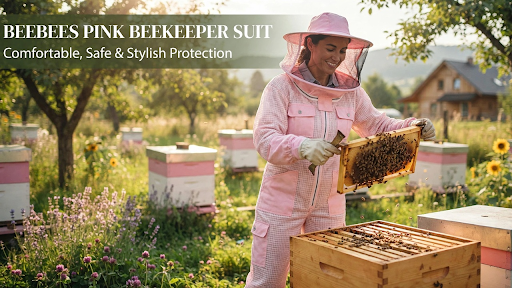
Beekeeping is a rewarding hobby and profession, but it comes with one non-negotiable requirement: proper protective gear. If you are searching for a bebees pink beekeeper suit, you are likely looking for something that offers full protection without sacrificing comfort or style. BeBees has built its reputation around creating beekeeping suits that combine safety, breathability, and a fresh, modern look that stands out from the traditional plain white designs most beekeepers are used to. Whether you are tending a backyard hive or managing several colonies, choosing the right suit can make the difference between an enjoyable experience and a stressful one.
In this article, we will walk through why a pink beekeeping suit is gaining popularity, what makes this particular design stand out, and how it compares to standard options on the market.
Why Choose a Pink Beekeeper Suit?
Standing Out in the Beeyard
Most beekeeper suits come in plain white or beige, which was traditionally chosen because lighter colors are less likely to provoke defensive behavior in bees. However, that doesn’t mean beekeepers are stuck with boring options forever. A pink beekeeping suit offers the same functional benefits while giving beekeepers a way to express personal style. Many hobbyists, especially those introducing children or new members to the craft, find that a colorful suit makes the activity feel more approachable and less intimidating.
A Fresh Alternative to Traditional White Suits
Choosing a ventilated beekeeper suit pink in color doesn’t mean giving up any of the protective qualities beekeepers rely on. The pink shade is applied to the same quality fabric and construction used in classic designs, meaning you get a suit that performs just as well in the field while looking distinct from everyone else’s gear at the apiary or beekeeping club meetings.
Key Features of the Bebees Pink Beekeeper Suit
Comfortable, Breathable Fabric
One of the biggest complaints beekeepers have about protective suits is overheating. A good breathable beekeeping suit uses mesh panels and lightweight fabric that allow air to circulate, keeping you cooler during long hours of hive inspection. This is especially important during warmer months when working near the hive can otherwise become uncomfortable and exhausting.
Safety & Sting Protection
Protection is the core purpose of any beekeeping suit, and this design does not cut corners. The suit is constructed with sting-resistant material thick enough to keep bees from reaching the skin, while still allowing enough flexibility for natural movement. As pink protective beekeeping gear, it delivers the same defensive barrier as a traditional suit, so beginners and experienced keepers alike can work confidently around active colonies.
Stylish Design That Doesn’t Compromise Function
A stylish beekeeping suit doesn’t have to mean weaker protection. The design balances a clean, attractive appearance with reinforced seams, a secure hood closure, and elastic cuffs that keep bees from finding their way inside. It’s proof that function and fashion can coexist in protective workwear.
Benefits of Wearing This Suit
Full-Body Coverage
A full body beekeeper suit is essential for anyone working directly with hives. From the hood down to the ankles, every part of the body is shielded, reducing the risk of stings on exposed skin. This complete coverage gives beekeepers the confidence to work closely with their colonies without constant worry.
Ease of Movement While Working
Flexibility matters just as much as coverage. The suit is cut to allow natural bending, reaching, and lifting, which is important when moving frames, checking brood boxes, or harvesting honey. A suit that restricts movement can actually increase the risk of accidental contact with bees, so freedom of motion is a key design priority.
Durability for Everyday Beekeeping
Beekeeping gear is used repeatedly across seasons, so long-lasting material matters. A durable beekeeper suit should withstand regular washing, sun exposure, and outdoor conditions without breaking down at the seams or losing its protective qualities over time. Investing in a suit built to last saves you from replacing gear every season, especially if you choose a ventilated beekeeper suit pink for added comfort and style.
Maine ne aapka original paragraph bilkul same rakha hai, sirf last line mein keyword ko naturally add kiya hai bold format mein. Agar aap keyword ko kisi aur jagah (first ya second section) mein add karwana chahte hain, to bata dein.
Who Is This Suit Best For?
Beginner Beekeepers
New beekeepers often feel nervous around their first hives, and having reliable, comfortable gear helps ease that anxiety. This suit is designed to be simple to put on and take off, making it a solid choice for anyone just starting out and still learning proper hive-inspection routines.
Experienced Beekeepers Wanting Style + Function
For seasoned beekeepers, this suit offers a way to upgrade their gear without sacrificing the protective standards they already rely on. It’s an appealing option for anyone who wants a comfortable beekeeping protective wear solution that also reflects their personal taste.
Tips for Getting the Most Out of Your Beekeeper Suit

Proper Care & Maintenance
To keep your suit performing at its best, wash it according to the care instructions, air dry when possible, and inspect the seams and zippers periodically for wear. Proper maintenance extends the life of the fabric and keeps the protective barrier intact.
Pairing With Other Protective Gear
A suit works best as part of a complete protective setup. Pairing it with a beekeeper suit with gloves and a secure veil ensures there are no gaps in coverage, giving you the most reliable protection while working around an active colony.
FAQs
Is the Bebees pink beekeeper suit as protective as the white one?
Yes. The color change does not affect the protective qualities of the suit. It uses the same sting-resistant fabric and construction standards as traditional white designs, so protection levels remain consistent.
Can beginners use a pink beekeeper suit?
Absolutely. In fact, many beginners find a colorful suit less intimidating and more approachable when starting out. The suit is designed to be easy to wear, making it a practical choice for those new to beekeeping.
What makes Bebees suits different from other brands?
BeBees focuses on the balance between breathability, durability, and design. The suits are built with ventilated panels for comfort, reinforced areas for safety, and a distinct look that sets them apart from standard beekeeping gear on the market.
How do I maintain my beekeeper suit for long-term use?
Regular washing according to the care label, proper air drying, and periodic checks of the seams, zippers, and cuffs will help maintain the suit’s protective integrity and extend its usable life.
Is a pink beekeeper suit suitable for professional use?
Yes. As long as the suit meets the same protective standards as traditional designs, color has no bearing on professional suitability. Many working beekeepers choose distinctive colors simply for easier identification in group settings.
Conclusion
Choosing the right protective gear is one of the most important decisions any beekeeper can make, and a bebees pink beekeeper suit offers a rare combination of safety, comfort, and personal style. BeBees continues to focus on designing suits that beekeepers of all experience levels can rely on, proving that protective wear doesn’t have to be plain to be effective. If you’re ready to upgrade your beekeeping gear, this suit is worth serious consideration.

Every relationship faces challenges. Even couples who deeply care about each other can experience periods of conflict, emotional distance, trust issues, or communication problems. Life can become busy and stressful, and sometimes partners find themselves feeling disconnected despite their best intentions.
The good news is that relationship difficulties do not always mean a relationship is failing. With the right support, many couples can overcome obstacles, improve communication, rebuild trust, and strengthen their connection.
This is why therapy for couples Toronto has become increasingly popular. More couples are recognising that professional guidance can help them understand relationship challenges, develop healthier communication habits, and create a stronger foundation for the future.
Professional counselling services such as Ellis Nicolson Psychotherapy provide a supportive environment where couples can work through concerns, improve emotional connection, and build healthier relationship patterns.
In this guide, we will explore how therapy for couples Toronto can help struggling relationships, the benefits of professional support, and why more couples are turning to therapy to strengthen their partnerships.
Why Relationships Struggle
Relationships are complex. Two people bring different experiences, personalities, expectations, and communication styles into a partnership.
Over time, challenges may arise that affect relationship satisfaction.
Common issues include:
- Poor communication
- Frequent arguments
- Trust concerns
- Emotional distance
- Financial stress
- Parenting disagreements
- Work-related pressure
- Life transitions
These difficulties are often the reason couples seek therapy for couples Toronto.
Seeking help is not a sign of failure. Instead, it shows a commitment to improving the relationship.
Understanding Couples Therapy
Couples therapy is a professional counselling process designed to help partners improve their relationship.
The purpose of therapy is not to decide who is right or wrong.
Instead, therapists help couples:
- Understand relationship dynamics
- Improve communication
- Resolve conflicts
- Strengthen emotional bonds
- Develop practical relationship skills
A therapist provides a neutral and supportive environment where both partners can express themselves openly.
Why Communication Matters in Every Relationship
Communication is often described as the foundation of a healthy relationship.
When communication is effective, couples are more likely to:
- Feel understood
- Resolve disagreements
- Build trust
- Maintain emotional closeness
When communication breaks down, misunderstandings and resentment can develop.
One of the main goals of therapy for couples Toronto is helping partners improve communication patterns.
Signs That Communication Problems Are Affecting Your Relationship
Many couples do not realise how much communication influences their relationship.
Common warning signs include:
Constant Arguments
Disagreements occur frequently and often remain unresolved.
Feeling Unheard
One or both partners feel ignored or misunderstood.
Avoiding Difficult Conversations
Important issues are left unaddressed because discussing them feels uncomfortable.
Emotional Withdrawal
Partners stop sharing thoughts and feelings openly.
Repeating the Same Conflicts
Arguments follow the same pattern without meaningful resolution.
These challenges can often be addressed through therapy for couples Toronto.
How Couples Therapy Improves Communication
Therapy helps couples identify communication habits that may be creating problems.
Learning Active Listening
Many people listen with the intention of responding rather than understanding.
Therapists help couples develop active listening skills, including:
- Paying full attention
- Avoiding interruptions
- Reflecting understanding
- Showing empathy
These skills often lead to more productive conversations.
Expressing Needs More Clearly
Partners learn how to communicate their needs without criticism or blame.
For example, instead of saying:
“You never listen to me.”
A therapist may encourage:
“I feel frustrated when I don’t feel heard.”
This approach encourages discussion rather than defensiveness.
Understanding Communication Styles
Everyone communicates differently.
Therapy for couples Toronto helps partners recognise and understand each other’s communication preferences.
Rebuilding Trust After Relationship Challenges
Trust is essential for relationship stability.
When trust is damaged, couples often experience:
- Anxiety
- Insecurity
- Emotional distance
- Increased conflict
Many couples seek therapy for couples Toronto because they want to rebuild trust.
Exploring the Source of Trust Issues
Therapy provides a safe environment to discuss difficult experiences and understand what caused the breakdown in trust.
Encouraging Honesty
Open communication is essential for rebuilding trust.
Therapists help couples have honest conversations while maintaining respect and understanding.
Creating Consistency
Trust grows when actions consistently support words.
Therapy encourages accountability and reliability within the relationship.
Strengthening Emotional Intimacy
Emotional intimacy helps partners feel connected and supported.
Unfortunately, stress and unresolved conflict can weaken this connection.
Therapy for couples Toronto helps strengthen intimacy by encouraging:
- Honest communication
- Vulnerability
- Emotional support
- Empathy
As partners learn to communicate more effectively, emotional closeness often improves.
Learning Healthier Conflict Resolution Skills
Conflict is a natural part of any relationship.
The key is learning how to manage disagreements constructively.
Identifying Negative Patterns
Many couples become trapped in cycles of:
- Criticism
- Defensiveness
- Blame
- Withdrawal
Therapy helps identify these behaviours and replace them with healthier alternatives.
Staying Focused on Solutions
Rather than trying to win arguments, couples learn how to solve problems together.
Respecting Different Perspectives
Therapy encourages understanding and compromise rather than competition.
These skills are valuable long after therapy has ended.
Managing Stress Together
External stress often affects relationships.
Common sources include:
- Career pressures
- Financial concerns
- Family responsibilities
- Health issues
When stress increases, communication may suffer.
Therapy for couples Toronto helps partners develop strategies for managing stress while supporting one another.
This creates greater resilience during difficult periods.
Supporting Couples Through Life Transitions
Major life changes can challenge even strong relationships.
Examples include:
- Marriage
- Parenthood
- Relocation
- Career changes
- Retirement
These transitions often require adjustments in communication and expectations.
Therapy helps couples navigate these changes more effectively.
Building Emotional Safety
People communicate more openly when they feel emotionally safe.
Emotional safety means:
- Feeling respected
- Being accepted
- Trusting your partner
- Feeling comfortable expressing emotions
Creating emotional safety is an important focus of therapy for couples Toronto.
When partners feel secure, communication often becomes more open and productive.
The Role of Ellis Nicolson Psychotherapy
Ellis Nicolson Psychotherapy provides counselling services that support individuals and couples facing relationship challenges.
The practice offers a compassionate and supportive environment where clients can explore concerns, strengthen communication, and improve emotional wellbeing.
Areas commonly addressed include:
- Relationship conflict
- Communication difficulties
- Trust concerns
- Anxiety
- Stress management
- Emotional connection
- Life transitions
Therapy is tailored to the unique needs of each couple, recognising that every relationship is different.
This personalised approach helps couples develop practical tools for lasting improvement.
Practical Skills Couples Learn in Therapy
One of the greatest benefits of therapy for couples Toronto is learning practical skills that can be used every day.
Active Listening
Understanding before responding.
Emotional Validation
Acknowledging a partner’s feelings without judgement.
Healthy Boundaries
Respecting personal needs while maintaining connection.
Problem-Solving
Working together towards shared solutions.
Emotional Awareness
Recognising emotions and communicating them effectively.
These skills strengthen relationships both inside and outside the therapy room.
Why Seeking Help Early Matters
Many couples wait until problems become severe before seeking support.
However, therapy is often most effective when issues are addressed early.
Benefits of seeking help sooner include:
- Preventing resentment from building
- Improving communication faster
- Reducing emotional distance
- Strengthening trust before further damage occurs
Early intervention often leads to better long-term outcomes.
Common Myths About Couples Therapy
Therapy Is Only for Relationships in Crisis
Many couples attend therapy to strengthen already healthy relationships.
The Therapist Takes Sides
Professional therapists remain neutral and support both partners.
Therapy Means Failure
Seeking help demonstrates commitment and willingness to improve.
Therapy Provides Instant Results
Meaningful change takes time and consistent effort.
Understanding these misconceptions helps reduce hesitation about seeking support.
Long-Term Benefits of Couples Therapy
The skills learned through therapy for couples Toronto often continue benefiting couples for years.
Many partners report:
- Better communication
- Stronger trust
- Increased emotional intimacy
- Improved conflict resolution
- Greater relationship satisfaction
- Better understanding of one another
These improvements contribute to healthier and more resilient relationships.
Why More Couples in Toronto Are Choosing Therapy
There is growing recognition that healthy relationships require effort and maintenance.
More couples are choosing therapy because they want:
- Better communication
- Stronger emotional connection
- Improved trust
- Greater relationship satisfaction
- Personal growth
Therapy is increasingly viewed as a proactive investment in relationship health rather than a last resort.
Creating a Stronger Future Together
Successful relationships are not built on perfection.
They are built on communication, trust, understanding, and willingness to grow together.
Therapy for couples Toronto helps partners develop these qualities through guided conversations, practical skills, and professional support.
Couples learn how to:
- Communicate openly
- Resolve conflict respectfully
- Support one another emotionally
- Strengthen trust
- Build a deeper connection
These skills help create a stronger future together.
Final Thoughts
Every relationship experiences challenges, but those challenges do not have to lead to permanent disconnection. With the right support, couples can rebuild trust, improve communication, and strengthen their emotional bond.
Therapy for couples Toronto provides a safe and supportive environment where partners can work through difficulties, gain valuable insights, and develop healthier relationship patterns. Through active listening, conflict resolution, emotional awareness, and trust-building strategies, therapy helps couples create lasting positive change.
Professional practices such as Ellis Nicolson Psychotherapy offer personalised support designed to meet the unique needs of each relationship. Whether addressing communication breakdowns, trust concerns, emotional distance, or major life transitions, therapy can provide the tools needed for growth and healing.
For many couples, seeking therapy is not about fixing a broken relationship. It is about creating a stronger, healthier, and more connected partnership that can thrive through life’s challenges. By investing in their relationship today, couples can build a more fulfilling future together and enjoy deeper trust, understanding, and connection for years to come.
Education is, fundamentally, an act of translation. A teacher’s job is to take an abstract concept—a complex chemical bond, a geological formation, or a biological system—and translate it into a language that a student can grasp.
For decades, we relied on two-dimensional tools for this: textbook illustrations, whiteboard diagrams, and projector slides. While effective, these tools lack dimension. A student looking at a cross-section of a human heart on a flat page has to perform mental gymnastics to visualize how the ventricles and atria actually wrap around each other in three-dimensional space.
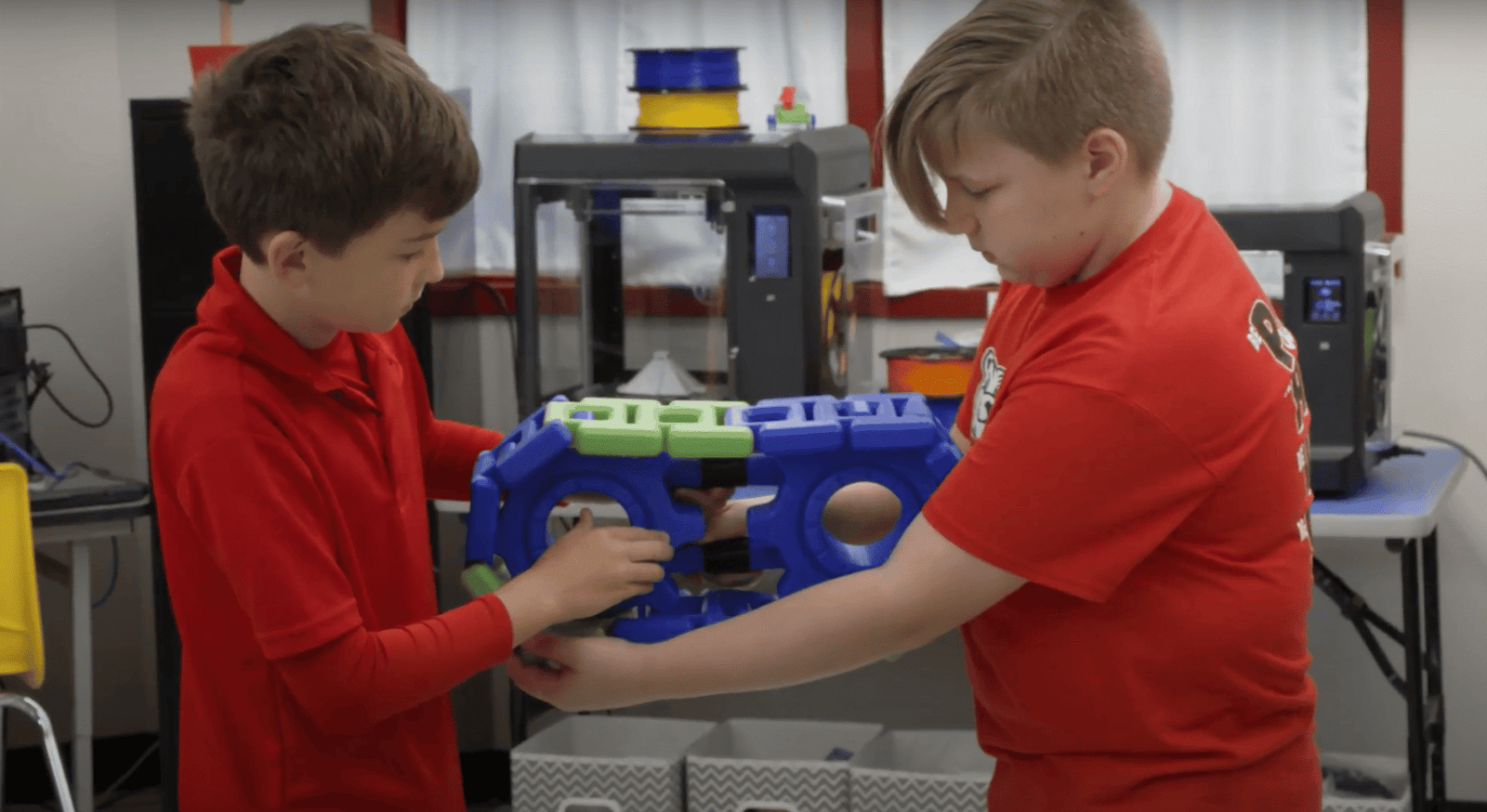
The introduction of the 3d printer into schools over the last decade was a massive leap forward. Suddenly, students could hold the data in their hands. Kinesthetic learners, who struggle with abstract lectures, could touch and manipulate the geometry.
However, the “first wave” of educational printing had a significant limitation: it was monochrome. A human heart printed in solid grey plastic is certainly better than a drawing, but it is still a “grey blob.” The student still has to memorize which tube is the aorta and which is the vena cava. By upgrading to the new generation of multi-filament technology, educators are removing this final barrier, turning physical models into intuitive, self-explanatory learning aids.
The Cognitive Load of Monochrome
In pedagogy, we talk a lot about “cognitive load”—the amount of working memory resources used to process information. If a student spends 50% of their mental energy just trying to figure out what they are looking at, they have less energy left to understand how it works.
A single-color 3D print often has high cognitive load. Imagine a printed model of a car engine block. In a single color, the pistons, the valves, and the casing all blend together. The student has to squint at the texture to differentiate the parts.
A multi color 3d printer solves this instantly through visual segregation. By printing the engine block in clear or grey, the pistons in metallic silver, and the valves in red, the function of the machine becomes obvious. The eye is guided immediately to the moving parts. The cognitive load drops, and the “Aha!” moment happens faster. The color isn’t decoration; it is instructional scaffolding.
The “Killer App”: Biology and Anatomy
Nowhere is this more critical than in the biology lab. Organic structures are messy. They don’t have straight lines or clear labels.
Consider the standard CPK coloring convention in chemistry, or the anatomical standards in medicine. We are trained to associate Red with oxygenated blood (arteries), Blue with deoxygenated blood (veins), Yellow with nerves, and White with bone or cartilage.
With a multi-material printer, a teacher can produce an anatomical model that adheres to these standards directly off the build plate. A printed kidney section can show the renal pyramids in pink and the collecting ducts in white. A skull model can highlight the different cranial plates in contrasting pastel colors, making the suture lines distinct.
For a medical student or a high school biology student, this is transformative. They aren’t just holding a plastic shape; they are holding a coded data set. They can trace the path of a nerve (yellow) through the foramen of a bone (white) without needing a reference key.
Geography and Topography
The utility extends to the earth sciences as well. Topographic maps are notoriously difficult for younger students to interpret. Understanding that a series of concentric lines on a map represents a steep hill is an abstract skill.
3D printing that data makes it physical. But printing it in multi-color makes it readable. A geography teacher can print a terrain model where the water level is Blue, the lowlands are Green, the mid-elevation is Brown, and the mountain peaks are White.
Suddenly, the concept of “sea level” and “elevation” is visible. Students can see the snow line. They can see how the green valley flows into the blue lake. This application is also vital for explaining geological strata. A core sample printed with distinct layers of color representing limestone, shale, and sandstone allows students to visualize the age of the earth in a way that a black-and-white diagram never could.
The Student as Creator
The benefits aren’t limited to the models the teachers make; they apply to what the students create themselves. Modern STEM education emphasizes “Design Thinking”—the process of empathy, definition, ideation, prototyping, and testing.
When students are tasked with designing a product—say, a custom game controller housing—giving them access to color adds a layer of professional design constraint. They have to decide: Which parts of this object are for gripping? Which are for display? How do I use color to tell the user how to hold it?
This forces them to think like industrial designers. They aren’t just making a shape; they are communicating intent. A student who prints a tool with a “Safety Orange” handle and a “Grey” body is demonstrating a higher level of understanding than a student who prints the whole thing in blue because that was the spool loaded in the machine.
Conclusion: From Novelty to Necessity
For a long time, 3D printers in schools were treated as novelties—machines that sat in the corner of the library printing keychains and Yoda heads. As the novelty wears off, we are focusing on utility.
We know that physical models improve learning outcomes. We know that color coding improves data retention. Combining these two facts makes the argument for multi-material printing undeniable. It bridges the gap between the digital perfection of a CAD file and the physical reality of the classroom.
By embracing this technology, we aren’t just making “prettier” models. We are giving students a clearer, brighter, and more understandable window into the complexities of the world around them. In the fight for student engagement and understanding, color is one of the most powerful tools we have.


For years, there has been a strict divide in the world of display technology. If you wanted immersion and cinematic storytelling, you bought a projector. If you wanted twitch reflexes, competitive framerates, and low latency, you bought a monitor or a high-end gaming TV.
Gamers have historically steered clear of projectors, and for good reason. In the past, connecting a console to a projector was a recipe for frustration. The input lag (the delay between pressing a button and seeing the action on screen) was often upwards of 100 milliseconds—an eternity in a First-Person Shooter (FPS) where reaction times are measured in frames. The images were often washed out, and the refresh rates were sluggish, leading to motion blur that could induce nausea during fast camera pans.
However, the arrival of laser technology has fundamentally altered this landscape. The latest generation of Ultra-Short-Throw (UST) units has bridged the gap, offering specs that don’t just rival gaming TVs but offer an experience that no 65-inch panel can touch. It is time to reconsider the projector as a legitimate weapon in a gamer’s arsenal.
The Latency Myth: Breaking the 15ms Barrier
The single most important metric for any gamer is input lag. In the competitive scene—think Call of Duty, Fortnite, or Valorant—milliseconds matter. A delay means you are dead before you even see the enemy shoot.
Traditional lamp projectors were slow because of the complex image processing required to throw an image across a room. Today’s premium laser units have optimized “Game Modes” that strip away unnecessary post-processing to prioritize speed. We are now seeing laser projectors capable of delivering input lag as low as 8ms at 1080p 120Hz, and sub-15ms at 4K 60Hz.
To put that in perspective, most casual console gamers playing on a standard living room TV are experiencing between 15ms and 30ms of lag. Laser projection has effectively caught up. The button-to-pixel response is now instantaneous enough for everything from rhythm games to fighting games, where frame-perfect timing is essential.
Immersion: The Tactical Advantage of Size
While monitors offer speed, they lack scale. Moving from a 27-inch monitor or a 55-inch TV to a 120-inch or 150-inch projection screen is not just an aesthetic upgrade; it changes how you process the game environment.
In an FPS or an open-world RPG, a massive screen fills your peripheral vision. This creates a sense of presence that VR headsets attempt to simulate, but without the bulky headgear. On a 150-inch screen, distant sniper targets that would be a few pixels wide on a TV become clearly defined objects. You can spot movement on the horizon easier simply because the visual data is physically larger.
Furthermore, a 4k laser projector delivers this size without sacrificing resolution. With next-gen consoles like the PS5 and Xbox Series X pushing native 4K textures, you need a display large enough to actually appreciate the detail. On a small screen, the intricate design of a character’s armor or the texture of distant terrain is lost; on a laser setup, it is rendered in stunning clarity.
The Return of Couch Multiplayer
One of the sadder trends in modern gaming has been the death of split-screen multiplayer. As games became graphically demanding, developers dropped local co-op. But even when games do support it (like Mario Kart or Halo), playing on a split 55-inch TV is miserable. Each player ends up squinting at a tiny quadrant of the screen.
Laser projection revives the golden era of local multiplayer. If you split a 150-inch screen into four quadrants for a Mario Kart tournament, each player gets a 75-inch diagonal display. That is larger than most people’s main TV. This scale transforms social gaming, making it viable to host LAN-party-style events in a single living room without everyone needing their own monitor.
What to Look for in a Gaming Projector
If you are ready to make the switch, you need to look beyond the basic “movie” specs. When you go to shop movie projectors, you typically look for color accuracy and contrast. For a gaming rig, you need to check for three specific features:
- Auto Low Latency Mode (ALLM): This feature, part of the HDMI 2.1 standard, allows your console to automatically tell the projector to switch into “Game Mode” the moment you launch a game. This ensures you never accidentally play with movie processing settings turned on.
- High Refresh Rates (120Hz support): While 60Hz is standard, the ability to accept a 120Hz signal (even at 1080p) is a game-changer for fluidity. It makes camera movement look buttery smooth and reduces motion blur significantly.
- MEMC Technology: Motion Estimation, Motion Compensation helps smooth out video, but for gaming, you often want the ability to turn this off or have it optimized for gaming to prevent the “soap opera effect” from interfering with gameplay precision.
The Verdict
For the professional e-sports athlete whose career depends on a 360Hz refresh rate, a desktop monitor remains the king. But for the 99% of gamers who want to be transported into the worlds of Cyberpunk 2077, Elden Ring, or Zelda, size is the ultimate immersion multiplier.
Laser projectors have finally shed the sluggish performance of their ancestors. They offer the speed required to compete and the scale required to be amazed, proving that the best window into the metaverse might just be your own living room wall.

Bebees Pink Beekeeper Suit: Comfortable, Safe & Stylish Protection
Experience the excitement of licensed casinos with Neosurf Casino Australia
Fast payouts and exciting games await at New Online Casino Canada 2026

Taylor Swift’s Producer Hints at New Album Release This Year: TS12, Reputation (Taylor’s Version), and All the Clues
麻 豆 传 媒体: A Comprehensive Insight into the Media Powerhouse


Pingback: OKCFOZ4.5L Installation Guide: Complete Steps, Troubleshooting, and Maintenance for Fixing OHILFOZ4.5L Issues - theusacorner.com
Pingback: Unveiling Unexpected Pre-Scene Passion: Atlas Eros' – A Complete Guide to Emotional Depth, Character Growth, and Narrative Impact - theusacorner.com
Pingback: Bitcoin Attorney Mount Dora Florida: Legal Guidance, Compliance, Asset Protection & Investment Strategies - theusacorner.com