
Blog
Claude Edward Elkins Jr.: How DNA Evidence Proved His Innocence


The Mysterious Case of Claude Edward Elkins Jr.
The story of Claude Edward Elkins Jr. is a complex and often tragic narrative. It involves accusations, a conviction, years of incarceration, and an eventual exoneration that left many questions in its wake. This case highlights critical flaws within the justice system and the profound, lasting impact on one man’s life. Delving into the details reveals a journey marked by struggle, perseverance, and the ultimate fight for freedom against seemingly insurmountable odds.
Who is Claude Edward Elkins Jr.?
Claude Edward Elkins Jr. was an ordinary man living in Ohio whose life took an extraordinary and devastating turn. Before his legal troubles began, he was a family man and a truck driver, living a relatively quiet life. His world was irrevocably altered when he was accused of a heinous crime.
This accusation set in motion a legal battle that would span decades. Elkins became a figure defined not by his life before the crime, but by the crime itself and his subsequent, relentless quest to prove his innocence from behind bars.
The Crime and Initial Investigation
The case against Elkins centered on the brutal 1998 rape and murder of his 58-year-old mother-in-law, Martha Madge, in their family home. The initial investigation focused on the family, and suspicion quickly fell upon Elkins.
Investigators pointed to circumstantial evidence, including his presence near the scene and perceived inconsistencies in his statements. The prosecution built a case suggesting a personal motive, despite a lack of direct physical evidence linking him to the assault and murder.
The Trial and Conviction
The trial of Claude Edward Elkins Jr. was heavily reliant on testimony and circumstantial details. The prosecution argued that Elkins had the opportunity and motive to commit the crime. A key piece of evidence presented was a hair found at the scene, which an expert claimed was consistent with Elkins’s.
Despite the absence of a confession or definitive DNA proof, the jury was convinced by the state’s narrative. In 1999, Elkins was found guilty and sentenced to life in prison, a verdict that he and his family staunchly disputed from the very beginning.
The Role of Eyewitness Testimony
A critical element in the prosecution’s case was the testimony of a key witness. This individual, a young girl at the time, was Elkins’s niece. She testified to seeing Elkins near the time of the crime, which helped solidify the timeline presented by the prosecution.
However, years later, the reliability of this testimony came under intense scrutiny. The witness eventually recanted her original statement, claiming she had been pressured and coached by authorities. This recantation became a pivotal moment in Elkins’s fight for exoneration.
The Fight for Exoneration
From the moment he was imprisoned, Claude Elkins Jr. never stopped fighting to clear his name. He filed numerous appeals and sought assistance from legal aid organizations. His case eventually attracted the attention of the Ohio Innocence Project.
The Ohio Innocence Project Steps In
The Ohio Innocence Project took on Elkins’s case, recognizing the significant doubts surrounding his conviction. Their team began a meticulous re-examination of all the evidence, focusing on areas the original defense may have overlooked or lacked the resources to pursue fully.
The Push for DNA Testing
Central to their strategy was the push for advanced DNA testing on evidence collected from the crime scene. This included biological material from the victim’s rape kit, which had not been subjected to the sophisticated DNA analysis available years later. Securing the court’s approval for this testing was a major hurdle.
The Power of DNA Evidence
After a prolonged legal battle, the court finally granted the request for DNA testing. The results were conclusive and staggering: the DNA found on the victim did not belong to Claude Edward Elkins Jr. Instead, it matched another individual, Earl Mann.
Mann was a convicted felon with a history of sexual assault who was already serving time for another crime. This scientific evidence completely dismantled the prosecution’s original case against Elkins, proving that someone else was the perpetrator.
Exoneration and Freedom
Armed with the irrefutable DNA evidence, Elkins’s legal team filed for his immediate release. In 2005, a judge overturned his conviction, and Claude Edward Elkins Jr. walked out of prison a free man after serving nearly seven years for a crime he did not commit.
His exoneration was a landmark victory for innocence advocates and a stark illustration of how wrongful convictions can occur. For Elkins, it was the end of one nightmare and the beginning of a new, challenging chapter of rebuilding his life.
Life After Prison
Adjusting to life after wrongful imprisonment presented immense challenges for Elkins. He had lost years with his family, his reputation had been destroyed, and the psychological scars of his ordeal were deep. He had to learn to navigate a world that had changed significantly during his time away.
He became an advocate for criminal justice reform, sharing his story to raise awareness about the fallibility of the system. His experience serves as a powerful testament to the importance of post-conviction DNA testing and the work of innocence organizations.
Broader Implications of the Case
The case of Claude Edward Elkins Jr. has had a lasting impact on the legal landscape. It underscores several critical issues within the criminal justice system that continue to be debated today.
- Wrongful Convictions: It highlights the reality that innocent people can be convicted based on flawed evidence.
- Eyewitness Reliability: The case questions the heavy reliance on eyewitness testimony, especially from children, which can be prone to error or influence.
- Importance of DNA: It proves the indispensable role of DNA evidence in correcting miscarriages of justice.
- Systemic Failures: It exposes how a combination of investigative tunnel vision and insufficient defense can lead to a wrongful conviction.
FAQs
What crime was Claude Edward Elkins Jr. convicted of?
Claude Edward Elkins Jr. was wrongfully convicted in 1999 for the 1998 rape and murder of his mother-in-law, Martha Madge.
How long was Claude Elkins Jr. in prison?
He spent nearly seven years in prison before his conviction was overturned and he was finally exonerated in 2005.
What evidence led to his exoneration?
DNA evidence from the crime scene conclusively proved his innocence. The DNA matched another man, a convicted felon named Earl Mann.
Who helped Claude Elkins Jr. get exonerated?
The Ohio Innocence Project took on his case, championing his cause and pushing for the DNA testing that ultimately set him free.
Conclusion
The story of Claude Edward Elkins Jr. is a powerful and sobering reminder of the imperfections within our justice system. His conviction, based on circumstantial evidence and later-recanted testimony, cost him nearly seven years of his life. His eventual exoneration, secured through the unwavering power of DNA evidence and the dedicated work of the Ohio Innocence Project, is a victory for truth. However, it also serves as a stark warning. The case compels us to demand higher standards of evidence, support organizations that fight for the wrongly accused, and advocate for reforms that prevent such devastating miscarriages of justice from happening again. It is a call to ensure that the pursuit of justice is always guided by facts, not just by narrative.
If you are interested in learning more about wrongful convictions or supporting the work of innocence projects, consider visiting the website of the national Innocence Project or a local chapter in your area. Your support can make a difference.
Discover Fintech Zoom.com: Real-Time Market Insights & Trends
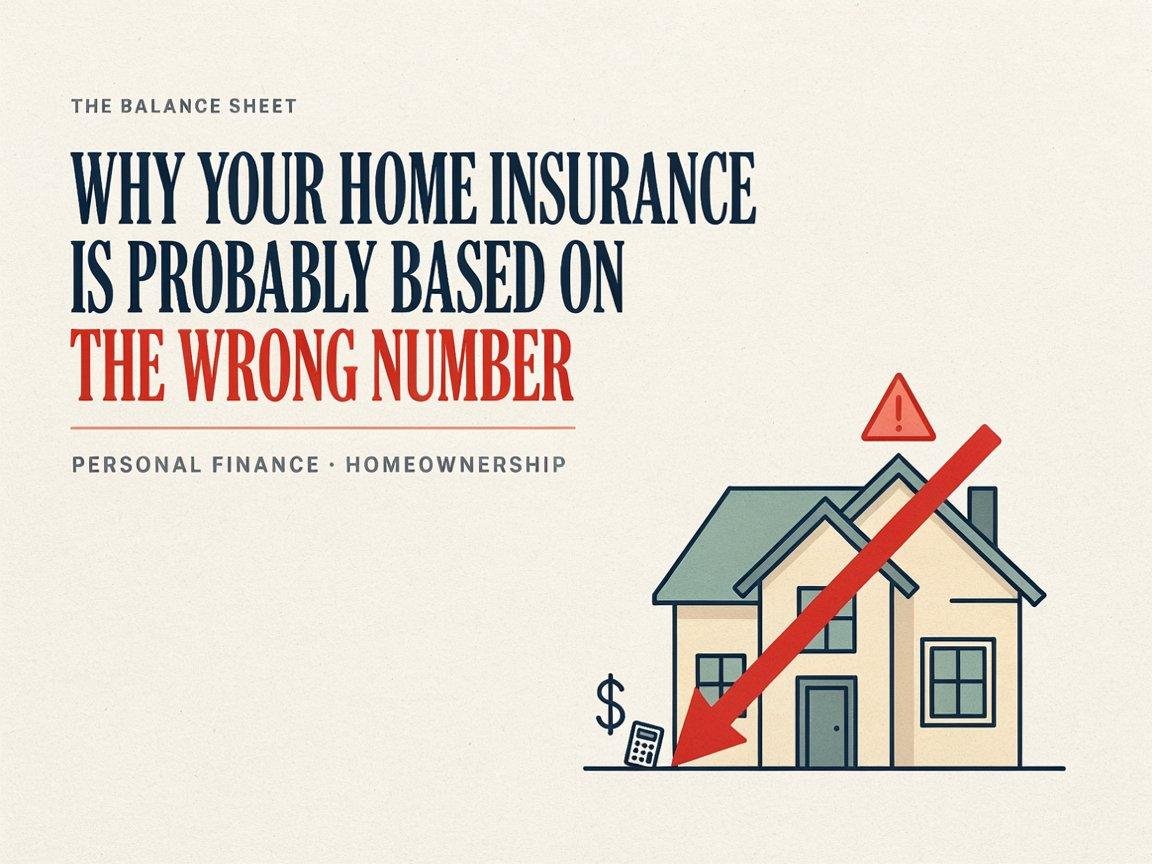
Most Canadian homeowners set their home insurance coverage once and never revisit it. The number on the policy feels safe because it was confirmed by a professional when the coverage was arranged. The premium gets paid automatically. The policy renews each year with a modest inflation bump. Life moves on.
Then a fire damages the kitchen. Or a burst pipe floods two floors. And the claim comes back short.
Not because the insurer acted in bad faith. Not because the policy was misrepresented. But because the number the entire policy was built on was wrong from the beginning, or was right once and quietly drifted out of date.
This is more common than most homeowners realize, and it is one of the most consequential financial planning gaps in Canadian household budgets. Understanding why it happens, and what to do about it, takes about ten minutes of reading and could protect you from a five or six-figure shortfall when you need your insurance to work.
The Number You Should Be Insuring Is Not What You Think
When most homeowners think about what their property is worth, they think about the price they could sell it for. In a strong Canadian real estate market, that number has been encouraging. A home purchased in 2015 for $700,000 might sell for $1.2 million today. That feels like more than enough coverage.
The problem is that property insurance does not work on market value. It works on replacement cost, and the two figures are not the same thing, often not even close.
Understanding the difference between replacement cost vs market value is the foundation of proper insurance coverage. Market value is what a buyer would pay for your property. It includes the land, the location, the neighbourhood, and demand from buyers. It is the number that matters when you sell.
Replacement cost is what it would cost to rebuild your structure from the ground up today. It excludes the land entirely, because land does not burn down or wash away in a flood. It is calculated based on current construction costs, current labour rates, and the cost of meeting today’s building code requirements.
In high land value markets across Canada, these two figures can be dramatically different. A home in a desirable Toronto neighbourhood might sell for $1.5 million, with a large portion of that price representing expensive urban land. The actual cost to rebuild the house might be $700,000. Insuring for $1.5 million means paying premiums on $800,000 worth of coverage you could never use.
More commonly, the gap runs the other way. Homeowners set their replacement cost low, anchoring to an old estimate, and find themselves underinsured when a claim arrives.
Why Replacement Cost Estimates Go Stale
Even when a homeowner sets their coverage correctly at the start, the replacement cost figure can drift significantly out of date in a relatively short period.
Canadian construction costs have risen sharply over the past several years. Material costs including lumber, concrete, steel, copper wiring, and roofing have climbed. Skilled trades shortages have pushed labour rates higher across the country. Supply chain disruptions added additional pressure on building materials. A replacement cost estimate that was accurate in 2019 or 2020 may be significantly below the actual rebuild cost today.
Renovations compound the problem. A homeowner who spends $60,000 on a kitchen renovation, $30,000 finishing the basement, and $15,000 replacing windows and doors has added $105,000 to the cost of rebuilding their home without necessarily updating their insurance coverage to match.
Automatic annual inflation adjustments help but rarely keep pace with real construction cost increases in specific markets. A blanket 3 percent annual increase does not capture a period where skilled trade costs in your city rose 18 percent in two years.
The Co-Insurance Clause Most Homeowners Have Never Read
Hidden inside most commercial, multi-unit, and many higher-value residential policies is a provision called the co-insurance clause. If you have not read your policy documents recently, this is worth understanding.
Co-insurance clauses require you to insure your property to a minimum percentage of its full replacement cost, typically 80, 90, or 100 percent. If you fall below that percentage, the insurer applies a proportional penalty to every claim, including partial claims well below your stated policy limit.
The math is not complicated. If your home would cost $900,000 to rebuild and your policy requires you to insure to 80 percent, you are required to carry at least $720,000 in coverage. If you only carry $540,000, and you file a legitimate $200,000 claim after a kitchen fire, the insurer pays you only $150,000. The missing $50,000 comes out of your pocket, purely because the coverage was inadequate relative to the true replacement cost.
Many Canadians do not discover this clause until they are holding a reduced settlement cheque. By then, the time to fix the problem has passed.
What a Professional Insurance Appraisal Actually Does
This is where a property appraisal enters the picture in a context most homeowners associate only with buying and selling.
A professional insurance appraisal in Toronto and other Canadian markets involves a designated appraiser visiting the property, documenting its physical characteristics, assessing the quality of construction and finishes, and calculating the actual cost to rebuild the structure using current material and labour pricing. The calculation accounts for demolition and debris removal, architectural and engineering fees for the rebuild design, and the cost of meeting current building code requirements, which are often more stringent than the standards the home was originally built to.
The result is a documented, defensible replacement cost figure that your insurance broker can use to set your coverage at the right level.
This is meaningfully different from the replacement cost estimate an insurer provides using their internal calculator. Those tools apply broad assumptions to a property type and often miss property-specific features, the quality of finishes, any above-standard construction, and current local trade rates. They produce a starting point, not a property-specific answer.
A professional appraisal is built around your actual home. It produces a figure that is both more accurate and more defensible if a claim is ever disputed.
The Properties Most at Risk of Underinsurance
While any homeowner can be underinsured, certain properties are consistently underserved by generic replacement cost calculators.
Heritage and older homes. Original features including plaster walls, old-growth lumber framing, period-specific brickwork, and architectural details cost significantly more to replicate than standard contemporary construction. Generic calculators routinely underestimate rebuild costs on these properties.
Custom-built and luxury homes. High-end finishes, premium mechanical systems, custom cabinetry, and architectural features require custom analysis to cost accurately.
Homes with significant renovation history. Any property where substantial improvements have been made since the original insurance coverage was established may carry a coverage gap.
Older homes in general. Properties built to 1970s, 1980s, or 1990s standards must be rebuilt to current code if substantially damaged. The cost uplift from code compliance alone can be significant.
Condominium unit owners. Many condo owners assume their building’s insurance covers their unit comprehensively. The building policy generally covers the standard unit and common elements. Improvements you have made above the standard unit definition, upgraded finishes, custom renovations, are typically your responsibility to insure separately.
What to Do If You Are Not Sure Your Coverage Is Right
The practical path forward is straightforward.
Review your current policy for the replacement cost figure and the co-insurance requirement. Ask your insurance broker whether the figure was set using a generic calculator or a professional appraisal. Consider when the figure was last updated and what has changed since then.
If your home is older, has been renovated, contains above-standard finishes, or has not had its replacement cost professionally assessed in the past three to five years, a professional insurance appraisal is worth commissioning. The cost is modest, the process is straightforward, and the protection it provides is proportional to the claim it might someday support.
Insurance exists to make you whole when something goes wrong. For it to do that job, the number at the centre of the policy has to reflect reality, not a calculator estimate from several years ago applied to a home the insurer has never seen.
Getting that number right is not the insurer’s job. It is yours.
This article was contributed by the team at Innovative Property Solutions (IPS), a professional real estate appraisal firm providing AACI designated residential, commercial, and insurance appraisals across Toronto and the Greater Toronto Area.

Walk into two offices that pay the same rent in Business Bay. One feels like a space someone assembled over several years — mismatched furniture, fluorescent overhead lighting, a reception desk that was clearly bought from a catalogue and placed wherever it fit. The other feels considered. The lighting shifts between zones. The reception area communicates the company’s identity before anyone says a word. The workstations are arranged so teams can collaborate when they need to and focus when they do not. Both offices cost roughly the same to run. Only one of them is working for the business.
This is the commercial interior design conversation that more Dubai businesses are starting to have — not because it is a trend, but because the evidence connecting workspace design to both employee performance and client conversion has become impossible to dismiss.
The Productivity Connection Is Not Abstract
There is a straightforward reason why companies with well-designed workspaces report lower staff turnover and higher output. People spend eight to ten hours a day in their office. The physical environment of those eight to ten hours affects every dimension of their experience: how focused they can be, how energized they feel, how comfortable their interactions are with colleagues, and fundamentally, whether the space signals that the organization they work for values them.
In Dubai specifically, the competition for skilled talent is real. A marketing agency in JLT competing for a senior hire against a tech firm in Dubai Internet City is not just competing on salary. The workspace matters in that conversation, and it matters more than most employers in the UAE currently acknowledge in their budgets.
Three specific design elements have the most direct impact on daily productivity.
Lighting. This is the single most underestimated factor in office performance and the one that makes the greatest difference per dirham spent. Standard fluorescent grid lighting produces a flat, even field that causes eye strain over long working periods and does not support the different modes of work that happen across a day. Focused task lighting at workstations, warmer ambient lighting in breakout areas, and directional lighting in meeting rooms each serve different purposes. A properly designed lighting scheme for a Dubai office supports focus during work hours, reduces fatigue, and changes the atmosphere of the space for different types of interaction. This is not expensive when designed from the outset. It becomes expensive when retrofitted after everything else is in place.
Acoustic design. Open plan offices in Dubai often fail acoustically. The combination of hard floor surfaces, glass partitioning, high ceilings, and dense workstation layouts creates an environment where ambient noise from one end of the floor reaches the other end continuously. Research consistently shows that uncontrolled ambient noise is one of the primary contributors to concentration loss and reported job dissatisfaction. Acoustic treatment does not mean adding padded walls. It means designing with materials and partition strategies that control sound distribution — acoustic ceiling panels, soft furnishing in breakout zones, glazed meeting rooms with proper door seals. These decisions happen at the design stage. They cannot be easily added after the fit out is complete.
Spatial flow. How people move through the space determines how they interact. An office where the coffee station requires walking past the CEO’s desk creates a social friction that changes how junior employees navigate their day. A meeting room positioned so that entering it requires crossing the main floor during a presentation distracts both the person entering and the people trying to focus. These are not minor inconveniences. Over time they shape the culture of the workplace in ways that are visible in staff behavior and invisible in the P&L until the correlation with turnover is noticed.
The Client Impression Is a Revenue Decision
Most commercial businesses in Dubai receive clients, partners, or suppliers at their premises at some point. The office is a physical communication of the company’s positioning, capability, and values. What clients experience from the moment they arrive at reception through to the meeting room shapes their assessment of the relationship in ways that rarely surface as explicit feedback but consistently influence decisions.
In sectors where credibility is the product — law firms, financial services, management consulting, architecture, property development — the workspace is part of the pitch. A client sitting across the table in a boardroom where the fit out matches the quality of the proposal feels differently about the engagement than a client sitting in a space where mismatched chairs and a cable-covered table send a different message entirely.
The reception area is where this matters most acutely. It is the first interior space every visitor experiences, and first impressions in physical environments form in seconds and persist. A reception desk designed and built for the specific space, with the brand properly integrated, sets a tone that everything else in the interaction builds on. A generic desk from a supplier catalogue, positioned wherever it fit in the available floor plan, sends a tone equally clearly.
This is why the companies in Dubai that invest in commercial interior design in Dubai tend to talk about it as a revenue decision, not an aesthetic one. The conversion rate in client meetings, the speed of trust-building in new relationships, and the implicit confidence signal in pitches are all affected by the physical environment in which they happen.
The Dubai Market Has Specific Dynamics
A commercial fit out or redesign in Dubai involves considerations that do not apply in most other markets, and they are worth understanding before any project begins.
The approval process is one. Any commercial interior modification that touches MEP — mechanical, electrical, or plumbing systems — or changes the layout of the space requires a Dubai Municipality building permit and a Dubai Civil Defence NOC for fire safety. From 2026, Hassantuk smart fire monitoring connection is also mandatory for all commercial premises. These are not bureaucratic obstacles to be managed around. They are legal requirements that affect the project timeline and that need to be built into the programme from day one.
The zone your office is in matters. Dubai Municipality governs most mainland commercial areas. Trakhees governs free zone areas including Palm Jumeirah, Al Furjan, and Jebel Ali. DDA governs Dubai Internet City, Media City, and Dubai Design District. Each authority has different submission portals and different drawing format requirements. A contractor who handles approvals for one zone does not automatically know the requirements of another.
Material specification matters differently here than in temperate climates. Dubai’s heat and humidity accelerate wear on surfaces that might last twenty years in a European office and last eight in an improperly specified Dubai one. Flooring choices, surface treatments, and joinery materials that are not specified for the UAE climate create visible deterioration within a few years of a fit out that looked exceptional on handover day.
Timeline realism matters. A commercial fit out in Dubai including approval processing, design sign-off, joinery fabrication, and construction typically takes 6 to 12 weeks for a standard office. Approvals run in parallel with design — not sequentially — in a well-managed project. Companies that plan for a six-week opening date without building the approval period into the programme miss that date and pay for the lease period during which the space is unoccupied.
What the Right Contractor Changes
The difference between a commercial interior project that is delivered on time, within budget, and to the specification that was agreed is almost entirely determined by the contractor chosen to execute it.
The distinction that matters most in Dubai is design-and-build versus design-only. A design-only firm produces drawings and hands them to the client. The client then manages a separate contractor to execute the work, and separately manages the approval process, or hires a third consultant for that. The design-and-build model puts all of this under one contract with one team accountable for the outcome.
For businesses in Dubai that are running the company while also managing an office fit out, the single-contract model removes a substantial coordination burden. The same team that produced the space plan is also preparing the DM permit drawings, managing the joinery fabrication, and coordinating the site. There is no gap between what was designed and what was built, because both happened with the same people.
Favoritehome is a Dubai-based design-and-build contractor working across offices, restaurants, salons, gyms, retail spaces, and hospitality projects across all Dubai zones. As an interior fit out company in Dubai that manages design, approvals, and construction under one contract, the team handles every element from the first concept to the completion certificate. The client gets one project manager, one fixed price, and one handover — rather than three separate processes running in parallel with no single point of accountability.
The Bottom Line
A well-designed commercial interior in Dubai does three things simultaneously. It supports the daily performance of the people working inside it. It communicates to every visitor something specific about the organization before anyone has spoken. And it holds its quality and value over time because the materials and the systems behind the surfaces were specified correctly for the environment.
None of those outcomes happen automatically from a fit out. They happen from intentional decisions made at the design stage, executed by a team that understands both the design objective and the construction reality of delivering it in Dubai.
The businesses in Dubai that are growing fastest are not necessarily the ones with the biggest offices. They are the ones where the workspace works — for the team, for the clients, and for the brand.

For decades, a facelift was the only real answer to sagging skin and a softening jawline. Today, that is no longer true, and the shift has been dramatic. Across York Region, more people than ever are choosing non-surgical treatments that deliver meaningful, visible tightening without a single incision, without general anaesthesia, and without the weeks of recovery a surgical procedure demands.
This is not a trend built on vanity alone. It reflects something more practical. People want results that fit into real life, a busy work schedule, family responsibilities, no time to disappear for a month of healing. Non-surgical skin tightening has stepped into that gap, and it has done so with technology genuinely capable of producing results that were once thought to require a scalpel.
Why the Shift Is Happening Now
A few factors have converged to drive this change. The technology behind non-surgical tightening has matured significantly in the last several years, reaching depths beneath the skin that were previously only accessible through surgery. At the same time, awareness has grown. People are no longer choosing between “do nothing” and “have surgery.” They understand there is a genuine middle path, one that produces real structural change rather than a temporary surface improvement.
There is also a cultural shift toward subtlety. Fewer people want a result that announces itself. Most are looking for something quieter, a version of their own face that simply looks more rested, more defined, less tired, without anyone being able to pinpoint exactly what changed. Surgical facelifts, done well, can achieve this too, but the appeal of getting there without surgery is obvious for anyone weighing the trade-offs of downtime, cost and risk.
The Two Technologies Leading the Shift
Two treatments in particular have become the names people search for when researching non-surgical alternatives to a facelift, and they work in genuinely different ways.
The first combines radiofrequency energy with precision microneedling, delivering controlled heat deep beneath the skin’s surface while simultaneously triggering the body’s own collagen-building response. This dual mechanism is what allows it to address not just fine lines, but genuine skin laxity across the face, jawline, neck and even the body, something most surface-level treatments cannot claim. Clients across Aurora, Richmond Hill and Vaughan have been turning to Morpheus8 in Aurora specifically because it reaches a depth and delivers a versatility that few non-surgical treatments can match, treating everything from early jowling to post-pregnancy skin laxity on the body.
The second approach takes a slower, more gradual path. Rather than immediately adding volume or tightening tissue on contact, it works by stimulating the body’s own collagen production over months, using a biocompatible substance the body has safely used in medical applications for decades. The result builds so gradually that friends and family often cannot identify exactly what has changed, only that someone looks well, rested, quietly refreshed. For clients dealing with broader volume loss across the face, rather than one isolated concern, Sculptra in Aurora has become a genuinely popular choice specifically because the results last years rather than months, trading a longer initial commitment for significantly less ongoing maintenance.
Who Is Actually Choosing These Treatments
The demographic pursuing non-surgical alternatives has broadened considerably. It is no longer only clients in their fifties and sixties who might once have considered a facelift. Many York Region residents in their late thirties and forties are starting treatment proactively, catching early signs of laxity before they become significant, essentially choosing maintenance over correction.
Men represent a growing share of this shift too, drawn by the lack of visible downtime and the practical, no-fuss nature of the treatment experience. For working professionals across Vaughan and Aurora, the appeal of a treatment that fits around a demanding schedule, without weeks of visible healing, has made non-surgical options an easy decision that surgery never quite was.
What a Realistic Result Actually Looks Like
It is worth being honest about what these treatments can and cannot do. Neither radiofrequency microneedling nor a collagen-stimulating treatment like Sculptra will produce the same dramatic, structural change as a surgical facelift for someone with very advanced skin laxity. What they do produce, for the right candidate, is a firmer, more lifted, more youthful version of the same face, not a different one.
This is precisely the appeal for most people exploring these options. The goal was never to look like someone else. It was to look like a well-rested version of themselves, and that is exactly what these technologies are built to deliver.
Making the Right Choice for Your Skin
With two genuinely different technologies both promising non-surgical tightening, the right choice depends entirely on individual goals, skin condition and timeline expectations. Someone wanting more immediate, versatile treatment that can also address acne scarring or body skin laxity is often better suited to radiofrequency microneedling. Someone specifically focused on gradual, long-lasting volume restoration across multiple areas of the face may find a collagen-stimulating approach the better fit.
This is not a decision to make from a search result alone. A proper in-person assessment, examining the specific skin concern and discussing realistic goals, remains the only reliable way to determine which non-surgical path actually makes sense for a given face.
Glow Med Clinic in Aurora has become one of the go-to clinics in York Region for exactly this reason, offering both technologies under one roof and, more importantly, an honest recommendation based on individual assessment rather than whichever treatment happens to be the current trend. For residents across Aurora, Richmond Hill, Vaughan and Newmarket exploring non-surgical alternatives to a facelift, a free consultation with their nurse-led team is typically the first and most useful step before committing to any treatment path.
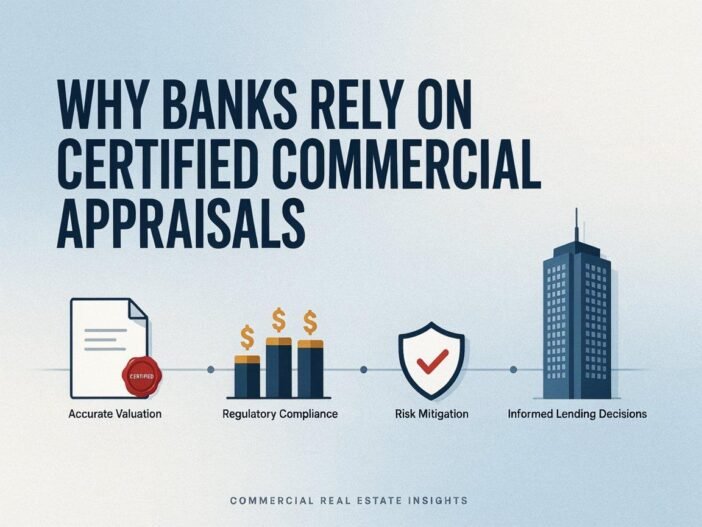
Anyone who has applied for commercial financing has run into the same requirement, regardless of which bank, credit union, or lender they approach. Before any funds move, a certified appraisal has to land on the underwriter’s desk. This is not a formality lenders could skip if they wanted to move faster. It is one of the most carefully protected steps in the entire lending process, and understanding why reveals a lot about how commercial financing actually works.
The Loan Is Only as Safe as the Collateral
When a bank lends against a commercial property, whether that is a retail plaza, an office building, or an industrial facility, the property itself is the collateral securing the loan. If the borrower defaults, the lender’s ability to recover their money depends entirely on what that property is actually worth in the market.
This means the appraised value is not a peripheral detail in a financing application. It is the foundation the entire lending decision sits on. A bank advancing a loan based on an inflated or unsupported value is taking on risk it does not know it has taken on, and banking regulators do not allow that kind of blind spot to exist. This is why certified appraisals are not optional paperwork. They are the mechanism that keeps the lender’s risk assessment honest.
Why “Certified” Is the Operative Word
Anyone can offer an opinion about what a commercial property is worth. A property owner has one. A listing broker has one. A well-meaning friend in real estate has one. None of those opinions carry any weight with a bank, and the reason comes down to accountability.
A certified appraisal is prepared by a designated appraiser operating under a formal, enforceable set of professional standards. In Canada, that generally means credentials through the Appraisal Institute of Canada and compliance with CUSPAP, the Canadian Uniform Standards of Professional Appraisal Practice. These standards dictate how comparable sales must be verified, how assumptions must be disclosed, and how the final conclusion must be documented and justified.
This matters to a bank for a very practical reason. If a certified appraisal is later found to be flawed, negligent, or misleading, the appraiser who prepared it is professionally accountable and can face real consequences through their governing body. An informal opinion carries no such accountability. Banks are not being bureaucratic when they insist on certification. They are insisting on a value opinion that someone stands behind under enforceable professional rules.
What the Appraisal Actually Tells the Underwriter
A certified commercial appraisal does considerably more than produce a single number. For income-producing properties, which describes most commercial real estate a bank finances, the appraiser analyzes the property’s net operating income and applies a market-supported capitalization rate to determine value. This process tells the underwriter not just what the property is worth, but whether the income it generates is sufficient to service the proposed debt with an adequate coverage margin.
This is the piece that often surprises borrowers. The appraisal is not just confirming collateral value. It is directly informing whether the loan itself makes financial sense. A property that looks impressive but generates thin, unstable income will produce a lower appraised value and a more cautious lending decision than a modest but well-leased building with strong, durable income. Banks are, in effect, using the appraisal to underwrite the deal as much as the property.
Independence Is the Whole Point
A certified appraiser has no financial stake in whether the loan closes. They are paid a professional fee regardless of the outcome, not a commission tied to the transaction. This independence is precisely what gives the bank confidence in the number.
Compare this to a broker opinion of value, often prepared as part of a listing pitch or a sale negotiation. A broker frequently has a direct interest in the transaction moving forward, and while most brokers are giving an honest professional read, the structural incentive is different from an appraiser’s. Banks are aware of this distinction, which is exactly why a broker opinion will never satisfy a commercial underwriting file, no matter how detailed it is.
Regulatory Pressure Reinforces the Requirement
This is not simply a matter of internal bank policy. Financial institutions operate under regulatory oversight that specifically governs how real estate secured lending decisions must be documented. Regulators expect banks to demonstrate that lending decisions are backed by independent, professionally prepared valuations, not internal estimates or informal opinions. A bank that deviates from this standard is exposing itself to regulatory scrutiny well beyond the risk of a single bad loan.
This regulatory backdrop is part of why the appraisal requirement is so consistent across virtually every lender in the market. It is not a competitive differentiator between banks. It is a baseline expectation built into how commercial real estate lending is regulated.
What This Means for Borrowers
If you are preparing to approach a lender for commercial financing, understanding this dynamic changes how you should think about the appraisal process. It is not a hurdle to get through as quickly and cheaply as possible. It is the document that will determine your loan terms, your maximum loan amount, and in some cases whether the deal is financeable at all.
Borrowers who understand their property’s actual income performance, occupancy, and market position before the appraisal is ordered are in a stronger position than those who are caught off guard by the result. A property with below-market leases in place, for example, may appraise lower than the owner expects if the appraiser is required to base the income analysis primarily on contracted rather than market rent. Knowing this in advance allows a borrower to have an informed conversation with their lender rather than an unpleasant surprise mid-transaction.
It is also worth understanding that a certified appraisal prepared for one purpose is not automatically usable for another. An appraisal completed for a sale transaction may not meet a specific lender’s requirements for a refinancing, and a report prepared for one bank is not always transferable to another without review. Borrowers should confirm with their lender exactly what the appraisal needs to support before commissioning the work.
The Bottom Line
Banks rely on certified commercial appraisals because the entire structure of secured lending depends on an accurate, independently verified understanding of the collateral backing the loan. It is not paperwork for its own sake. It is the mechanism that protects the lender, satisfies regulatory expectations, and ultimately gives both the bank and the borrower a shared, defensible understanding of what the property is actually worth and whether the proposed loan is sound.
For property owners navigating this process, working with a properly designated appraiser from the outset, one who understands both the commercial appraisal methodology lenders expect and the specific documentation standards a financing file requires, is the difference between a smooth underwriting process and a financing timeline derailed by an inadequate or unusable report. Firms such as even Appraisal Inc. work directly with borrowers, brokers, and lenders across Ontario to produce the kind of certified, defensible appraisals that commercial financing decisions actually depend on.
Software reliability check MAGICQA20261110J 02528
Software reliability check MAGICQA20261110H 00979
Software reliability check MAGICQA20261110G 02874

Esports News DualMedia: Inside the Hybrid Team‑and‑Media Powerhouse

Taylor Swift’s Producer Hints at New Album Release This Year: TS12, Reputation (Taylor’s Version), and All the Clues
