
Blog
Mike Wolfe Passion Project: From Antique Picker to Cultural Preservationist


Introduction
Mike Wolfe’s passion project extends far beyond the cameras of American Pickers. The renowned antique hunter has transformed his lifelong obsession with forgotten treasures into a cultural preservation movement that celebrates America’s rich history. Through his various ventures, Wolfe demonstrates how one person’s passion can evolve into a meaningful mission that educates, inspires, and preserves our collective past. His dedication to rescuing discarded artifacts and sharing their stories has created a lasting impact on how we view historical preservation and the value of everyday objects from bygone eras.
The Genesis of Mike Wolfe’s Historical Mission
Mike Wolfe’s passion project began in childhood, when he discovered a rusty bicycle in a neighbor’s trash. This early experience sparked a lifelong fascination with abandoned objects and their hidden stories.
Growing up in Iowa, Wolfe spent countless hours exploring barns, basements, and forgotten corners of rural America. He developed an eye for recognizing value in items others considered worthless.
Early Influences and Inspiration
His mother’s encouragement played a crucial role in nurturing his collecting instincts. She supported his unusual hobby when others viewed it as mere junk gathering.
Wolfe’s passion project was further shaped by his appreciation for craftsmanship and American ingenuity. He recognized that discarded items represented:
- Stories of innovation and creativity
- Evidence of changing social trends
- Examples of superior manufacturing techniques
- Connections to historical periods
American Pickers: The Platform That Launched a Movement
The History Channel’s American Pickers provided Wolfe with the perfect platform to showcase his passion project on a national scale. The show transformed his personal mission into a cultural phenomenon.
Since its debut in 2010, American Pickers has educated millions about the importance of preserving historical artifacts. Wolfe uses each episode to demonstrate how everyday objects tell compelling stories.
Beyond Entertainment: Educational Impact
The show serves as an informal history lesson, teaching viewers to appreciate the craftsmanship and cultural significance of vintage items. Wolfe’s passion project reaches audiences who might never visit traditional museums.
Through careful storytelling, he helps viewers understand how objects connect us to previous generations. This approach has revolutionized public perception of antique collecting.
Antique Archaeology: Physical Spaces for Historical Discovery
Wolfe’s passion project includes his Antique Archaeology stores in Iowa and Tennessee. These locations serve as museums, shops, and educational centers rolled into one.
Each store reflects Wolfe’s commitment to preserving American history through carefully curated collections. Visitors experience immersive environments that celebrate different aspects of our cultural heritage.
Creating Community Connections
The stores function as gathering places for fellow enthusiasts and curious visitors. Wolfe’s passion project extends to building communities around shared appreciation for historical preservation.
Staff members are trained to share the stories behind displayed items. This personal approach transforms casual browsing into meaningful educational experiences.
Key features of Antique Archaeology stores include:
- Rotating displays of unique historical artifacts
- Interactive exhibits explaining manufacturing processes
- Educational materials about different historical periods
- Opportunities for visitors to share their own collecting stories
Kid Pickers: Inspiring the Next Generation
Wolfe’s passion project includes nurturing young collectors through the Kid Pickers segment on American Pickers. This initiative recognizes that children often have natural instincts for treasure hunting.
By featuring young collectors, Wolfe encourages the next generation to appreciate history and develop their own collecting interests. This approach ensures his mission continues beyond his lifetime.
Educational Outreach Programs
The Kid Pickers concept has expanded into school visits and educational programs. Wolfe’s passion project now includes formal partnerships with educational institutions.
These programs teach children to see historical value in everyday objects. Students learn research skills while developing appreciation for craftsmanship and innovation.
Preservation Through Documentation
Mike Wolfe’s passion project extends to documenting the stories behind discovered items. He maintains detailed records of provenance and historical context for significant finds.
This documentation serves multiple purposes: preserving knowledge, educating future generations, and maintaining historical accuracy. Wolfe understands that objects without stories lose much of their cultural value.
Digital Archives and Online Presence
Social media platforms allow Wolfe to share discoveries with global audiences. His passion project leverages technology to reach people who cannot visit his physical locations.
Online content includes detailed photographs, historical research, and personal reflections on significant finds. This digital documentation ensures stories survive even if physical objects are eventually sold.
Supporting Rural Communities Through Collecting
Wolfe’s passion project provides economic benefits to rural communities across America. His buying activities inject money into local economies while preserving regional history.
Many sellers use proceeds from Wolfe’s purchases to fund property improvements or other projects. This economic impact demonstrates how historical preservation can benefit living communities.
Highlighting Regional Specialties
Different geographic regions have produced distinctive items reflecting local industries and cultures. Wolfe’s passion project celebrates these regional differences through focused collecting.
From automotive memorabilia in Detroit to agricultural implements in farming communities, his work highlights America’s diverse industrial heritage. This approach preserves regional identity alongside national history.
The Psychology of Collecting and Cultural Impact
Mike Wolfe’s passion project taps into fundamental human instincts for collecting and preserving meaningful objects. His work explores the psychological connections between people and possessions.
Research shows that collecting activities provide psychological benefits including stress reduction and sense of accomplishment. Wolfe’s approach validates these positive aspects while emphasizing educational value.
Changing Perceptions of Value
His passion project challenges traditional definitions of valuable antiques. Wolfe demonstrates that historical significance often matters more than monetary worth.
This perspective shift encourages people to reconsider items they might otherwise discard. The result is broader participation in historical preservation activities.
Challenges and Criticisms in Historical Preservation
Wolfe’s passion project faces ongoing challenges including competition from online marketplaces and changing collector preferences. Younger generations often prefer digital collections over physical objects.
Economic pressures on rural property owners sometimes lead to hasty disposal of historical items. Wolfe works to educate people about proper preservation techniques and fair market values.
Balancing Commerce and Conservation
Critics sometimes question whether commercial collecting activities truly serve preservation goals. Wolfe’s passion project addresses these concerns through educational initiatives and community partnerships.
He demonstrates that responsible collecting can support both economic and cultural objectives. This balanced approach helps address skepticism while advancing preservation goals.
Future Vision for American Historical Preservation
Mike Wolfe’s passion project continues evolving to meet changing cultural needs. Future plans include expanded educational programming and digital preservation initiatives.
Technology offers new opportunities for documenting and sharing historical discoveries. Virtual reality experiences could allow global audiences to explore American history through Wolfe’s collections.
Legacy Planning and Institutional Partnerships
Wolfe recognizes the importance of ensuring his passion project survives beyond his active involvement. Partnerships with museums and educational institutions provide pathways for long-term impact.
These collaborations help preserve both physical collections and educational methodologies. The goal is creating sustainable systems for ongoing historical preservation work.
Frequently Asked Questions
What inspired Mike Wolfe to start his passion project?
Mike Wolfe’s passion began in childhood when he found a rusty bicycle in a neighbor’s trash. This early discovery sparked his lifelong interest in rescuing forgotten objects and learning their stories.
How does American Pickers support historical preservation?
The show educates millions of viewers about the cultural significance of everyday historical objects. It demonstrates proper collecting techniques while sharing fascinating stories behind discovered items.
What makes Antique Archaeology stores unique?
These locations combine retail, museum, and educational functions. Visitors experience immersive environments that celebrate American history through carefully curated collections and knowledgeable staff storytelling.
How does the Kid Pickers program work?
Kid Pickers features young collectors on American Pickers episodes, encouraging the next generation to appreciate history. The program has expanded to include school visits and educational partnerships.
What economic impact does Wolfe’s collecting have on rural communities?
His buying activities inject money into local economies while preserving regional history. Many sellers use proceeds to fund property improvements, demonstrating how preservation can benefit living communities.
How does Wolfe balance commercial success with preservation goals?
He emphasizes education and community partnerships alongside collecting activities. This approach demonstrates that responsible collecting can support both economic and cultural objectives effectively.
Conclusion: The Lasting Impact of One Man’s Vision
Mike Wolfe’s passion project demonstrates how individual enthusiasm can evolve into a significant cultural movement. Through American Pickers, Antique Archaeology, and various educational initiatives, he has transformed antique collecting from a niche hobby into a widely appreciated form of historical preservation. His work proves that everyday objects possess profound cultural value when their stories are properly understood and shared.
The success of Wolfe’s passion project lies in its accessibility and educational focus. By making historical preservation entertaining and relatable, he has inspired countless people to develop their own appreciation for American heritage. His emphasis on storytelling ensures that collected items remain meaningful rather than becoming mere decorative objects.
Looking forward, Wolfe’s influence extends beyond his personal collecting activities. The communities he has built, the young people he has inspired, and the historical awareness he has fostered will continue generating positive impacts for years to come. His passion project serves as a model for how dedicated individuals can make lasting contributions to cultural preservation while building sustainable businesses and educational platforms.
Ready to start your own historical preservation journey? Begin by exploring local antique shops, attending estate sales, or simply paying closer attention to the historical objects in your own community. Every preserved story contributes to our collective understanding of American heritage.
Atticus Shaffer Wife: The Truth About His Relationship Status

COVID-19 is a contagious disease caused by the coronavirus SARS-CoV-2. In January 2020, the disease spread worldwide, resulting in the COVID-19 pandemic.
The symptoms of COVID‑19 can vary but often include fever,[7] fatigue, cough, breathing difficulties, loss of smell, and loss of taste.[8][9][10] Symptoms may begin one to fourteen days after exposure to the virus. At least a third of people who are infected do not develop noticeable symptoms.[11][12] Of those who develop symptoms noticeable enough to be classified as patients, most (81%) develop mild to moderate symptoms (up to mild pneumonia), while 14% develop severe symptoms (dyspnea, hypoxia, or more than 50% lung involvement on imaging), and 5% develop critical symptoms (respiratory failure, shock, or multiorgan dysfunction).[13] Older people have a higher risk of developing severe symptoms. Some complications result in death. Some people continue to experience a range of effects (long COVID) for months or years after infection, and damage to organs has been observed.[14] Multi-year studies on the long-term effects are ongoing.[15]
COVID‑19 transmission occurs when infectious particles are breathed in or come into contact with the eyes, nose, or mouth. The risk is highest when people are in close proximity, but small airborne particles containing the virus can remain suspended in the air and travel over longer distances, particularly indoors. Transmission can also occur when people touch their eyes, nose, or mouth after touching surfaces or objects that have been contaminated by the virus. People remain contagious for up to 20 days and can spread the virus even if they do not develop symptoms.[16]
Testing methods for COVID-19 to detect the virus’s nucleic acid include real-time reverse transcription polymerase chain reaction (RT‑PCR),[17][18] transcription-mediated amplification,[17][18][19] and reverse transcription loop-mediated isothermal amplification (RT‑LAMP)[17][18] from a nasopharyngeal swab.[20]
Several COVID-19 vaccines have been approved and distributed in various countries, many of which have initiated mass vaccination campaigns. Other preventive measures include physical or social distancing, quarantining, ventilation of indoor spaces, use of face masks or coverings in public, covering coughs and sneezes, hand washing, and keeping unwashed hands away from the face. While drugs have been developed to inhibit the virus, the primary treatment is still symptomatic, managing the disease through supportive care, isolation, and experimental measures.

Most Canadian homeowners set their home insurance coverage once and never revisit it. The number on the policy feels safe because it was confirmed by a professional when the coverage was arranged. The premium gets paid automatically. The policy renews each year with a modest inflation bump. Life moves on.
Then a fire damages the kitchen. Or a burst pipe floods two floors. And the claim comes back short.
Not because the insurer acted in bad faith. Not because the policy was misrepresented. But because the number the entire policy was built on was wrong from the beginning, or was right once and quietly drifted out of date.
This is more common than most homeowners realize, and it is one of the most consequential financial planning gaps in Canadian household budgets. Understanding why it happens, and what to do about it, takes about ten minutes of reading and could protect you from a five or six-figure shortfall when you need your insurance to work.
The Number You Should Be Insuring Is Not What You Think
When most homeowners think about what their property is worth, they think about the price they could sell it for. In a strong Canadian real estate market, that number has been encouraging. A home purchased in 2015 for $700,000 might sell for $1.2 million today. That feels like more than enough coverage.
The problem is that property insurance does not work on market value. It works on replacement cost, and the two figures are not the same thing, often not even close.
Understanding the difference between replacement cost vs market value is the foundation of proper insurance coverage. Market value is what a buyer would pay for your property. It includes the land, the location, the neighbourhood, and demand from buyers. It is the number that matters when you sell.
Replacement cost is what it would cost to rebuild your structure from the ground up today. It excludes the land entirely, because land does not burn down or wash away in a flood. It is calculated based on current construction costs, current labour rates, and the cost of meeting today’s building code requirements.
In high land value markets across Canada, these two figures can be dramatically different. A home in a desirable Toronto neighbourhood might sell for $1.5 million, with a large portion of that price representing expensive urban land. The actual cost to rebuild the house might be $700,000. Insuring for $1.5 million means paying premiums on $800,000 worth of coverage you could never use.
More commonly, the gap runs the other way. Homeowners set their replacement cost low, anchoring to an old estimate, and find themselves underinsured when a claim arrives.
Why Replacement Cost Estimates Go Stale
Even when a homeowner sets their coverage correctly at the start, the replacement cost figure can drift significantly out of date in a relatively short period.
Canadian construction costs have risen sharply over the past several years. Material costs including lumber, concrete, steel, copper wiring, and roofing have climbed. Skilled trades shortages have pushed labour rates higher across the country. Supply chain disruptions added additional pressure on building materials. A replacement cost estimate that was accurate in 2019 or 2020 may be significantly below the actual rebuild cost today.
Renovations compound the problem. A homeowner who spends $60,000 on a kitchen renovation, $30,000 finishing the basement, and $15,000 replacing windows and doors has added $105,000 to the cost of rebuilding their home without necessarily updating their insurance coverage to match.
Automatic annual inflation adjustments help but rarely keep pace with real construction cost increases in specific markets. A blanket 3 percent annual increase does not capture a period where skilled trade costs in your city rose 18 percent in two years.
The Co-Insurance Clause Most Homeowners Have Never Read
Hidden inside most commercial, multi-unit, and many higher-value residential policies is a provision called the co-insurance clause. If you have not read your policy documents recently, this is worth understanding.
Co-insurance clauses require you to insure your property to a minimum percentage of its full replacement cost, typically 80, 90, or 100 percent. If you fall below that percentage, the insurer applies a proportional penalty to every claim, including partial claims well below your stated policy limit.
The math is not complicated. If your home would cost $900,000 to rebuild and your policy requires you to insure to 80 percent, you are required to carry at least $720,000 in coverage. If you only carry $540,000, and you file a legitimate $200,000 claim after a kitchen fire, the insurer pays you only $150,000. The missing $50,000 comes out of your pocket, purely because the coverage was inadequate relative to the true replacement cost.
Many Canadians do not discover this clause until they are holding a reduced settlement cheque. By then, the time to fix the problem has passed.
What a Professional Insurance Appraisal Actually Does
This is where a property appraisal enters the picture in a context most homeowners associate only with buying and selling.
A professional insurance appraisal in Toronto and other Canadian markets involves a designated appraiser visiting the property, documenting its physical characteristics, assessing the quality of construction and finishes, and calculating the actual cost to rebuild the structure using current material and labour pricing. The calculation accounts for demolition and debris removal, architectural and engineering fees for the rebuild design, and the cost of meeting current building code requirements, which are often more stringent than the standards the home was originally built to.
The result is a documented, defensible replacement cost figure that your insurance broker can use to set your coverage at the right level.
This is meaningfully different from the replacement cost estimate an insurer provides using their internal calculator. Those tools apply broad assumptions to a property type and often miss property-specific features, the quality of finishes, any above-standard construction, and current local trade rates. They produce a starting point, not a property-specific answer.
A professional appraisal is built around your actual home. It produces a figure that is both more accurate and more defensible if a claim is ever disputed.
The Properties Most at Risk of Underinsurance
While any homeowner can be underinsured, certain properties are consistently underserved by generic replacement cost calculators.
Heritage and older homes. Original features including plaster walls, old-growth lumber framing, period-specific brickwork, and architectural details cost significantly more to replicate than standard contemporary construction. Generic calculators routinely underestimate rebuild costs on these properties.
Custom-built and luxury homes. High-end finishes, premium mechanical systems, custom cabinetry, and architectural features require custom analysis to cost accurately.
Homes with significant renovation history. Any property where substantial improvements have been made since the original insurance coverage was established may carry a coverage gap.
Older homes in general. Properties built to 1970s, 1980s, or 1990s standards must be rebuilt to current code if substantially damaged. The cost uplift from code compliance alone can be significant.
Condominium unit owners. Many condo owners assume their building’s insurance covers their unit comprehensively. The building policy generally covers the standard unit and common elements. Improvements you have made above the standard unit definition, upgraded finishes, custom renovations, are typically your responsibility to insure separately.
What to Do If You Are Not Sure Your Coverage Is Right
The practical path forward is straightforward.
Review your current policy for the replacement cost figure and the co-insurance requirement. Ask your insurance broker whether the figure was set using a generic calculator or a professional appraisal. Consider when the figure was last updated and what has changed since then.
If your home is older, has been renovated, contains above-standard finishes, or has not had its replacement cost professionally assessed in the past three to five years, a professional insurance appraisal is worth commissioning. The cost is modest, the process is straightforward, and the protection it provides is proportional to the claim it might someday support.
Insurance exists to make you whole when something goes wrong. For it to do that job, the number at the centre of the policy has to reflect reality, not a calculator estimate from several years ago applied to a home the insurer has never seen.
Getting that number right is not the insurer’s job. It is yours.
This article was contributed by the team at Innovative Property Solutions (IPS), a professional real estate appraisal firm providing AACI designated residential, commercial, and insurance appraisals across Toronto and the Greater Toronto Area.
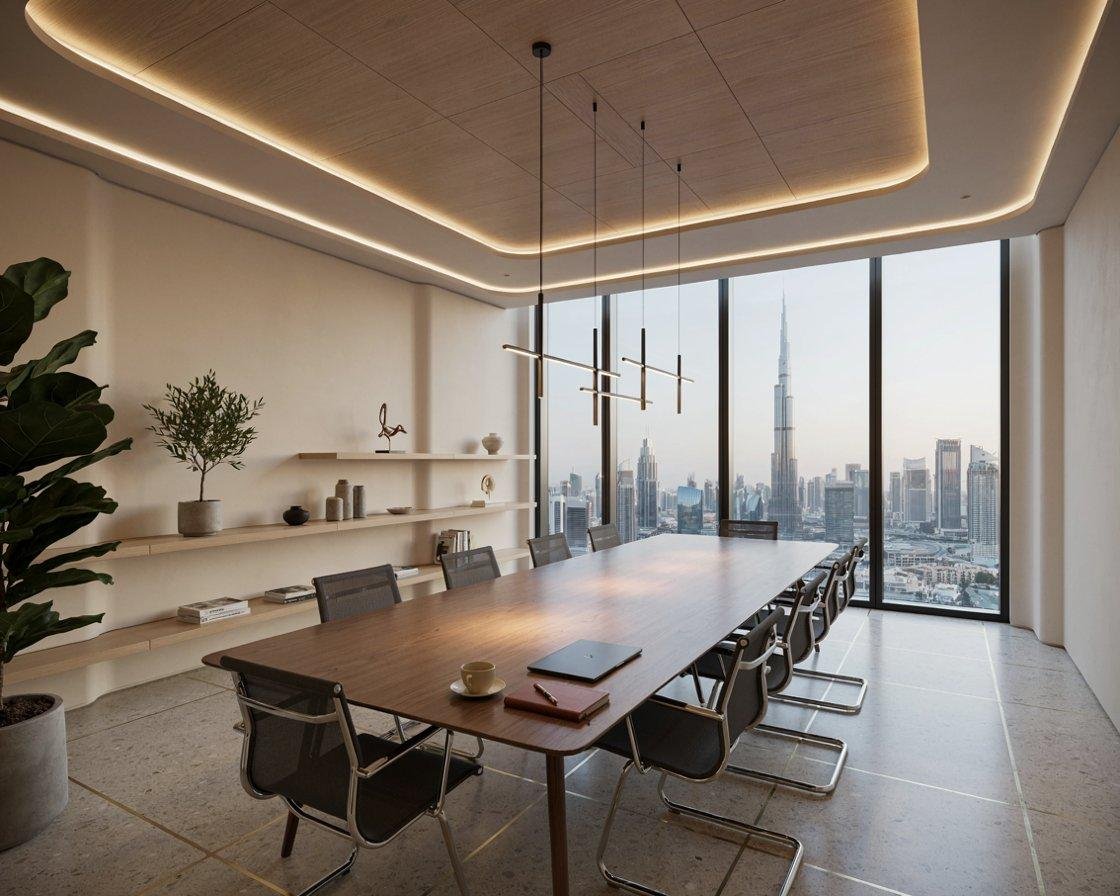
Walk into two offices that pay the same rent in Business Bay. One feels like a space someone assembled over several years — mismatched furniture, fluorescent overhead lighting, a reception desk that was clearly bought from a catalogue and placed wherever it fit. The other feels considered. The lighting shifts between zones. The reception area communicates the company’s identity before anyone says a word. The workstations are arranged so teams can collaborate when they need to and focus when they do not. Both offices cost roughly the same to run. Only one of them is working for the business.
This is the commercial interior design conversation that more Dubai businesses are starting to have — not because it is a trend, but because the evidence connecting workspace design to both employee performance and client conversion has become impossible to dismiss.
The Productivity Connection Is Not Abstract
There is a straightforward reason why companies with well-designed workspaces report lower staff turnover and higher output. People spend eight to ten hours a day in their office. The physical environment of those eight to ten hours affects every dimension of their experience: how focused they can be, how energized they feel, how comfortable their interactions are with colleagues, and fundamentally, whether the space signals that the organization they work for values them.
In Dubai specifically, the competition for skilled talent is real. A marketing agency in JLT competing for a senior hire against a tech firm in Dubai Internet City is not just competing on salary. The workspace matters in that conversation, and it matters more than most employers in the UAE currently acknowledge in their budgets.
Three specific design elements have the most direct impact on daily productivity.
Lighting. This is the single most underestimated factor in office performance and the one that makes the greatest difference per dirham spent. Standard fluorescent grid lighting produces a flat, even field that causes eye strain over long working periods and does not support the different modes of work that happen across a day. Focused task lighting at workstations, warmer ambient lighting in breakout areas, and directional lighting in meeting rooms each serve different purposes. A properly designed lighting scheme for a Dubai office supports focus during work hours, reduces fatigue, and changes the atmosphere of the space for different types of interaction. This is not expensive when designed from the outset. It becomes expensive when retrofitted after everything else is in place.
Acoustic design. Open plan offices in Dubai often fail acoustically. The combination of hard floor surfaces, glass partitioning, high ceilings, and dense workstation layouts creates an environment where ambient noise from one end of the floor reaches the other end continuously. Research consistently shows that uncontrolled ambient noise is one of the primary contributors to concentration loss and reported job dissatisfaction. Acoustic treatment does not mean adding padded walls. It means designing with materials and partition strategies that control sound distribution — acoustic ceiling panels, soft furnishing in breakout zones, glazed meeting rooms with proper door seals. These decisions happen at the design stage. They cannot be easily added after the fit out is complete.
Spatial flow. How people move through the space determines how they interact. An office where the coffee station requires walking past the CEO’s desk creates a social friction that changes how junior employees navigate their day. A meeting room positioned so that entering it requires crossing the main floor during a presentation distracts both the person entering and the people trying to focus. These are not minor inconveniences. Over time they shape the culture of the workplace in ways that are visible in staff behavior and invisible in the P&L until the correlation with turnover is noticed.
The Client Impression Is a Revenue Decision
Most commercial businesses in Dubai receive clients, partners, or suppliers at their premises at some point. The office is a physical communication of the company’s positioning, capability, and values. What clients experience from the moment they arrive at reception through to the meeting room shapes their assessment of the relationship in ways that rarely surface as explicit feedback but consistently influence decisions.
In sectors where credibility is the product — law firms, financial services, management consulting, architecture, property development — the workspace is part of the pitch. A client sitting across the table in a boardroom where the fit out matches the quality of the proposal feels differently about the engagement than a client sitting in a space where mismatched chairs and a cable-covered table send a different message entirely.
The reception area is where this matters most acutely. It is the first interior space every visitor experiences, and first impressions in physical environments form in seconds and persist. A reception desk designed and built for the specific space, with the brand properly integrated, sets a tone that everything else in the interaction builds on. A generic desk from a supplier catalogue, positioned wherever it fit in the available floor plan, sends a tone equally clearly.
This is why the companies in Dubai that invest in commercial interior design in Dubai tend to talk about it as a revenue decision, not an aesthetic one. The conversion rate in client meetings, the speed of trust-building in new relationships, and the implicit confidence signal in pitches are all affected by the physical environment in which they happen.
The Dubai Market Has Specific Dynamics
A commercial fit out or redesign in Dubai involves considerations that do not apply in most other markets, and they are worth understanding before any project begins.
The approval process is one. Any commercial interior modification that touches MEP — mechanical, electrical, or plumbing systems — or changes the layout of the space requires a Dubai Municipality building permit and a Dubai Civil Defence NOC for fire safety. From 2026, Hassantuk smart fire monitoring connection is also mandatory for all commercial premises. These are not bureaucratic obstacles to be managed around. They are legal requirements that affect the project timeline and that need to be built into the programme from day one.
The zone your office is in matters. Dubai Municipality governs most mainland commercial areas. Trakhees governs free zone areas including Palm Jumeirah, Al Furjan, and Jebel Ali. DDA governs Dubai Internet City, Media City, and Dubai Design District. Each authority has different submission portals and different drawing format requirements. A contractor who handles approvals for one zone does not automatically know the requirements of another.
Material specification matters differently here than in temperate climates. Dubai’s heat and humidity accelerate wear on surfaces that might last twenty years in a European office and last eight in an improperly specified Dubai one. Flooring choices, surface treatments, and joinery materials that are not specified for the UAE climate create visible deterioration within a few years of a fit out that looked exceptional on handover day.
Timeline realism matters. A commercial fit out in Dubai including approval processing, design sign-off, joinery fabrication, and construction typically takes 6 to 12 weeks for a standard office. Approvals run in parallel with design — not sequentially — in a well-managed project. Companies that plan for a six-week opening date without building the approval period into the programme miss that date and pay for the lease period during which the space is unoccupied.
What the Right Contractor Changes
The difference between a commercial interior project that is delivered on time, within budget, and to the specification that was agreed is almost entirely determined by the contractor chosen to execute it.
The distinction that matters most in Dubai is design-and-build versus design-only. A design-only firm produces drawings and hands them to the client. The client then manages a separate contractor to execute the work, and separately manages the approval process, or hires a third consultant for that. The design-and-build model puts all of this under one contract with one team accountable for the outcome.
For businesses in Dubai that are running the company while also managing an office fit out, the single-contract model removes a substantial coordination burden. The same team that produced the space plan is also preparing the DM permit drawings, managing the joinery fabrication, and coordinating the site. There is no gap between what was designed and what was built, because both happened with the same people.
Favoritehome is a Dubai-based design-and-build contractor working across offices, restaurants, salons, gyms, retail spaces, and hospitality projects across all Dubai zones. As an interior fit out company in Dubai that manages design, approvals, and construction under one contract, the team handles every element from the first concept to the completion certificate. The client gets one project manager, one fixed price, and one handover — rather than three separate processes running in parallel with no single point of accountability.
The Bottom Line
A well-designed commercial interior in Dubai does three things simultaneously. It supports the daily performance of the people working inside it. It communicates to every visitor something specific about the organization before anyone has spoken. And it holds its quality and value over time because the materials and the systems behind the surfaces were specified correctly for the environment.
None of those outcomes happen automatically from a fit out. They happen from intentional decisions made at the design stage, executed by a team that understands both the design objective and the construction reality of delivering it in Dubai.
The businesses in Dubai that are growing fastest are not necessarily the ones with the biggest offices. They are the ones where the workspace works — for the team, for the clients, and for the brand.

For decades, a facelift was the only real answer to sagging skin and a softening jawline. Today, that is no longer true, and the shift has been dramatic. Across York Region, more people than ever are choosing non-surgical treatments that deliver meaningful, visible tightening without a single incision, without general anaesthesia, and without the weeks of recovery a surgical procedure demands.
This is not a trend built on vanity alone. It reflects something more practical. People want results that fit into real life, a busy work schedule, family responsibilities, no time to disappear for a month of healing. Non-surgical skin tightening has stepped into that gap, and it has done so with technology genuinely capable of producing results that were once thought to require a scalpel.
Why the Shift Is Happening Now
A few factors have converged to drive this change. The technology behind non-surgical tightening has matured significantly in the last several years, reaching depths beneath the skin that were previously only accessible through surgery. At the same time, awareness has grown. People are no longer choosing between “do nothing” and “have surgery.” They understand there is a genuine middle path, one that produces real structural change rather than a temporary surface improvement.
There is also a cultural shift toward subtlety. Fewer people want a result that announces itself. Most are looking for something quieter, a version of their own face that simply looks more rested, more defined, less tired, without anyone being able to pinpoint exactly what changed. Surgical facelifts, done well, can achieve this too, but the appeal of getting there without surgery is obvious for anyone weighing the trade-offs of downtime, cost and risk.
The Two Technologies Leading the Shift
Two treatments in particular have become the names people search for when researching non-surgical alternatives to a facelift, and they work in genuinely different ways.
The first combines radiofrequency energy with precision microneedling, delivering controlled heat deep beneath the skin’s surface while simultaneously triggering the body’s own collagen-building response. This dual mechanism is what allows it to address not just fine lines, but genuine skin laxity across the face, jawline, neck and even the body, something most surface-level treatments cannot claim. Clients across Aurora, Richmond Hill and Vaughan have been turning to Morpheus8 in Aurora specifically because it reaches a depth and delivers a versatility that few non-surgical treatments can match, treating everything from early jowling to post-pregnancy skin laxity on the body.
The second approach takes a slower, more gradual path. Rather than immediately adding volume or tightening tissue on contact, it works by stimulating the body’s own collagen production over months, using a biocompatible substance the body has safely used in medical applications for decades. The result builds so gradually that friends and family often cannot identify exactly what has changed, only that someone looks well, rested, quietly refreshed. For clients dealing with broader volume loss across the face, rather than one isolated concern, Sculptra in Aurora has become a genuinely popular choice specifically because the results last years rather than months, trading a longer initial commitment for significantly less ongoing maintenance.
Who Is Actually Choosing These Treatments
The demographic pursuing non-surgical alternatives has broadened considerably. It is no longer only clients in their fifties and sixties who might once have considered a facelift. Many York Region residents in their late thirties and forties are starting treatment proactively, catching early signs of laxity before they become significant, essentially choosing maintenance over correction.
Men represent a growing share of this shift too, drawn by the lack of visible downtime and the practical, no-fuss nature of the treatment experience. For working professionals across Vaughan and Aurora, the appeal of a treatment that fits around a demanding schedule, without weeks of visible healing, has made non-surgical options an easy decision that surgery never quite was.
What a Realistic Result Actually Looks Like
It is worth being honest about what these treatments can and cannot do. Neither radiofrequency microneedling nor a collagen-stimulating treatment like Sculptra will produce the same dramatic, structural change as a surgical facelift for someone with very advanced skin laxity. What they do produce, for the right candidate, is a firmer, more lifted, more youthful version of the same face, not a different one.
This is precisely the appeal for most people exploring these options. The goal was never to look like someone else. It was to look like a well-rested version of themselves, and that is exactly what these technologies are built to deliver.
Making the Right Choice for Your Skin
With two genuinely different technologies both promising non-surgical tightening, the right choice depends entirely on individual goals, skin condition and timeline expectations. Someone wanting more immediate, versatile treatment that can also address acne scarring or body skin laxity is often better suited to radiofrequency microneedling. Someone specifically focused on gradual, long-lasting volume restoration across multiple areas of the face may find a collagen-stimulating approach the better fit.
This is not a decision to make from a search result alone. A proper in-person assessment, examining the specific skin concern and discussing realistic goals, remains the only reliable way to determine which non-surgical path actually makes sense for a given face.
Glow Med Clinic in Aurora has become one of the go-to clinics in York Region for exactly this reason, offering both technologies under one roof and, more importantly, an honest recommendation based on individual assessment rather than whichever treatment happens to be the current trend. For residents across Aurora, Richmond Hill, Vaughan and Newmarket exploring non-surgical alternatives to a facelift, a free consultation with their nurse-led team is typically the first and most useful step before committing to any treatment path.
Exploring the landscape of online libraries A complete overview

Bebees Pink Beekeeper Suit: Comfortable, Safe & Stylish Protection
Experience the excitement of licensed casinos with Neosurf Casino Australia

Taylor Swift’s Producer Hints at New Album Release This Year: TS12, Reputation (Taylor’s Version), and All the Clues
麻 豆 传 媒体: A Comprehensive Insight into the Media Powerhouse
